
You're staring at a shelf of nail polish, and the shade is the easy part. The real confusion? Which format you should trust with your nails.
Regular polish, gel, dip powder, press-ons, and strips all promise a perfect manicure, but they behave very differently.
The most important split comes down to wear time and removal. Regular polish chips in about 3 to 5 days. Gel formulas hold 2 to 3 weeks.
Dip powder can push toward 4 weeks. As of 2026, those numbers still hold across most brands. Your lifestyle decides which one makes sense.

Image source: Wikimedia Commons / אבנר (CC BY-SA)
Why the Polish Format Matters More Than the Shade
Color is personality, but format is commitment. Pick a formula that doesn't match your routine, and you'll be fighting chips, stains, or nail damage within a week. Pick the right one, and a manicure becomes effortless.
In our research, the key differentiators came down to three things: how long it stays, how it comes off, and what it does to your nail plate underneath. Those three factors matter far more than the color in the bottle.
Think about your week before you choose. If you're typing all day, washing dishes, or lifting weights, the odds shift. If you're heading to a wedding and need polish for one weekend, they shift again.
The best choice depends on conditions, not taste.
- Regular polish, minimal equipment, fast style changes, chip-prone
- Gel polish, durable shine, needs a UV/LED lamp and soak-off removal
- Dip powder, tough build, more removal time, can support fragile nails
- Press-ons and strips, no dry time, swap in minutes, less custom fit
Each option solves a different problem. That's why there's no single winner.
Regular Polish: Quick, Easy, and Low-Risk
Regular nail polish is the classic solvent-based lacquer that air-dries at room temperature. The formula contains pigments suspended in a solvent blend that evaporates within a few minutes. That gives you the fastest route to color with almost no special equipment.
It isn't the most durable finish, though. Typical wear lands between 3 and 5 days before edge chipping starts. But that's not necessarily a downside.
You can change shades weekly without heavy removal rituals. The trade-off is honest: beauty and flexibility over longevity.
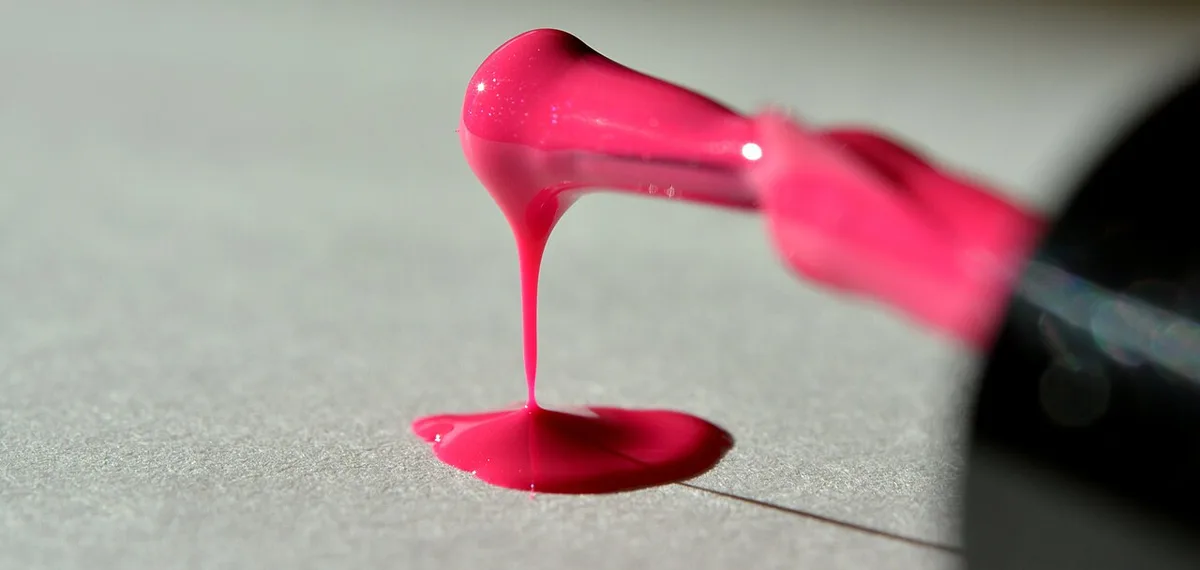
Image source: Wikimedia Commons / Patrik Nygren (CC BY-SA)
Application is straightforward. Base coat, two thin color layers, top coat. Wait about one minute between coats so they don't smear.
A quick-dry top coat cuts the final wait significantly.
Removal also plays nice with your nails. Most regular polishes lift off with a non-acetone remover in under five minutes. The FDA regulates cosmetic color additives, which adds a layer of safety oversight.
If you prefer cleaner ingredients, check the label for 5-free or 7-free formulas. Those omit common suspect chemicals like formaldehyde, toluene, and DBP.
That makes regular polish the safest default for anyone with weak, thin, or peeling nails. It's also the easiest way to experiment with trends without a long-term commitment.
Gel Polish: The Shiny One That Needs a Lamp
Gel nail polish is a liquid polymer that hardens under a UV or LED lamp. Unlike regular polish, it doesn't dry by evaporation. It cures into a glassy, chip-resistant layer that keeps its shine for weeks.
As of 2026, most salons and home kits use LED lamps that cure each coat in 30 to 60 seconds.
The payoff is real: 2 to 3 weeks of flawless wear without smudging. It shrugs off water, hand sanitizer, and everyday bumps. But it asks for more at removal.
You'll need to soak nails in acetone for 10 to 15 minutes and gently push the softened gel off. Harsh buffing or yanking can peel layers of your natural nail with it.
There's also a safety catch. Gel products need full curing. If they aren't fully polymerized, the liquid monomers can trigger contact dermatitis.
The American Academy of Dermatology warns against picking or peeling gel polish. They also recommend patch testing if you've had allergy symptoms in the past. That's not fear-mongering.
It's the practical reality of working with light-activated resin.
For the right person, gel polish is a fantastic choice. You just have to respect the lamp and the removal process.
Dip Powder: Stronger Nails or Overstated Boost?
Dip powder nails take a different route. Instead of curing liquid under a lamp, you brush on a glue-like base, roll the nail in tinted powder, and seal it with a protective top coat. The build layer is harder and thicker than either regular or gel polish.
That's why many people call it strengthening.
Manufacturer claims often promise 3 to 4 weeks of wear. User reports generally confirm that, provided the removal is done correctly. The catch?
Removal is slow. If a salon is impatient, they'll file the top layer aggressively, then soak the rest in acetone. That's where thin, damaged nails come from.
It's not the powder itself. It's aggressive removal.

Image source: Wikimedia Commons / Sgt. Lauren Twigg
Some salons use a peel-off base coat under dip powder to make removal gentler. That shortens wear time, but it's easier on your natural nails. If your nails are already thin, dip powder can genuinely help them feel sturdier.
It only works when applied over a healthy nail plate. If your nails are already peeling, the thick coating may hide damage while it gets worse underneath.
Dip powder is best for people who want maximum durability and don't mind the longer salon chair time. It's also a strong pick for fragile nails that can't handle gel removal.
Press-Ons and Polish Strips: The No-Dry Alternatives
Press-on nails and nail polish strips quietly one-upped the old versions. Modern press-ons come in full sets with tabs or glue. You can wear them for one night or up to a week.
Polish strips are thin adhesive sheets that look exactly like painted nails, right down to the top coat shine.
No lamp is involved. No drying time exists. You press, smooth, and go.
That makes them the best choice for travelers, event-goers, and anyone who hates sitting still for 20 minutes after a manicure.
The downside is customization. Press-ons fit most people, but not every nail bed. Strips need a little trimming and patience with curved edges.
Both can pop off earlier if your hands get constantly wet or oily. In our research, users who sealed the edges with a clear top coat got noticeably longer wear.
Strips are also great for nail-biters. The adhesive layer is smooth and resistant to picking. Just make sure your natural nails are clean, dry, and lightly buffed before applying.
A little prep goes a long way.
Side-by-Side Comparison: Wear Time, Removal, Cost, and Nail Health
Here's where the differences become easy to see. We've put the four main options side by side so you can weigh them at a glance.
| Format | Typical Wear | Removal | Nail Health Risk | Average Cost per Manicure |
|---|---|---|---|---|
| Regular polish | 3–5 days | Wipe off with remover, 5 min | Low | $8–$15 DIY |
| Gel polish | 2–3 weeks | Soak in acetone, 10–15 min | Medium if removal is rushed | $25–$50 salon |
| Dip powder | 3–4 weeks | Soak and gentle scrape, 15–20 min | Medium-high if over-filed | $35–$60 salon |
| Press-ons / strips | 1–7 days | Peel or soak off, 5 min | Low | $5–$15 |
The removal step is what damages nails most. Aggressive filing and prying layers off is the main culprit. Slow, patient removal keeps your natural nails safe regardless of which format you pick.
Who Should Pick Which? A Practical Breakdown
- Choose regular polish if you change your mind often, prefer low commitment, or have thin natural nails. It's also the best pick for beginners learning to paint neatly.
- Choose gel polish if you need a flawless, high-shine finish for two or three weeks straight. Just commit to the soak-off removal and never peel it off.
- Choose dip powder if you want maximum durability and your nails are naturally brittle or break easily. Budget extra time for removal and ask your tech to file lightly.
- Choose press-ons or strips if you're rushing to an event, traveling, or testing a bold style without the long-term promise. They're also great for kids and teens.
Frequently Asked Questions
How long does nail polish take to dry?
Most regular polishes feel dry to the touch in 5 to 10 minutes. Full hardening takes 1 to 2 hours. Gel polish cures under an LED lamp in 30 to 60 seconds per coat.
Does gel polish damage your nails?
No. Gel polish itself doesn't damage nails. The damage comes from prying, peeling, or aggressively filing it off.
Slow acetone soaks and gentle pushing keep your nail plate healthy.
Can you use acetone on natural nails?
Yes, but it's drying. Acetone removes polish efficiently and strips natural oils too. Use it sparingly, then follow up with cuticle oil or hand cream to restore moisture.
How do I remove glitter nail polish without hurting my nails?
Soak a cotton pad in remover, press it on the nail, and wrap it in foil for 5 minutes. The glitter softens and slides off. This works better than scrubbing.
Are press-on nails reusable?
Yes, if you use adhesive tabs instead of glue. Gently peel them off, clean the back, and store them on the sheet. Glue-on press-ons are usually one-time wear.