
If your foundation always looks streaky, your eyeshadow won't blend, and your blush lands in one patchy spot, the problem probably isn't your makeup. It's your makeup brushes. Choosing the right brush, and knowing how to use it, changes everything about your application.
The good news? You don't need twenty brushes to get a professional finish. Our research across manufacturer specs, dermatology guidance, and aggregate user reviews shows that five to seven well-chosen brushes cover nearly every daily look.
The American Academy of Dermatology also recommends washing those brushes at least once a week to keep skin clear. So let's break down exactly what you need, what to skip, and how to tell a quality brush from a dud.
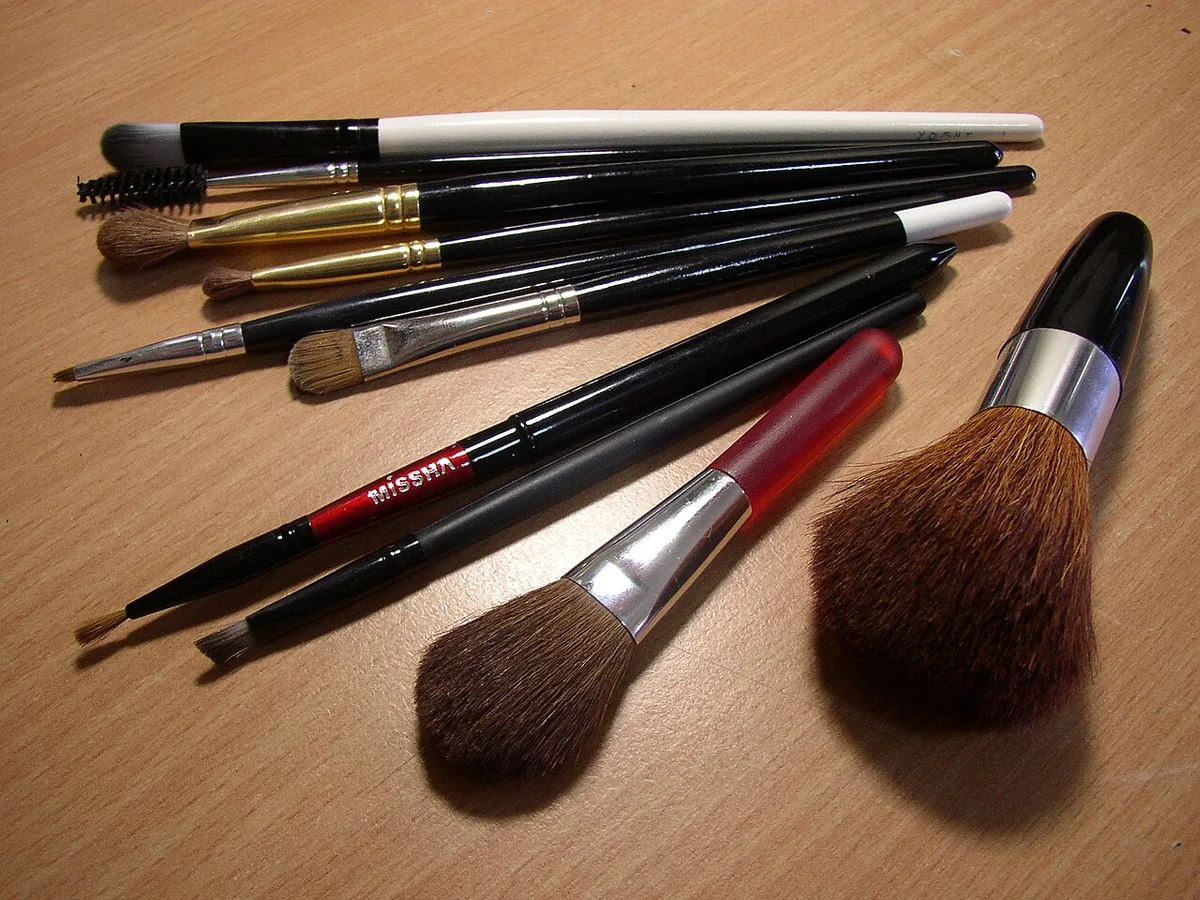
Image source: Wikimedia Commons / Kandance拍攝 (CC BY-SA)
Quick Answer
Makeup brushes are handheld tools used for precise cosmetic application. They split into synthetic and natural hair types. Synthetic works best with creams or liquids.
Natural handles powder formulas more effectively. Clean brushes weekly to avoid breakouts and eye infections.
Which Makeup Brushes Do You Actually Need?
Walk into any beauty store and you'll see rows of brushes for every imaginable task. It's overwhelming. The reality is that five or six brushes handle nearly every look a normal person wears.
| Brush | Best For | Key Feature |
|---|---|---|
| Foundation brush | Liquid and cream base | Dense, flat or round top |
| Powder brush | Setting powder, bronzer | Fluffy, loose bristles |
| Blush brush | Powder blush | Domed, medium density |
| Eyeshadow brush | Lid color and crease | Firm, compact head |
| Angled brow or liner brush | Brows and gel liner | Firm, chiseled edge |
| Concealer brush | Spot correction | Small, tapered tip |
If you only ever wear powder, skip the foundation brush and lean on the powder and blush brushes. If you never touch gel liner, the angled brush pulls double duty for defining brows. Add a concealer brush only if you do detailed correction work.
That's it. Everything else is a nice-to-have, not a requirement.
Synthetic vs Natural Bristles: The Pros and Cons
The biggest decision in brush shopping isn't shape. It's bristle type. Synthetic brushes use nylon or polyester fibers.
Natural brushes come from animal hair like goat, sable, or pony. Each has a clear job.
| Synthetic | Natural | |
|---|---|---|
| Best for | Creams, liquids | Powders |
| Texture | Firm, smooth | Soft, grippy |
| Cleaning | Quick, dries 2-4 hours | Needs care, dries 6-12 hours |
| Allergens | None | Possible lanolin reaction |
| Cruelty-free | Always | Rarely |
Synthetic fibers don't absorb product, so they apply foundation with less waste. They're also easier to sanitize, which matters if you have acne-prone skin. Natural hair grabs powder pigment and diffuses it beautifully, which is why pros still favor it for eyeshadow and blush.
In our research, manufacturer specs from major brush makers indicate that modern synthetic fibers have closed the gap significantly in recent years. If you're buying one set for everything, synthetic is the safer all-rounder.
Brush Sets vs Buying Singles: What's the Smart Move?
Sets are tempting. Ten brushes for thirty dollars sounds like a steal. But look closely and you'll usually find a few you'll never touch, and maybe only one or two that genuinely perform.
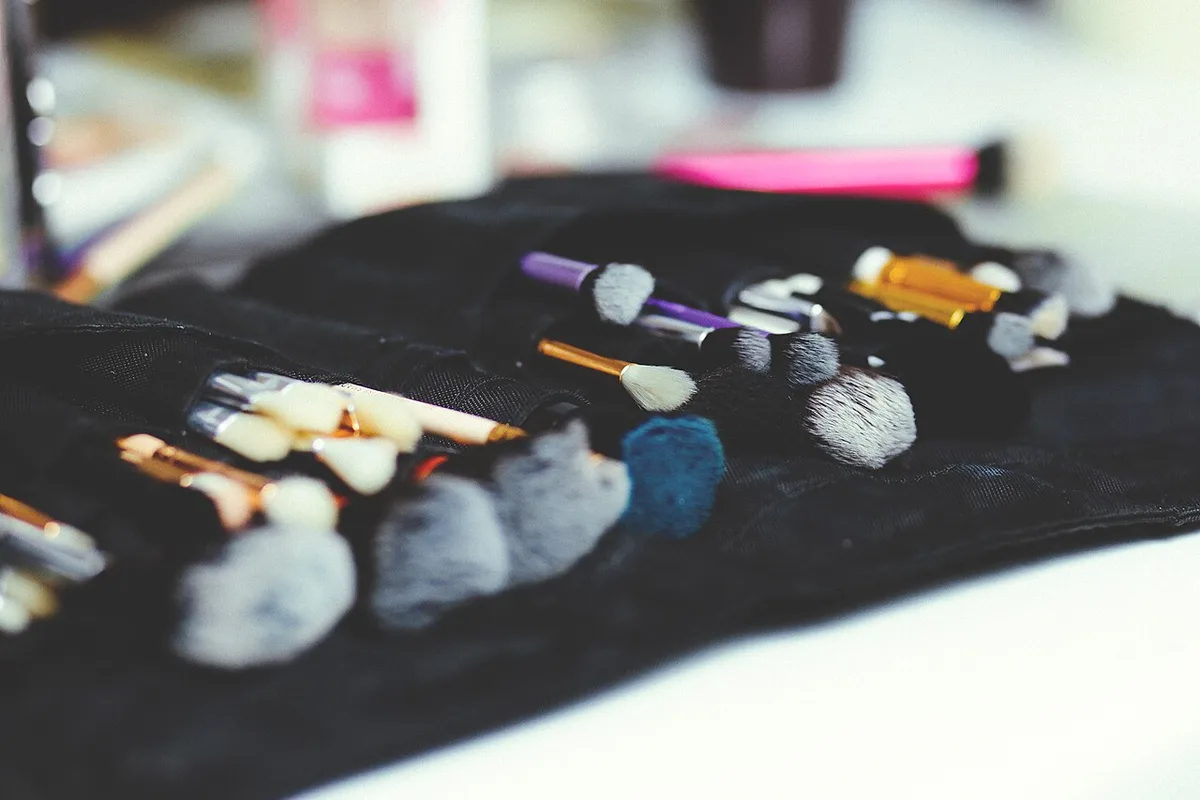
Image source: Wikimedia Commons / freestocks.org freestocks
Here's how to decide. If you're brand new to makeup and have little to no gear, a well-rated set of five to eight brushes gives you a low-cost starting point. Just make sure it includes the core brushes listed above.
If you're replacing old brushes or leveling up, buy singles. You'll pay more per brush, but you'll get exactly what you need and can pour your budget into the brushes you use daily.
The math matters too. A 12-piece set might cost $30, which works out to $2.50 per brush. But if you only use six of them, that's $5 per useful brush with no quality guarantee.
A decent single synthetic brush runs $10 to $15 and can last three years. Aggregate reviews consistently show that buyer regret comes from set padding, not the hero brushes. Rule of thumb: if the set has more brushes than you'd use in a week, skip it.
Drugstore vs Professional Brushes: Where the Real Difference Shows
Price doesn't always equal quality, but in brushes it often signals construction. A $5 drugstore brush and a $25 professional brush might look similar at first glance. The difference shows up in the ferrule, the bristle density, and how the brush survives twenty washes.
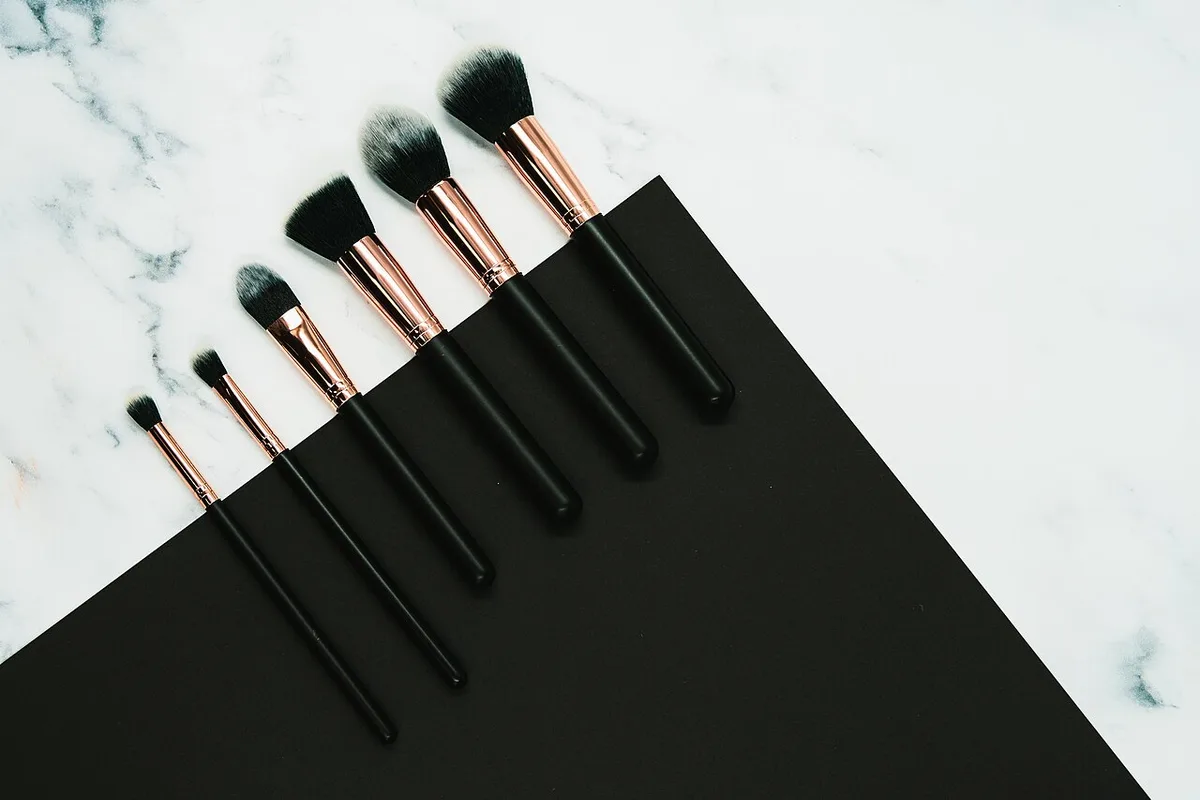
Image source: Wikimedia Commons / geehairimages (CC BY)
| Drugstore ($3-10) | Professional ($10-30) | |
|---|---|---|
| Bristles | Synthetic, dense enough | Higher fiber quality, tighter knot |
| Ferrule | Seamed, can rust | Seamless, rust-resistant |
| Shape retention | Splays after months | Holds shape for years |
| Typical lifespan | 6-12 months | 3-5 years |
Drugstore brushes improved a lot in the last decade. Budget brands make genuinely usable tools. But for daily application of cream or liquid products, our research and aggregate reviewer feedback suggest the mid-range price point delivers the biggest quality jump.
You're paying for tighter bristle packing, which means more precise application, and better glue and metal, which means the brush won't fall apart in the sink. Do you need a $60 artisan brush? Probably not.
That's luxury territory, where you're paying for handcrafted handles and heritage names. The sweet spot for most people sits between $12 and $25 per brush.
Matching Brushes to Your Makeup Routine and Face
The right brush for you depends on your skin, your style, and the formulas you actually wear. Here's how to match tools to real life.
- Acne-prone or sensitive skin: choose synthetic and wash weekly
- Dry skin: use a damp sponge or stippling brush for liquids
- Oily skin: keep a fluffy powder brush handy for setting
- Cream-only routine: dense flat or buffing brushes work best
- Powder-only routine: one great powder brush plus a smaller domed blush brush
Eye shape matters too. If you have hooded eyes, use a smaller, tapered crease brush. A giant fluffy blender eats up your limited lid space.
If you wear bold brows, an angled firm brush gives crisp, hair-like strokes.
Remember, your routine is yours. A five-brush kit that matches your formulas beats a twenty-brush set that sits untouched. Per FDA guidance, sharing brushes and other makeup tools can transfer germs, so keep your kit personal and clean it regularly.
Common Brush Mistakes That Ruin Your Application (and How to Fix Them)
Even with good brushes, small errors wreck the result. The good news is that each mistake has a simple fix.
| Mistake | What Happens | The Fix |
|---|---|---|
| Pressing too hard | Streaks, wasted product | Use light pressure, let bristles glide |
| Using dry brushes on cream | Patchy, dragging application | Slightly dampen or use a stippling motion |
| Overloading the brush | Heavy, cakey look | Tap off excess before applying |
| Skipping brush cleaning | Breakouts, poor blending | Wash weekly with gentle shampoo |
| Using powder brush for liquids | Absorbs product, streaks | Match brush type to formula |
One of the biggest culprits is dragging a dense foundation brush across the face like a spatula. That smears product flat and highlights every piece of dry skin. Instead, buff in small circular motions or press and roll the brush using a stippling technique.
The bristles do the work, not your arm.
Another quiet problem? Bristle splaying. When the ferrule loosens or bristles fan outward, your brush loses its precision edge.
Store brushes upright, never cram them into a makeup bag bristle-first, and give an old brush a break once it stops holding its shape. A splayed brush makes blending impossible, and no product trick fixes that.
How to Clean and Maintain Your Makeup Brushes
Cleaning isn't optional, it's part of the skill. Dermatologists recommend weekly washes for brushes that touch cream or liquid products, since bacteria multiply quickly in damp fibers. Powder brushes can stretch to every two to three weeks.
As of 2026, most major brands recommend simple liquid soap as the best all-round cleaner.
Wet the bristles with lukewarm water, avoiding the ferrule at all costs. Water inside the metal base loosens the glue and causes shedding. Add a drop of gentle shampoo or dedicated brush cleanser, then swirl the bristles on a silicone mat or the palm of your hand.
Rinse until the water runs clear. Reshape the brush head with your fingers and lay it flat, tilted slightly downward so water doesn't seep into the handle.
Drying matters more than washing. Standing brushes upright while wet pushes moisture into the ferrule, which leads to rusted metal and loose bristles. Synthetic fibers dry in two to four hours.
Natural hair takes six to twelve, so plan your cleaning around morning routines. Never use a hair dryer to speed things up. Heat warps the glue and damages bristle texture permanently.
Frequently Asked Questions
How often should I replace makeup brushes?
With proper care, synthetic brushes last about three years. Natural hair brushes can last five if you clean them gently and store them correctly. Replace a brush as soon as bristles splay, the ferrule loosens, or the fibers feel rough.
Chances are, your skin will tell you first.
Are expensive makeup brushes worth it?
Up to a point, yes. The biggest quality jump happens between $5 and $15 per brush. You get tighter bristle packing, better glue, and smoother ferrules.
Beyond that, you're paying for handles, heritage names, and handcrafted details. A mid-range brush set covers most needs without breaking the bank.
What's the difference between a stippling brush and a buffing brush?
Stippling brushes have a flat top with stiff, separated bristles. They deposit product in thin layers, ideal for lightweight coverage. Buffing brushes pack dense fibers tightly, working product into the skin for fuller coverage.
Stippling gives sheer and natural, buffing gives smooth and buildable. Both work well for liquid foundation, just with different finishes.
Can I use one brush for cream and powder products?
You can, but you shouldn't. Cream and liquid formulas leave residue that changes how a brush picks up powder. The oils clog the fibers and create patchy application.
In our research, manufacturer care guides consistently recommend separate brushes for wet and dry formulas. If you need to swap, clean the brush between uses.
Do I need to buy a brush cleaning mat?
No, but it helps. A silicone mat with ridges removes pigment faster and more thoroughly than hand-swirling alone. A thorough clean takes 30 seconds with a mat versus two minutes without.
Budget drugstore options work fine and save water. Dry a mat between uses to prevent mold growth on the silicone surface.
How do I stop my brushes from shedding?
Light shedding in the first wash is normal, especially with natural fibers. If it persists, check how you're washing. Never soak past the ferrule, never twist the bristles, and avoid hot water.
For persistent shedding, the issue is likely a cheaply made brush with weak glue. At that point, replace it rather than fight it.