
Most dorm room organization ideas fail for one simple reason: you buy storage before you ever see your room. The shelf blocks the window. The bin won't fit under the bed.
The wall hooks fall off by day three.
A shared double room averages about 144 square feet. The standard bed is a Twin XL measuring 38 by 80 inches, and most university housing offices enforce a no-drill policy as of 2026. That means the smartest strategy starts with a tape measure, not a cart.
You need a system your specific room can handle.
Start With Your Room, Not a Shopping List
Grab a tape measure before you grab a single bin. That's rule one. The biggest mistake in dorm storage is buying under-bed containers that don't fit the actual gap.
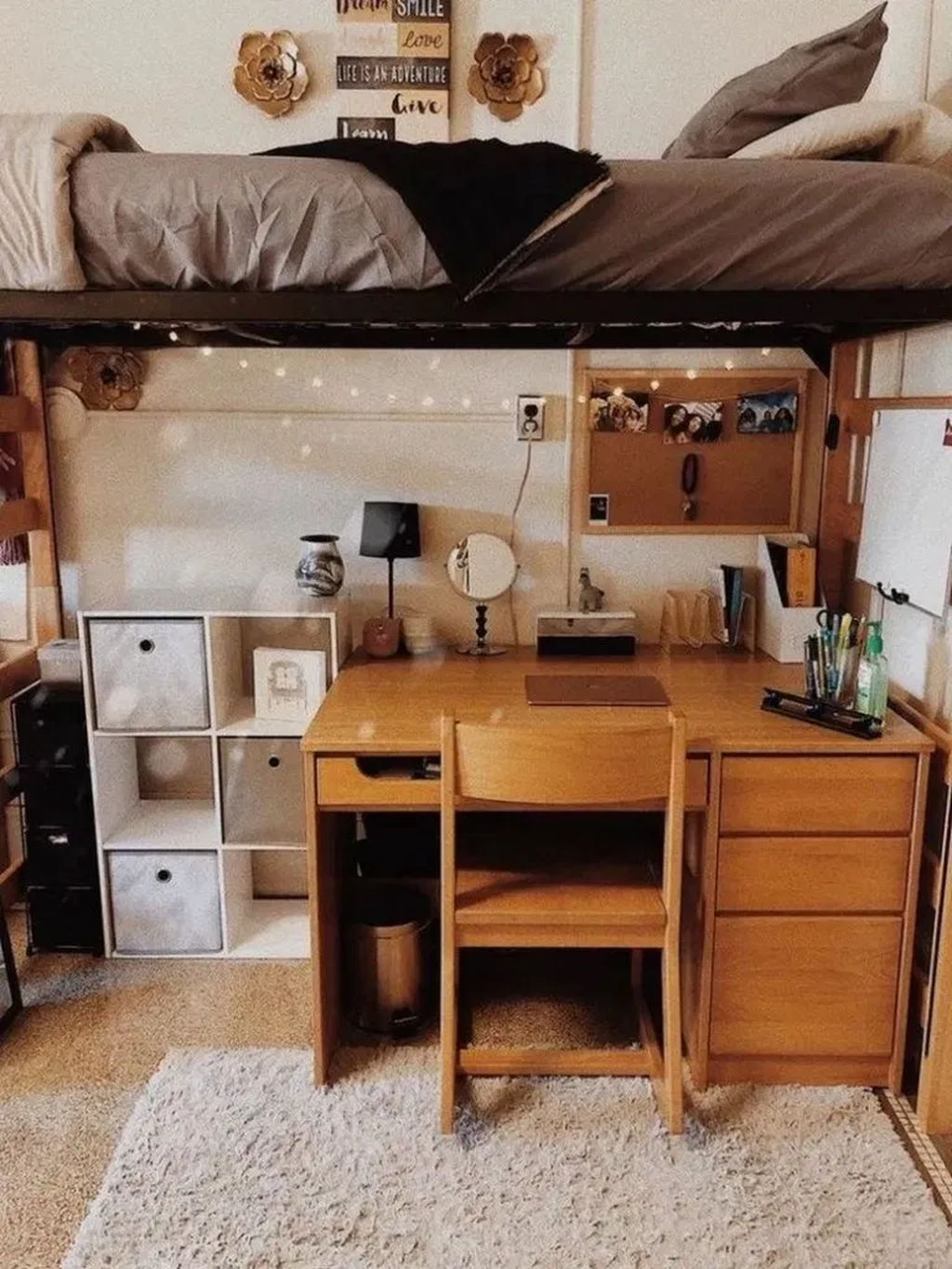
Image source: Web (Bing) / pinterest.com (Web image (fair-use with source credit))
Standard dorm beds leave about 12 to 14 inches of clearance. Measure the real number, not the estimated one. Write down the room length and width, the closet interior, the window size, and the wall material.
This one list will rule out half the products you're eyeing.
Your walls matter just as much. Cinderblock surfaces make adhesive strips slip over time. Plaster walls can peel when you remove them.
Carpeted floors let fabric bins slide easily, while hard flooring needs bins with a solid base.
Here's the if/then logic. If your room is tiny, vertical shelving beats floor bins. If you have a corner spot, a rolling cart works better than a fixed shelf.
If you're in a suite with built-in furniture, your storage needs drop by half. The room sets the rules, not the decoration blogs.
Also measure the doorways and the elevator entrance. A storage unit that won't fit through the door is useless, even if it's perfect for the space. That extra five minutes at move-in saves you a return trip later.
The 4 Questions That Decide Your Dorm Storage Setup
These four questions control every storage choice you'll make. Answer them before you look at any product.
| Question | What it decides | Best next step |
|---|---|---|
| What's your bed clearance? | Under-bed bin depth | 10+ inches: deep bins. Under 10: vacuum bags |
| Can you drill or mount? | Wall storage options | Allowed: shelves. Banned: over-door and adhesive |
| Are you sharing the room? | Closet and shelf division | Yes: assign zones. No: use all space |
| What's your budget? | DIY vs. premade system | Tight: foldable bins. Flexible: matching stackable set |
If your bed sits low, skip tall rolling bins and use vacuum storage bags instead. If drilling is banned, over-the-door organizers and tension rods carry the load. If you have a roommate, split all shared surfaces before move-in.
If money is tight, a matching set of stackable bins beats a random pile of mismatched boxes.
The order matters too. Measure first, then ask what your housing contract allows. Only after those two steps should you spend a cent.
Bed Strategy: Loft It, Riser It, or Leave It Low
Your bed takes up roughly 20 square feet of floor space. That's your biggest organizational canvas.
You have three main strategies:
- Leave it low. You get about 12 to 14 inches underneath. Works for shallow bins and flat storage bags.
- Add bed risers. You gain 4 to 6 more inches. Fits taller shoe boxes, small drawers, and larger containers.
- Loft it. You create 24 to 48 inches of open floor. This is enough for a desk, a dresser, or a mini-fridge.
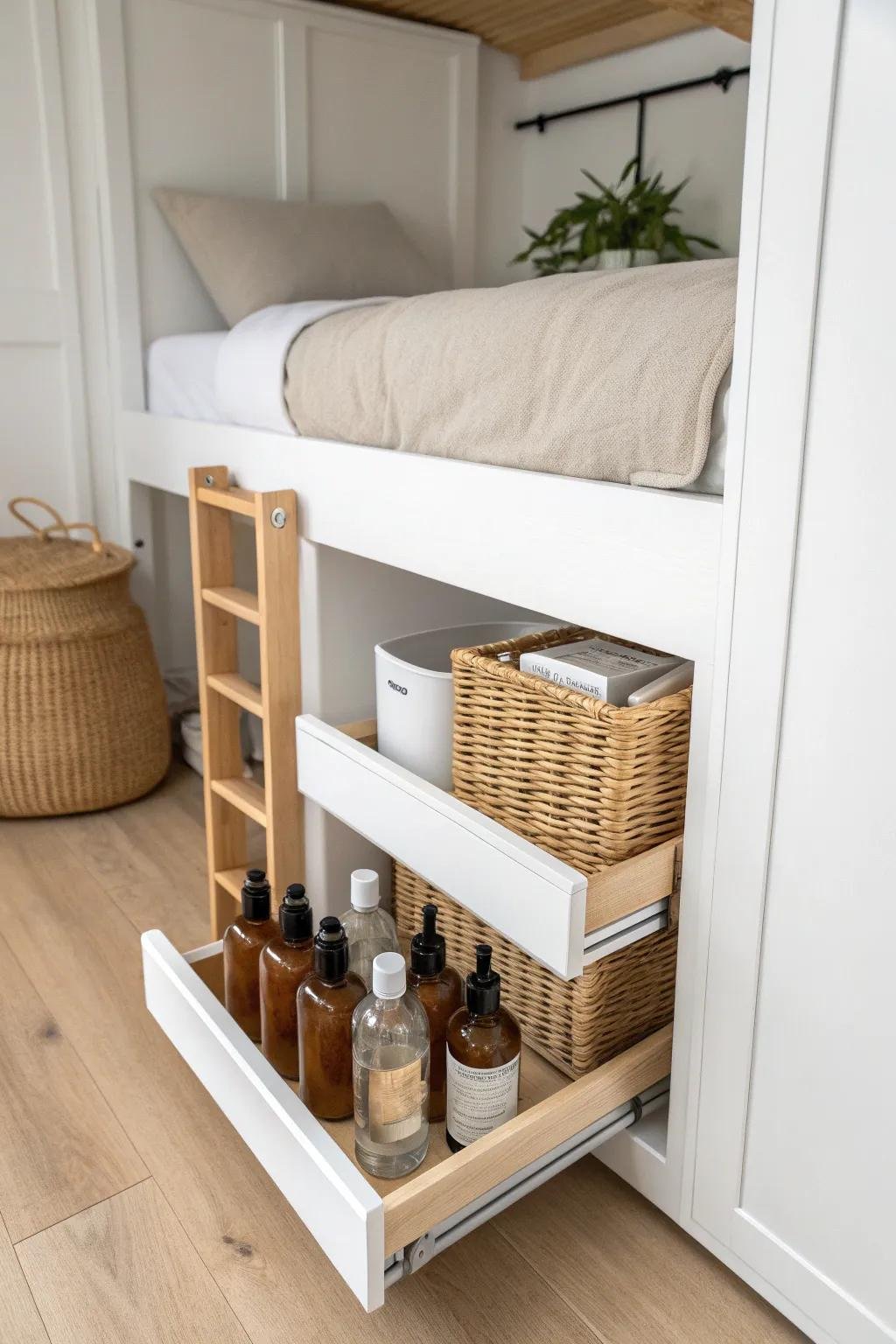
Image source: Web (Bing) / sundayflat.com (Web image (fair-use with source credit))
The right choice depends on your ceiling height and your housing rules. If you have an 8-foot ceiling and written approval, lofting is the biggest space win in a small dorm. If you're in an older building with low ceilings, risers are safer and simpler.
If your bed arrives with a guardrail, keep the bed low and use storage drawers.
Safety comes first. Never install a DIY loft from a marketplace or secondhand source. University housing offices require approved loft kits for a reason.
Also keep a clear fire egress path. The National Fire Protection Association sets campus housing codes that require an unobstructed exit route, and blocking it with bins is a code violation.
Wall and Closet Space: No-Drill Hacks vs. Mounted Systems
Most dorms ban drilling. That pushes you toward no-damage solutions, which are honestly easier to install.
- Adhesive hooks handle about 5 to 10 pounds on smooth surfaces. Perfect for keys, robes, and small bags. Skip them on cinderblock.
- Over-the-door organizers offer 12 to 24 pockets. Use them for shoes, toiletries, or snacks. Check the hinge weight first.
- Tension rods fit inside closets and window frames. They create instant shelf dividers or effectively double the hanging rod space.

Image source: Web (Bing) / walmart.com (Web image (fair-use with source credit))
Here's the decision tree. If your walls are smooth painted drywall, adhesive strips work reliably. If they're cinderblock or textured, stick to over-door systems and tension rods.
If your closet is deep but lacks a second rod, add a hanging rod extender. If you need extra drawers, roll a small stackable cart into the closet corner.
The biggest upgrade for most dorms is the closet itself. A single rod gives you maybe 2 feet of hanging space per person. Extending the rod vertically with stacked shelves can double that without touching the walls.
Sharing Space: The Roommate Storage Agreement
Half your storage problems are your roommate's stuff. That's not an insult. It's space math.
Talk through shared items before move-in day. Who brings the mini-fridge? The microwave?
The TV? One text conversation prevents two of everything in a 144-square-foot room.
Split the closet by zone, not by pile. You get the left side, they get the right. If the rod is double-hung, assign the top to one person and the bottom to the other.
This avoids the "whose sweater is this" conflict entirely.
Shared shelves need boundaries too. Labeled bins cost two dollars and save you from a full-blown ownership debate. Use one color per person if you want to make it obvious at a glance.
If your roommate won't negotiate, claim your zone immediately on move-in day. Place your bins first. Physically mark your side with organizers.
It's easier to hold space than to take it back.
A 5-Step Workflow to Organize Your Dorm in One Afternoon
Start with the empty room and your measurements from earlier sections. Wall length, closet interior, and under-bed clearance tell you exactly what fits where.
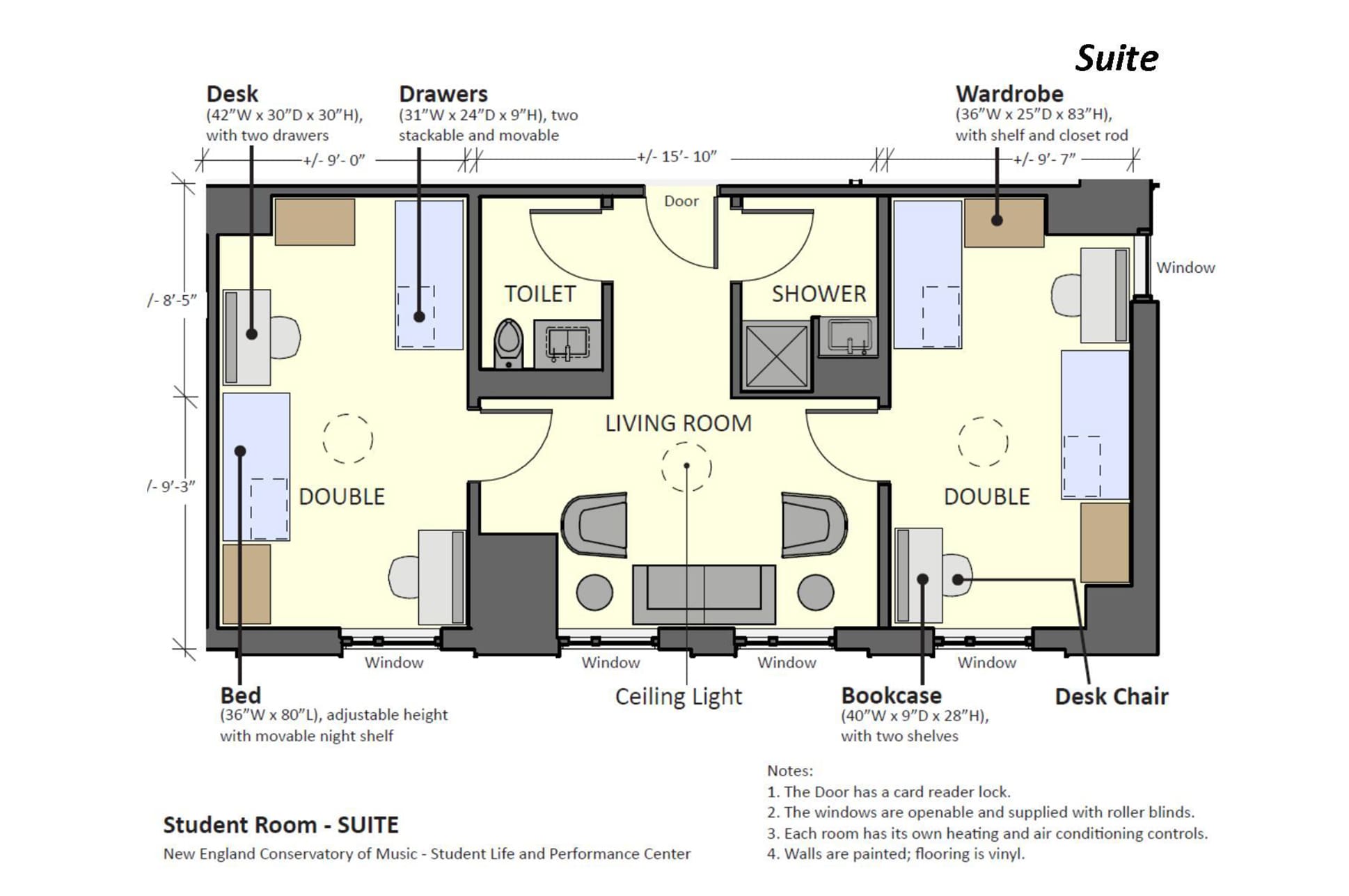
Image source: Web (Bing) / infoupdate.org (Web image (fair-use with source credit))
A sample room layout from university housing shows how zones fit together on paper. Use it as a template to sketch your own floor plan.
Step one is the bed. Decide risers, lofting, or low before anything else. Step two is the closet.
Hanging rod extenders and shelf dividers go in first. Step three is zone mapping. Sleep, study, clothes, and gear each get a spot.
Confirm the door opens fully and the window route stays clear. Step four is anchoring the floor. Heavy items like the mini-fridge, rolling bins, and storage ottoman sit lowest.
Step five is the nightly reset basket. Label one catch-all bin for loose items and empty it every night.
Rolling carts work great in the study zone if your desk lacks drawers. Our editorial research shows labeling bins before you fill them saves an hour of guessing later. The full workflow takes about four to six hours in a standard double room.
Dorm Organization Mistakes That Cost Time, Money, and Deposit
The biggest mistake is buying storage before you measure the room. An under-bed bin that's 12 inches tall won't fit a 10-inch clearance. Return trips waste your move-in window.
Ignoring the no-drill policy is the second one. Holes in walls mean deposit deductions. University housing offices inspect every room at move-out, and they check the walls and door frames.
Overbuying bins ranks third. Most students bring 30 percent more storage than their room can hold. That leaves you with empty containers stacked in a corner.
Buy the basics first and see what you actually need.
Passing on adhesive limits is fourth. Command hooks have weight ratings from 1 to 10 pounds. Overloading them is how your coat ends up on the floor at 2 AM.
Fifth is skipping the door hinge check. Over-door organizers work great until the door won't close. Confirm the hinge clearance before you hang anything.
Humidity is the quiet assassin. Adhesive strips lose their grip on humid walls. Press them firmly and wait 24 hours before hanging anything heavy.
Residents who measure first skip nearly all of these.
Dorm Organization FAQ: Final Answers for Common Setups
Here are quick answers for the setups we hear about most.
How much under-bed clearance does a standard Twin XL have?
Standard Twin XL beds sit 12 to 14 inches above the floor with a typical metal frame. Measure yours anyway, since frame styles vary. Shallow bins and vacuum bags fit best.
Risers add 4 to 6 inches of extra height.
What's the best way to organize a shared dorm closet?
Split the rod by zone, not by pile. Give each person a clear section of the hanging rod. Use shelf dividers to separate folded items.
Color-coded bins eliminate the "whose is this" problem entirely. Hanging rod extenders add a second level for shorter items.
Can I hang things on the wall if drilling is banned?
Yes. Use adhesive hooks, over-the-door organizers, and tension rods instead. Adhesive strips work best on smooth painted walls but fail on cinderblock.
Tension rods fit inside closet frames to create instant shelf space. For textured surfaces, stick with over-door and tension systems.
How do I keep my dorm room from getting cluttered?
Keep a labeled catch-all basket for loose items and empty it nightly. Do a 10-minute weekly reset, putting everything back in its zone. Review your storage every month and donate anything you haven't touched.
Less stuff means less mess.
What should I buy before move-in versus after seeing the room?
Bring only essentials and your measured floor plan. Peek at the room layout, check the closet size, then shop. Many campus towns have big-box stores near campus for move-in-day purchases.
Loft kits and risers depend on what the bed looks like in person.