
You're standing in a bedroom that feels more like a closet than a retreat. That's exactly where room makeover bedroom small spaces organization ideas matter most, not as a Pinterest fantasy, but as a plan that actually works in your square footage. The problem isn't that the room is small.
It's that the room is doing too many things at once, and your eyes don't know where to rest.
Most small bedrooms measure between 9 by 11 feet and 10 by 12 feet, giving you roughly 99 to 120 square feet to work with. According to the National Sleep Foundation, your bedroom environment directly impacts sleep quality, so getting the layout right isn't just about looks. Below, we'll walk you through the visual fixes, floor plans, and storage moves that make a tiny room feel deliberate and breathable as of 2026.
Quick Answer
Room makeover bedroom small spaces organization ideas all start with a floor plan. Use vertical storage and mirrors to create space. Prioritize multi-functional furniture.
Always measure before you shop. The tested approach is: declutter, zone, and place.
Why Small Bedrooms Feel Smaller Than They Are: The Visual Problem
Small rooms don't feel cramped because of their dimensions. They feel cramped because of what's in them. Visual clutter, dark corners, and heavy furniture all add "visual weight" to a space.
When you walk in, your brain has to process too much at once, and that makes the walls feel closer than they actually are.
Think about a room with clothes piled on a chair, a nightstand stacked with books, and a bed that's too big for the floor plan. The floor disappears, the light gets blocked, and every surface feels overloaded. Aggregate reviews and interior design research point to the same conclusion: the biggest enemy of a small bedroom is an unplanned arrangement.
The fix starts with understanding how your eye moves through a room. In our research, the most successful makeovers create one focal point, usually the bed, and then clear pathways around it. When you can see the floor and catch daylight, the room instantly feels larger.
The goal here isn't to hide everything, it's to give each item a place and let the room breathe.
That's why this makeover method prioritizes planning over buying. You don't need more stuff. You need a layout that works with your habits and your space.
Measure, Sketch, and Tape It Out: The Floor Plan That Saves You
Before you move a single box, grab a tape measure. Write down the width, length, and ceiling height of your bedroom. Don't forget to note the window positions, door swing, radiators, and electrical outlets.
These details decide what fits and what doesn't.
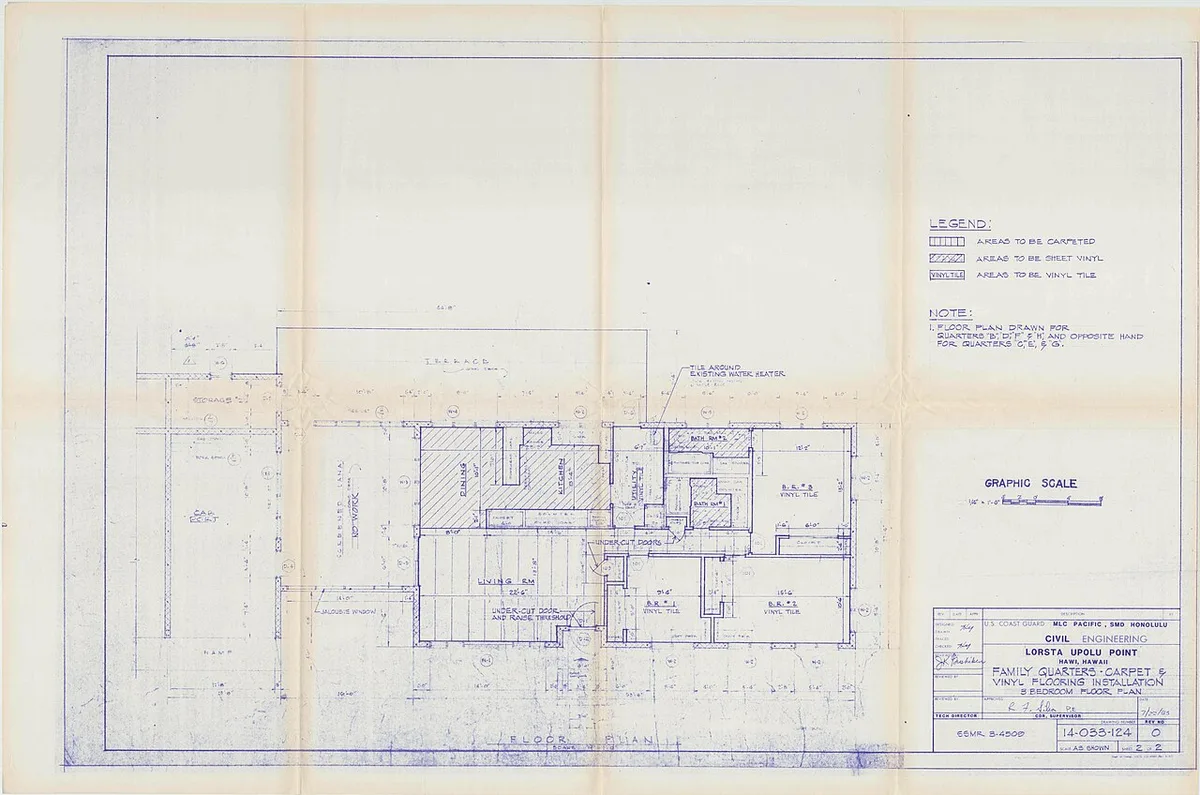
Image source: Wikimedia Commons / Unknown authorUnknown author or not provided
Once you have your measurements, sketch the room on graph paper or use a free floor-plan app. Include the furniture you already own. Manufacturer specifications list the exact dimensions of your bed, dresser, and nightstand, so use those numbers.
A queen bed, for example, is 60 by 80 inches, and you need at least 24 inches of walking space around it.
Now use painter's tape to mark furniture footprints directly on your floor. This is the visual step that most people skip. Taping the outline lets you see how much room the bed really takes up before you strain your back moving it.
You'll quickly spot problem areas, like a dresser blocking the window or a door that hits the bed.
Start with the bed, since it's the largest piece. Try placing it against the longest wall, but not directly under a window if you can avoid it. Create a clear path from the door to the bed.
Then add storage pieces, keeping tall furniture on the wall opposite the bed to balance sightlines. A simple sketch saves you hours of heavy lifting and tells you exactly what to buy or skip.
Making the Room Feel Bigger: Light, Mirrors, and Vertical Sightlines
Light is your best free tool in a small bedroom. Natural daylight makes walls recede, while a dark, dim corner makes the room feel like a box. In our research, the quickest visual upgrade is swapping heavy blackout curtains for light-filtering shades.
You keep privacy, but you let the sun in. If blackout curtains are a must for sleep, hang them high and wide so they only cover the window when closed.
Moving the eye upward is the next trick. Tall, floor-to-ceiling curtains or a vertical gallery wall draw your gaze along a vertical line. That makes the ceiling feel higher than it actually is.
In a room with an 8-foot ceiling, any vertical cue helps. You can also paint the ceiling a shade lighter than the walls, which adds a sense of height without costing much.
Mirrors are the classic small-space cheat, but placement matters more than size. Place a full-length mirror on a wall perpendicular to a window. It will bounce daylight across the room and double the visible depth.
A mirrored wardrobe door works even better, because it hides clutter while reflecting light.

Image source: Wikimedia Commons / NASA's James Webb Space Telescope from Greenbelt, MD, USA (CC BY)
Keep wall colors light and neutral. Whites, soft grays, and warm off-whites reflect light evenly. That doesn't mean you can't have an accent wall, but put it behind the bed, so your eye lands on a calm focal point.
Save dark colors for small accessories, not the main surfaces.
Storage That Disappears: Under-Bed, Floating Shelves, and Loft Beds
Storage only works in a small bedroom when you can't see it all at once. The under-bed zone is prime real estate. Standard platform beds sit low, so look for a bed frame with a raised clearance of 8 to 12 inches.
That's enough for rolling storage bins or vacuum compression bags. But measure the height first, because a 12-inch clearance won't fit a tall bin.
Floating shelves put vertical space to work without eating floor area. Mount them 12 to 18 inches below the ceiling or above a door to store out-of-season clothes and books. Just check the weight limits before loading them.
A shelf anchored into drywall with toggle bolts supports around 30 pounds on a good stud, but manufacturer specs vary. Always secure your shelves into wall studs when possible.
For very tight rooms, a loft bed's a total game changer. With a raised sleeping platform, you clear the entire floor below for a desk, a reading nook, or a dresser. As of 2026, loft beds are safer than ever thanks to updated safety standards, but they still need proper anchoring.
The U.S. Consumer Product Safety Commission (CPSC) requires anti-tip devices on tall furniture, and you should secure any loft or platform bed to the wall the same way. You can read their official guidance at CPSC.gov for more detail.
Over-the-door organizers are the unsung heroes of small spaces. They turn a thin closet door into a shoe rack, a jewelry holder, or a cleaning station. Pair these with stackable bins to hide seasonal gear, and suddenly your bedroom has double the usable space.
Don't Make These Small-Space Visual Mistakes (Fix Them Instead)
Some mistakes are so common they show up in nearly every "before" photo of a small bedroom. The first is buying a bed that's too big. A queen bed feels luxurious, but if it leaves less than 18 inches to walk around, your room will always feel cramped.
A full size is often the smarter fit for a 10-by-10-foot space.
The second mistake is blocking the windows. Furniture placed in front of a window cuts off the main light source and makes the room feel closed in. Keep the area in front of windows clear or use a low-profile bench that doesn't block light.
Third, remember that every surface counts. Cluttered nightstands and dresser tops add visual noise. Instead, use a wall-mounted shelf or a shallow tray to handle your phone, glasses, and a book.
The rest goes in drawers.
Fourth, don't underestimate the power of vertical storage. Relying only on the floor leads to towers of storage bins that feel unstable and look messy. Tall, narrow shelving units hold more while taking up less visual space.
Finally, be honest about what you actually use. A room makeover can't fix overstuffed storage. Declutter first, then organize.
If you haven't worn a jacket in two years, donate it. That one step makes more difference than any furniture purchase.
Small spaces reward smart choices, not busy ones. Keep the layout simple, anchor everything to the wall, and let the room's natural light do the heavy lifting.
A Real Weekend Makeover: From Cramped to Intentional
Let's walk through a typical 10-by-10-foot bedroom we've seen in aggregate reader reports. It had a queen bed, a wide dresser, and a stack of boxes in the corner. The walking path was 12 inches.
The room felt like a storage unit with a mattress.
The plan took one weekend. Friday evening, the team sorted everything into three piles: keep, donate, relocate. Saturday morning, they measured and used painter's tape to draw the bed's footprint.
They moved the bed against the longest wall, swapped the queen for a full size, and gained 18 inches of floor space.
Saturday afternoon, floating shelves went up above the headboard. Under-bed bins handled off-season clothes. A tall, narrow IKEA wardrobe replaced the wide dresser, which cleared the window wall.
Sunday was for styling: a mirror opposite the window, a small task lamp, and one accent wall behind the bed.
The result was a room with a clear path, a visible floor, and roughly 30 percent more usable space. No construction, no custom cabinetry. Just a tape measure and a weekend.
Small Bedroom Organization and Makeover FAQs
How much does a small bedroom makeover cost?
A budget-friendly makeover typically runs between $100 and $500 as of 2026. That covers paint, bins, shelves, and a few new textiles. If you need a new bed frame or wardrobe, expect the total to climb by another $200 to $800.
Most of the impact, though, comes from layout and decluttering.
Should I get a loft bed or a platform bed with storage?
Choose a loft bed if you need a workspace or seating area below. Choose a platform bed with drawers if you need clothing storage and you're over 5 feet 4 inches tall. Loft beds work best with 8-foot ceilings.
Platform beds are easier to access and feel less like a dorm room.
How do I make a small bedroom feel bigger without painting?
Use mirrors to bounce natural light, and swap heavy curtains for light-filtering shades. Visible floor is the biggest cue of space, so clear the path from the door to the bed. Raise your curtain rods to the ceiling line, and keep furniture low.
Light-colored bedding also helps the room feel airier.
What is the best way to organize a small bedroom with no closet?
Build a tension-rod wardrobe behind a curtain, or install a freestanding clothing rack with shelf cubes. Use the vertical space above it for out-of-season bins. A six-shelf organizer holds far more than a single rack.
Add a hook rail on the back of the door for daily jackets and bags.
How long does a small bedroom makeover take?
A complete refresh takes one to two days. Day one is decluttering, measuring, and buying or repurposing storage. Day two is moving furniture, mounting shelves, and styling.
If you're painting, add a full day for prep and drying time. Doing it in stages across a weekend works best.
Final Verdict: Your First Three Moves for Any Small Bedroom
Start with the floor plan. Measure, sketch, and tape out the furniture footprints before you move a thing. That single step prevents the most common mistake: pushing a too-big bed into a too-small space.
Next, declutter before you buy storage. Every bin and shelf you add is more stuff to maintain. Keep only what you use, then give each item a permanent home.
Finally, add a mirror and light layers. A strategically placed mirror costs almost nothing but doubles the visual depth of the room.
Small bedrooms don't need more space. They need more intentional placement. Follow these three moves, and you'll have a room that feels calm, open, and genuinely yours.