
Your space isn't too small. Decluttering tips for small spaces start with the same honest admission: storage bins don't fix overflow, they just tidy it up. As of 2026, apartments and tiny homes keep getting smaller, so every square inch has to justify itself.
Princeton University research shows that visual clutter actively competes for your attention, which is why a messy room feels mentally heavy. The fix isn't buying more organizers. It's a step-by-step workflow that forces harder decisions about what you actually need.

Image source: Bing (Web (fair-use with source credit))
Quick Answer
Decluttering tips for small spaces work best when you work in micro-zones, not whole rooms. Empty one shelf or drawer. Sort items into keep, donate, trash, and unsure.
Store only what earns its place. Rebuild using the Container Concept. Do this for 15 to 45 minutes daily.
Why Small Spaces Clutter Faster (and Why More Bins Won't Fix It)
Small spaces clutter faster because they have less surface area to absorb the mess. In a large house, a pile of mail can sit on a hallway table for days without blocking anything. In a studio, that same pile lands on the kitchen counter, the only usable workspace.
Proximity turns minor clutter into friction, and friction shows up instantly.
Here's the trap: adding storage before editing just hides the problem. Bins and shelves don't force decisions, so they don't reduce the volume. You've organized your way into the same state, just with better labels.
The shelves fill up, the drawers fill up, and every surface stays busy.
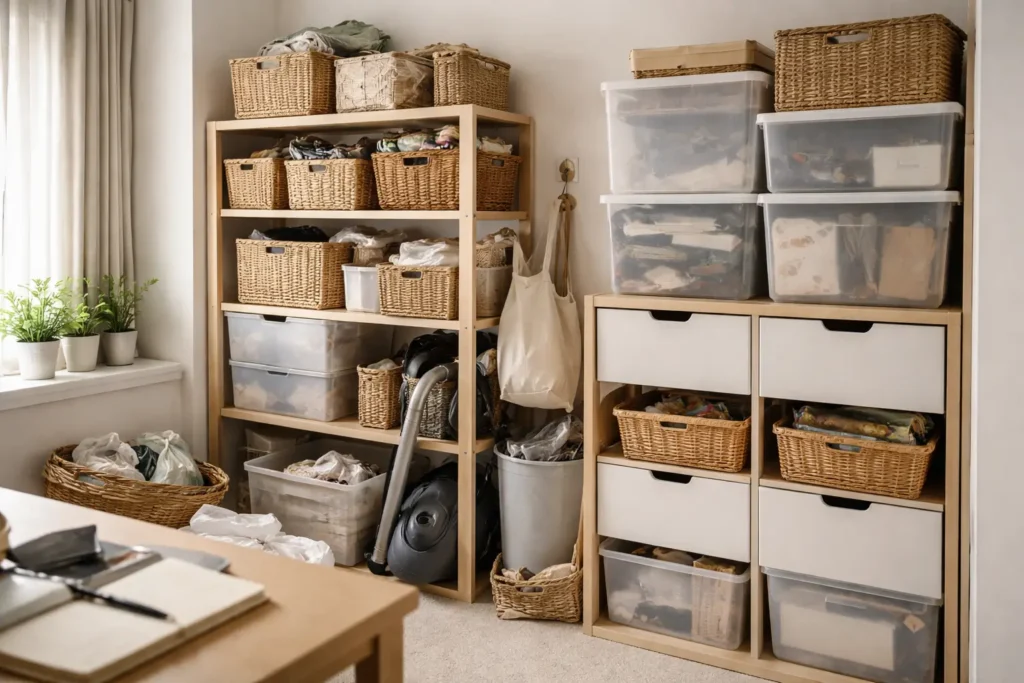
Image source: Bing (Web (fair-use with source credit))
Research from Princeton University shows that visual disorder raises cognitive load. You feel it the moment you walk in the door. That heaviness isn't imagination.
It's your brain processing too many objects at once. The goal is to get the volume down first. Organization comes second.
The Decision Tree: Match Your Space Type and Clutter Category to the Right Move
Your approach changes based on two variables: your space type and the clutter category you're facing. The right move depends on the situation, so there's no single master plan that works for every room.
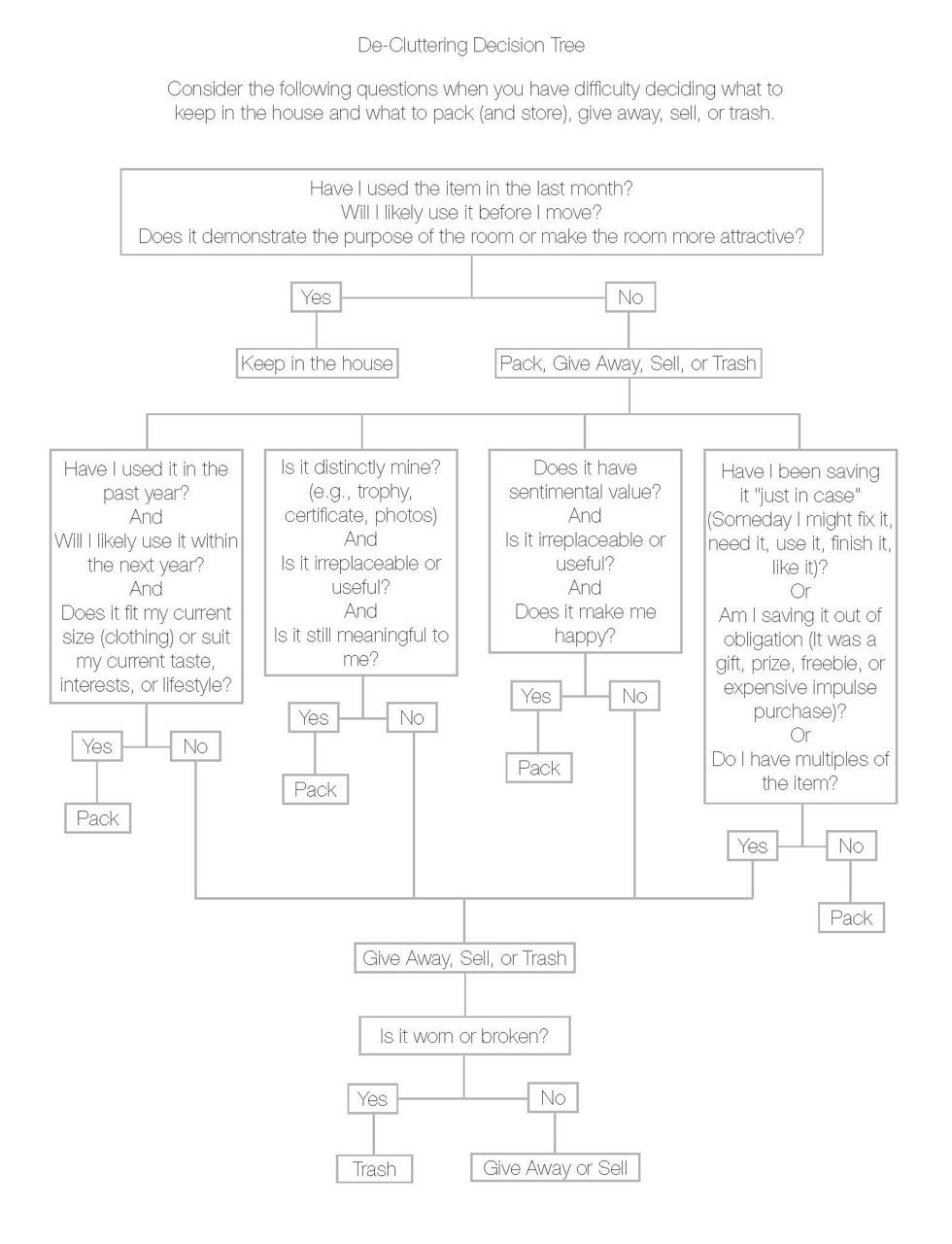
Image source: Web (Bing) / ca.pinterest.com (Web image (fair-use with source credit))
Space Types
- Studio renter: you need to separate sleep, work, and living without walls.
- Dorm student: you need temporary, non-damaging storage you can move in minutes.
- Van or RV dweller: every item must serve a living function.
- Small-family home: you're managing high-volume categories like toys and outgrown clothes.
Clutter Categories
- Daily essentials get prime real estate.
- Seasonal gear rotates to high shelves or under-bed bins.
- Sentimental items get one capped container.
- "Just in case" piles get a 30-day box.
Decision Branches
| Condition | Recommended Move |
|---|---|
| Daily essential | Keep it in an open, easy-to-reach spot |
| Seasonal | Store vertically, out of the main path |
| Sentimental | If it doesn't fit the cap, photograph it and let it go |
| "Just in case" | Box it, date it, revisit in 30 days |
| Unsure after 30 days | Donate the whole box without looking |
The 4-Step Micro-Zone Workflow That Clears Any Tiny Space
The fastest way to clear a small space is to stop trying to do the whole room at once. A micro-zone is one drawer, one shelf, or one corner. Each zone takes 15 to 45 minutes.
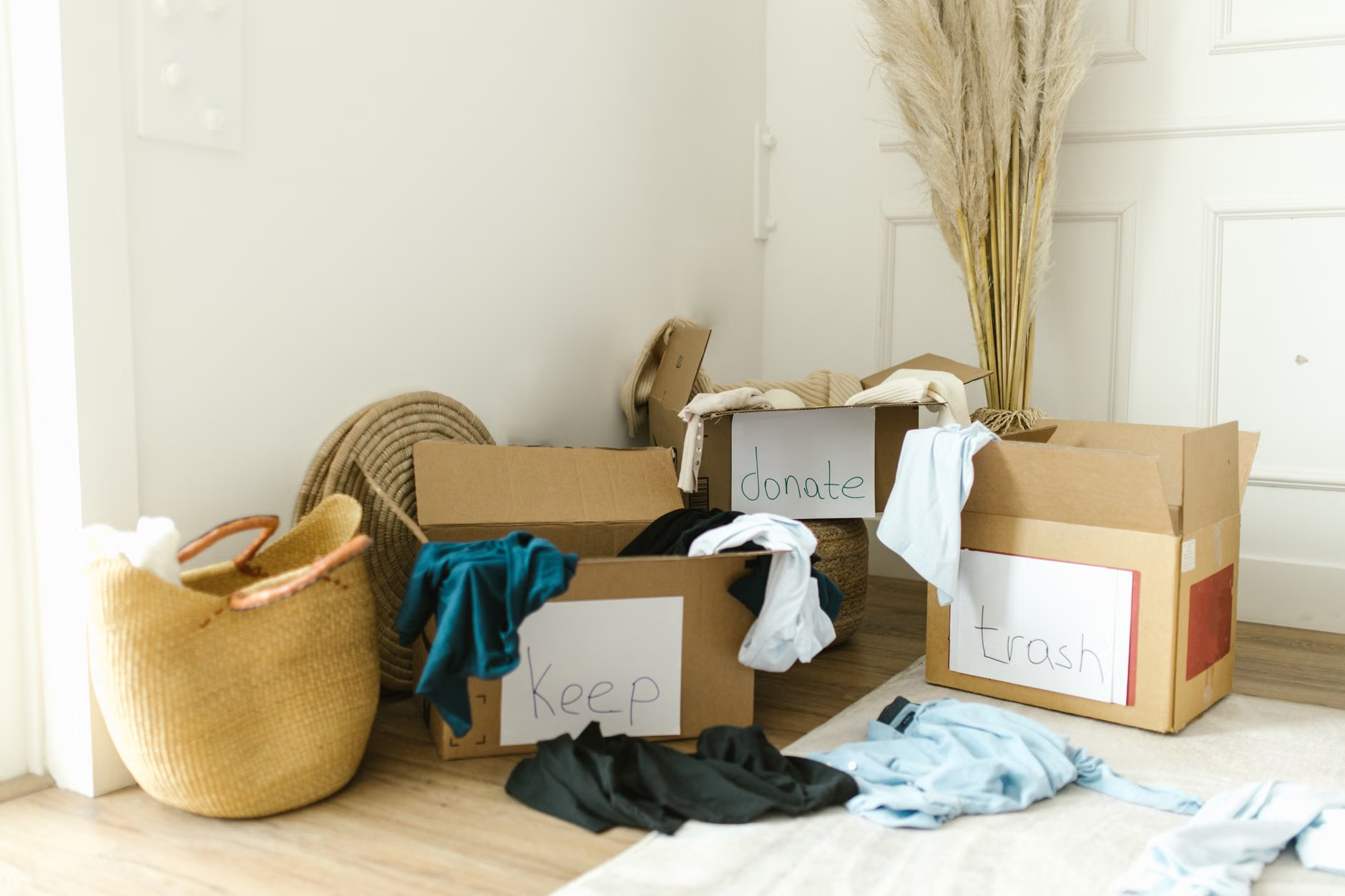
Image source: Pexels / RDNE Stock project (Pexels License)
Step 1: Empty and Wipe Down
Take everything out. Every single item. Now clean the empty surface.
This resets the zone completely.
Step 2: Sort Into Keep, Donate, Trash, or Unsure
Make three piles and one box. The keep pile is for daily use. The donate pile leaves the house.
The trash pile goes in the bag immediately, and the unsure pile goes into the 30-day box.
Step 3: Relocate Non-Negotiables to Vertical or Hidden Storage
Daily items stay in the zone. Seasonal gear moves up. Use wall-mounted shelves, over-door hooks, and under-bed bins to free up floor space.
If it's out of sight, it still needs a clear home. Label everything so it stays that way.
Step 4: Rebuild With the Container Concept
Pick a container. It can be a basket, a drawer, or a shelf. Keep only what fits inside.
When the container fills, something comes out. This keeps the zone balanced long after the session ends.
That's the whole workflow. Repeat it one micro-zone at a time until the space feels like it's working for you instead of against you.
What Stays, What Goes: The 30-Day Box and Other Smart Deciders
The hardest part of decluttering isn't the physical work. It's the decisions. The 30-day box solves the biggest one: "What if I need it later?"
Grab a cardboard box or a bin. Put everything you're unsure about inside. Label the box with today's date, plus 30 days from now.
Store it somewhere out of sight. When the date rolls around, open it. If you haven't needed any of it, donate the whole box without looking through it again.
Here are a few other deciders that work well in small spaces:
- The one-year rule. If you haven't worn or used it in the past 12 months, let it go. Exceptions apply to seasonal gear and formal wear.
- The duplicate rule. Keep the best one, donate the rest. You don't need three rice cookers in a studio.
- The "would I buy it again?" test. If you wouldn't spend money on it today, it's not earning its square footage.
- The photo trick. Snap a picture of sentimental items before donating them. The memory lives on. The clutter doesn't.
7 Decluttering Mistakes That Make Small Spaces Worse
Even good intentions can backfire in a tiny space. These are the mistakes I see most often, and they're all avoidable.
- Buying storage before decluttering. Bins and baskets just organize the clutter. Edit first, then shop for containers.
- Decluttering an entire room in one sitting. You'll burn out and make rushed, regretful choices. Stick to micro-zones.
- Starting with sentimental items. Those are the hardest decisions. Build momentum with an easy catch-all drawer or bathroom cabinet first.
- Forgetting the vertical plane. Floor space is precious. Look up. Walls, door backs, and closet rods are untapped real estate.
- Keeping "just in case" items without a limit. Cap it at one small box per category. Life doesn't require a backup for every single thing.
- Skipping the maintenance rule. The one-in-one-out rule only works if you actually follow it. Make it a habit, not a suggestion.
- Letting the donate pile linger. If it sits in a corner for weeks, it re-enters your mental space. Drop it off within 48 hours.
Zone-Specific Quick Wins: Closet, Kitchen, Entryway, and Desk
Each micro-zone has its own rhythm. Here's the fastest path for the four spaces that clog up first in small homes.
Closet
Pull everything out. Sort by category, not by outfit. You'll find five identical black tees.
Keep the best two, donate the rest. Store off-season items in clear bins on the top shelf. Use slim, non-slip hangers to double your hanging capacity.
If you haven't worn it in a year, it goes.
Kitchen
Clear the counter first. Small appliances that get used weekly belong in a cabinet, not on the counter. Keep only your daily-use tools within arm's reach.
Ditch duplicates. One spatula, one measuring cup set, one can opener. Check expiration dates.
Toss anything past its prime.
Entryway
This zone collects shoes, bags, and mail within hours. Add a wall-mounted hook rail for coats and bags. Use a shallow tray or bowl for keys and wallets.
Install a slim shoe rack that fits under the hooks. Give every person in the home one shelf. The rule is simple: if it doesn't fit on your shelf, it needs to go.
Desk
Paper piles grow fast in small spaces. Create a filing system with three folders: action, read, and archive. Shoot for a clear desktop at the end of each day.
The one-touch rule works well here: handle a piece of paper once, then file, act, or toss it.
Quick Reference
| Zone | Biggest Culprit | 10-Minute Fix |
|---|---|---|
| Closet | Excess clothing | Remove off-season items to top-shelf bins |
| Kitchen | Counter appliances | Move weekly-use items into cabinets |
| Entryway | Shoes and mail | Add hooks and a tray for daily carry |
| Desk | Paper pileup | Sort into action, read, and archive folders |
How to Keep It From Coming Back: Maintenance Rules That Stick
A decluttered space doesn't stay clean on its own. It needs small, repeatable habits. The payoff is that these habits take minutes, not weekends.
The one-in-one-out rule is the backbone. When you bring something new home, remove something similar. New shoes mean an old pair gets donated.
New mug means an old one leaves. This keeps your volume stable without constant big purges.
Schedule a daily reset. Set a timer for five minutes each evening. Return stray items to their homes.
Flatten couch blankets, clear the kitchen sink, reset the entryway. This is maintenance, not cleaning. It prevents small messes from compounding.
Use a monthly micro-zone sweep. Pick one drawer or shelf on the first of the month. Spend 15 minutes editing it.
You'll catch the paper pileup, the expired beauty products, and the mystery cables before they spread.
Finally, respect your container limits. Those bins, shelves, and drawers you set up have an official capacity. When a container is full, that's your signal to edit, not to buy another bin.
This simple boundary keeps your home honest for the long haul.
Frequently Asked Questions
How long does it take to declutter a small apartment?
Most small apartments take two to four weekends of consistent micro-zone sessions. Each session runs 15 to 45 minutes. Working one shelf or drawer at a time prevents burnout and keeps the space livable throughout the process.
What should I do with items I'm unsure about?
Put them in a clearly labeled 30-day box. Store it out of sight. Revisit it after a month.
If you never needed anything inside, donate the box without opening it. This removes the guilt while protecting you from real regret.
Should I buy storage bins before decluttering?
No. Always edit first, then purchase containers. If you buy bins first, you'll organize the clutter into a prettier version of the same problem.
After you've removed excess, buy containers only to fit what remains.
How do I declutter sentimental items in a small space?
Limit yourself to one small container per category. Keep only the items that genuinely matter. Photograph the rest before donating.
The memory stays with the photo, while the physical object stops consuming your limited space.
Can I declutter a shared small space with someone else?
Yes, but set boundaries first. Each person gets their own zone and their own container limits. Never sort someone else's belongings without asking.
Focus on shared spaces like the kitchen together, then divide the work. Respect each other's "keep" decisions and revisit disagreements after a week.