
There’s a moment in every small apartment where you stare at a room and realize it needs to be three rooms at once. Home office by day, guest bedroom by night, dining corner for Sunday suppers. That’s where multi-functional furniture ideas come in.
These aren’t dorm-room gimmicks. They’re serious solutions that let one piece do the work of two or three.
In our research, the average U.S. studio apartment is around 500 square feet, and tiny homes often fall between 100 and 400 square feet. Every square foot counts. The right convertible piece can free up half your floor space without a renovation.
Here’s how to choose and position them.

Image source: Web (Bing) / walmart.com (Web image (fair-use with source credit))
Why Your Space Needs Multi-Functional Furniture (and Why Visuals Actually Matter)
The biggest mistake people make? Buying furniture from photos. A sofa bed looks great in a staged catalog shot until you unfold it and lose the whole living room.
You need to see how pieces transform in real space.
That’s why visual thinking matters here. A Murphy bed folded shut looks like a sleek wardrobe. Open, it swings down and needs six feet of open floor.
A product image won’t show that. Only dimensions and layout planning do.
Start with your daily flow. Where do doors swing? Which walls have outlets?
Does sunlight matter? Multi-functional furniture only works when it fits your routines.
If you work from home, a disappearing desk is the priority. If you host guests monthly, a hidden bed is the priority. If you have kids, storage is the priority.
There is no universal pick. There is only the piece that matches your room.
These pieces are also a mental shift. You’re buying a bed, storage, and a work surface in one package. You trade some comfort or style for major space gains.
The Core Toolkit: 6 Workhorse Ideas That Transform a Room
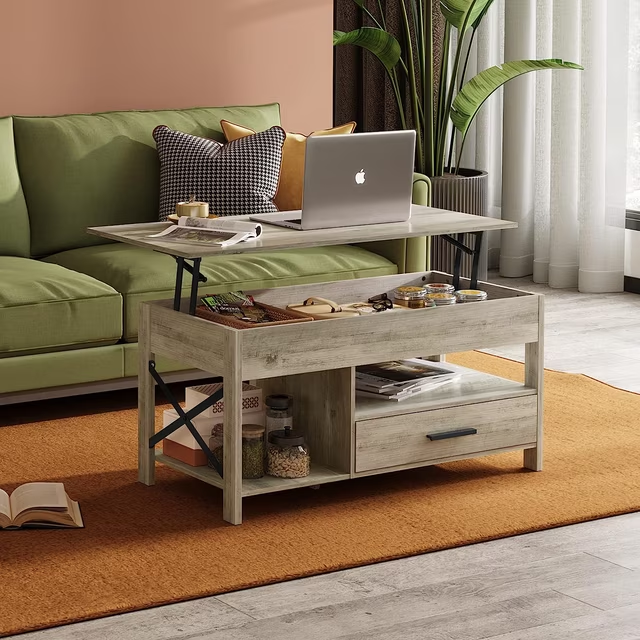
Image source: Bing (Web (fair-use with source credit))
Some multi-functional pieces are reliable workhorses. Start with these six.
| Piece | What it does | Best for | Price range |
|---|---|---|---|
| Murphy bed | Folds into a wall cabinet | Studios, home offices | $1,500–$4,000 installed |
| Lift-top coffee table | Raises to desk height, hides storage | Small living rooms | $150–$600 |
| Drop-leaf table | Folds to a slim console, expands for guests | Kitchens, studios | $200–$800 |
| Daybed with trundle | Sofa by day, two beds at night | Kids’ rooms, guest rooms | $300–$1,000 |
| Storage ottoman | Footrest, extra seat, and hidden bin | Any room | $100–$400 |
| Modular shelving | Mixes shelves, drawers, and baskets | Changing needs | $150–$700 |
If you’re starting small, get a storage ottoman first. It’s low risk, affordable, and useful immediately. The Murphy bed is the biggest commitment, but it delivers the most dramatic space savings.
The Visual Guide to Measuring Your Room Before You Buy
Before you order anything, measure like a designer. Don’t rely on eyesight. Use a tape measure and write everything down.
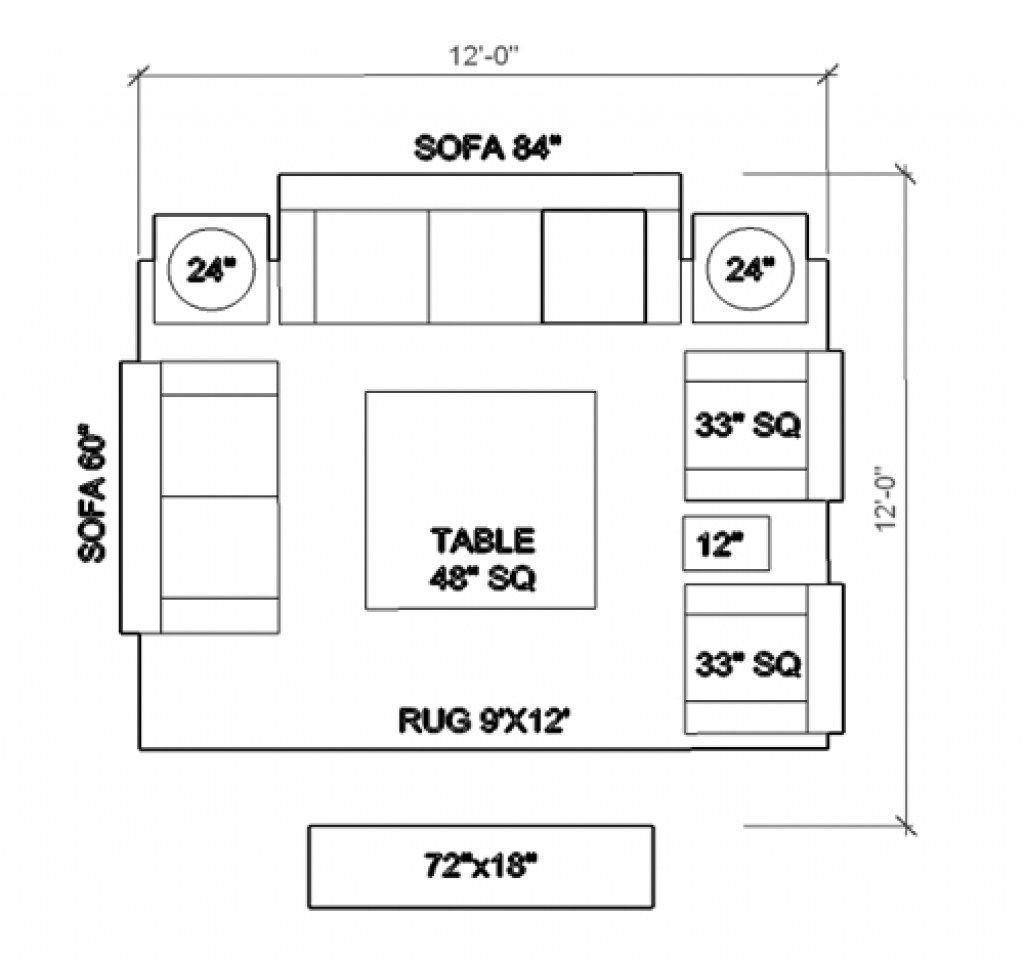
Image source: Web (Bing) / pinterest.com (Web image (fair-use with source credit))
- Measure the room’s length, width, and ceiling height. Many wall beds and tall shelving units need eight feet of clearance.
- Map clearance zones. A sofa bed needs 36 to 48 inches of open floor in front of it. A fold-down desk needs 30 inches of knee room.
- Check every doorway, stairwell, and elevator. Standard interior doors are 30 to 32 inches wide. Measure before delivery day.
- Locate wall studs with a stud finder. Murphy beds and tall shelving must anchor into studs, not drywall.
- Lay out the footprint with painter’s tape on the floor. You’ll instantly see if the piece blocks a walkway or eats the whole room.
This five-step check takes about 20 minutes. It has already saved plenty of people from expensive return fees and awkward hallway standoffs.
Sofa Bed vs. Murphy Bed vs. Daybed: A Side-by-Side Comparison
These three options solve the same problem: somewhere for guests to sleep. But they’re very different beasts.
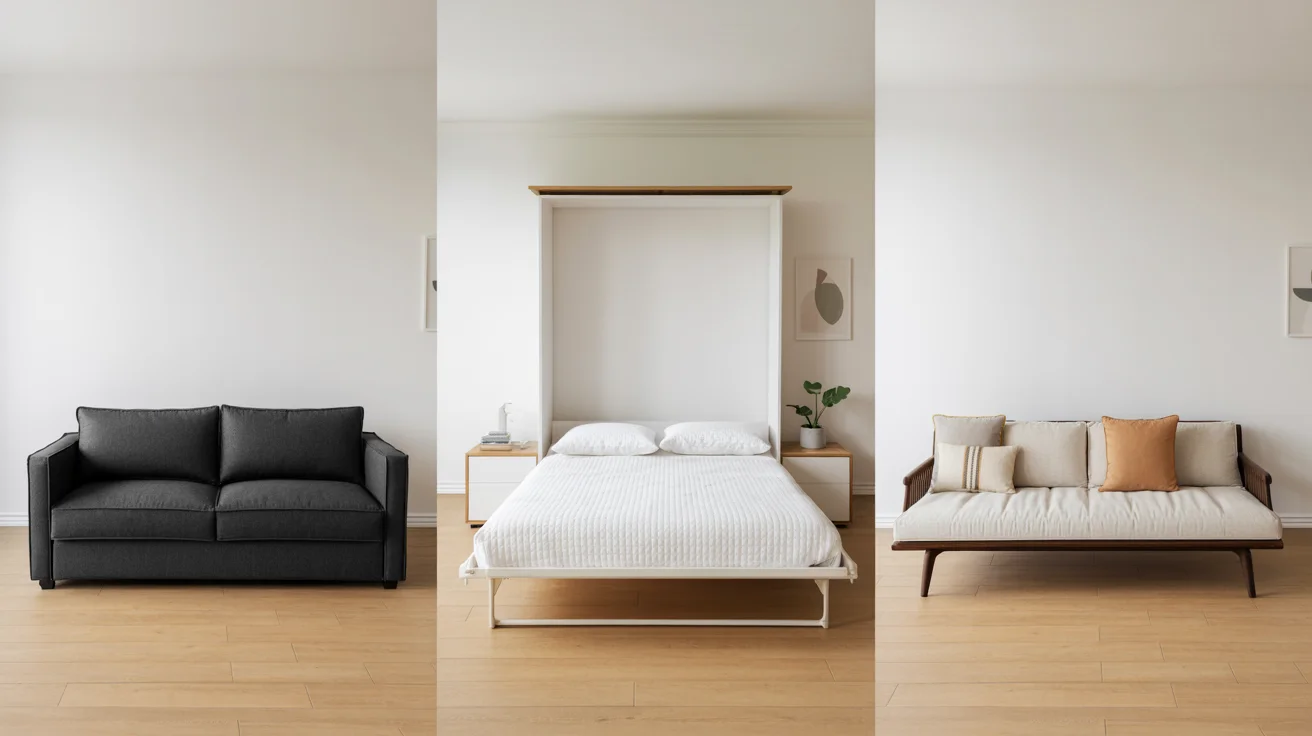
Image source: Web (Bing) / modishresidence.com (Web image (fair-use with source credit))
A sofa bed gives you a couch and a bed in one footprint. It’s the easiest to live with daily. The downside is the thin mattress.
Classic pull-out mechanisms feel like a metal bar across your back. Modern click-clack designs are better, but still not hotel-grade.
A Murphy bed gives you a real queen or full mattress on a solid frame. It sleeps better than any sofa bed. The catch is that it needs strong wall studs and open floor space when it folds down.
Store it away upright, and the room returns to normal.
A daybed with trundle looks like a sofa by day and sleeps one or two at night. The trundle mattress sits low, so it’s not ideal for older guests. For kids and teens, it’s perfect for sleepovers and play.
| Feature | Sofa Bed | Murphy Bed | Daybed + Trundle |
|---|---|---|---|
| Daily comfort as sofa | Excellent | Good (hidden in wall) | Excellent |
| Night comfort as bed | Fair | Excellent | Good |
| Floor space needed | Large footprint | Clear space when opened | Modest width |
| Price range | $400–$1,500 | $1,500–$4,000+ | $300–$1,000 |
| Best for | Living rooms, everyday seating | Home offices, guest rooms | Kids’ rooms, studios |
If you want the best night’s sleep, choose the Murphy bed. If you need daily seating first, choose the sofa bed. If you’re working with a tight budget, the daybed is your friend.
5 Visual Mistakes That Make Multi-Functional Pieces Fail
Even the perfect piece fails if you place it wrong. Here are the five most common visual and spatial mistakes we see.
1. Ignoring the swing radius. Convertible pieces have moving parts. Fold-down desks swing open.
Murphy beds rotate down. If that arc hits the coffee table, the setup is broken. Always account for the open position, not just the closed footprint.
2. Matching scale, not proportion. A huge storage ottoman overwhelms a small room. A tiny drop-leaf table looks lost in a large open plan.
Check from standing height and eye level, not just one angle.
3. Forgetting vertical space. Multi-functional furniture means going up, not just out. Tall shelving with baskets and wall-mounted desks use unused wall height.
That’s free space you’re already paying for.
4. Blocking natural light. A tall Murphy cabinet in front of a window darkens the room. The whole point is to make the space feel larger, not smaller.
Keep windows and light paths clear.
5. Skipping the test setup. Watch reviews that show the full conversion from start to finish, not just the final reveal. Real-world feedback reveals awkward transition steps that staged photos hide.
Avoid these five and your space will feel twice as large.
Real-Life Setups: Studio Apartments, Home Offices, and Kids’ Rooms
For a 500-square-foot studio, the goal is zones, not walls. A Murphy bed with an attached fold-down desk creates a sleeping zone that turns into a work zone by morning. Pull the bed down at 11 p.m.
Flip the desk up at 9 a.m. One piece covers two daily routines.
If a Murphy bed is too pricey, a daybed with a trundle works almost as well. It hugs one wall like a sofa. Guests get a real mattress on the trundle, not a sagging pull-out.
Kids and teens love this setup because it doubles as a sleepover hub.
Home offices need a different approach. A wall-mounted fold-down desk only needs 12 inches of depth when closed. Open it, and you’ve got a 24-inch-deep work surface with real legroom.
Pair it with a storage ottoman or a lift-top coffee table for extra workspace and hidden filing.
Kids’ rooms demand storage above everything. A platform bed with built-in drawers replaces both a bed frame and a dresser. A storage bench at the foot of the bed holds toys or out-of-season clothes.
Use modular shelving above the desk to keep the floor clear.
The visual lesson in every setup is the same: follow the daylight and keep the moving parts unobstructed. A room looks larger when the bed disappears into cabinetry and the desk folds flat against the wall. That’s why side-by-side photos of the open and closed states are so persuasive.
Safety, Maintenance, and Mechanism Care: Keeping Your Furniture Safe and Smooth
Safety starts with the wall. Anything tall or wall-mounted needs anchoring into studs. The U.S.
Consumer Product Safety Commission has documented tip-over incidents from dressers and shelving units. Anchor every piece taller than it is deep, including Murphy bed cabinets.
Before you buy used convertible furniture, check the CPSC recall database. Mechanisms wear out and get recalled. A quick search takes two minutes.
ASTM F2057 covers clothing storage unit stability, a useful benchmark for tall furniture.
Maintaining the mechanism is simple. Clean the tracks and hinges quarterly with a dry cloth. Apply a light silicone lubricant to moving joints.
Tighten screws and bolts every few months, since conversion motion loosens them over time.
Weight limits are real. A storage ottoman rated for 250 pounds will not survive a 350-pound person. Check the manufacturer label.
On sofa beds, respect mattress thickness limits. A mattress that’s too thick prevents the fold mechanism from closing correctly, which can cause permanent damage.
Upholstery care matters too. Vacuum fabric surfaces weekly to keep dust out of the hinges. Treat stains immediately to prevent them from setting into cushion foam.
Always use both hands during conversion. Most injuries from sofa beds and wall beds happen when people rush.
Frequently Asked Questions About Compact Living Furniture
What multi-functional furniture works best in a studio apartment?
A Murphy bed with built-in storage is the strongest all-rounder. It frees wall space when closed, offers a real mattress when open, and the cabinet doubles as shelving. A lift-top coffee table adds a desk and hidden storage without taking up extra floor.
Are sofa beds comfortable for daily sleeping?
Most are not. Sofa bed mattresses typically range from 4 to 6 inches thick, too thin for consistent spinal support. If you need nightly sleep, choose a daybed with a proper twin or full mattress, or invest in a Murphy bed that holds full-depth mattresses.
How much does a quality Murphy bed cost?
Expect to pay $1,500 to $4,000 for a quality wall bed with installation. That price covers a solid wood frame, hydraulic mechanism, and a real mattress. Budget models under $800 exist, but they often use cheaper pistons and thinner cabinets that wear out quickly.
Can I install a Murphy bed in a rental apartment?
Yes, but check your lease first. Most landlords allow it if you use studs and repair the holes before moving out. Alternatively, choose a freestanding wall bed system or a sofa bed to avoid drilling entirely.
Save the hardware kit and patch kit for move-out day.
How do I maintain a lift-top coffee table mechanism?
Clean the guide tracks quarterly with a dry cloth. Apply a light silicone lubricant to the springs and hinges. Tighten any loose bolts.
If the top wobbles, check the locking pins and adjust the leveling feet under the table base.