
You know the feeling. You clear your desktop on Sunday night, and by Tuesday it looks like a paper bomb went off. The pens have migrated, the cables are tangled, and you can't remember where you put the sticky notes.
It's not a discipline problem. It's a layout problem.
Organizing a small home office means making a few smart decisions in the right order. Measure first. Sort by use.
Choose furniture that matches your actual space and work style. Per ANSI/HFES 100 workstation standards, your desk should sit 28 to 30 inches high, with your monitor top at or just below eye level. Get those basics right, and the rest gets easy.
As of 2026, the most practical small office setups are the simplest ones. A clear desk. A defined home for every tool.
And a 10-minute reset routine that keeps it that way.
Quick Answer
Organizing a small home office starts with three moves. Measure your space first. Sort your stuff into keep, donate, and discard piles.
Then pick furniture that fits your room and work style. Use vertical storage to save floor space. Finish with cable management and good lighting.
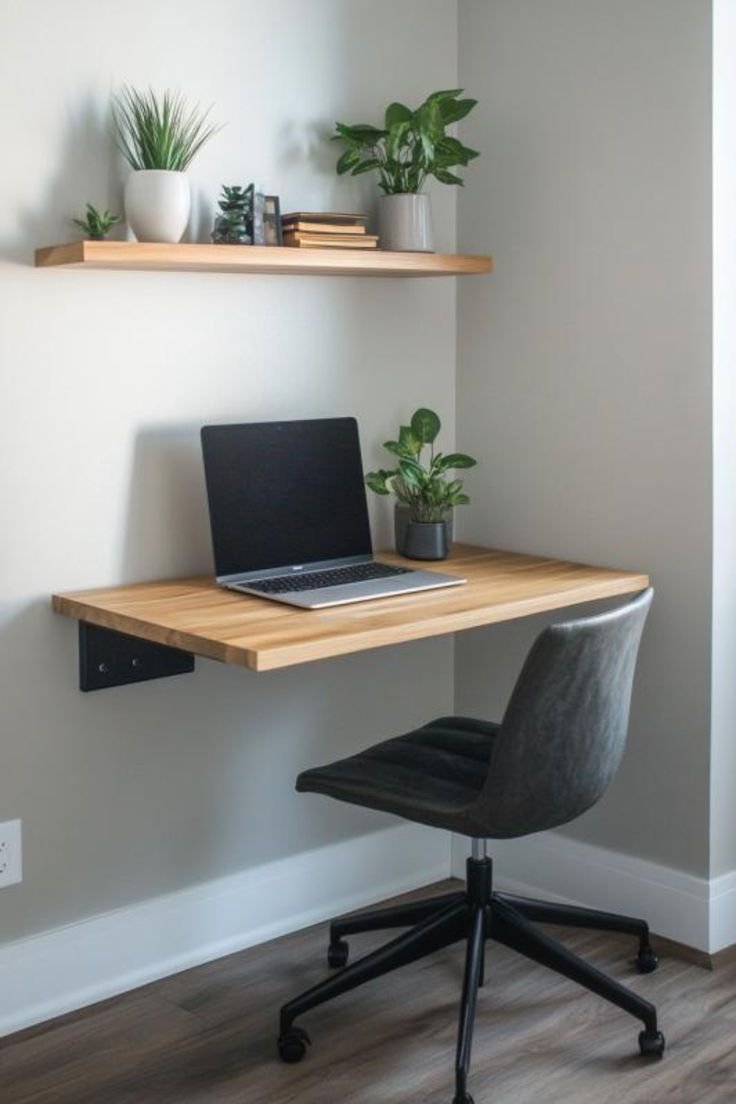
Image source: Web (Bing) / pinterest.com (Web image (fair-use with source credit))
5 Quick Decisions That Make or Break a Small Home Office
Before you buy a single bin or shelf, make five decisions. These choices shape everything else. Skip them and you'll waste money on furniture that doesn't fit or storage you never use.
1. Sort by use, not by category. Group items by how often you touch them. Daily-use gear like your keyboard, mouse, and notebook stays on the desk.
Weekly-use items like a hole punch or label maker go in a drawer. Monthly-use stuff like spare cables or old tax folders goes higher up or further away.
2. Measure first, buy second. Grab a tape measure and record your floor space, wall width, and ceiling height. Doorways matter too.
A desk that can't fit through the door is useless. Keep these numbers with you while shopping.
3. Plan your work triangle early. The work triangle connects your desk, your storage, and your waste bin. If those three points form a short, natural path, you'll move less and focus more.
4. Choose zones over furniture. Most people think in terms of desks and shelves. Real organizing works in zones.
A focus zone for your computer. An admin zone for paperwork. A supply zone for consumables.
Decide which zones you need before choosing furniture.
5. Prioritize light and cables from day one. Poor lighting strains your eyes. Messy cables make every future change harder.
Plan for a task light around 4000K to 5000K, and budget for cable trays or sleeves before you assemble anything.
These five decisions take about ten minutes. They'll save you hours of rework later.
Find Your Small Office Type: The 30-Second Space Audit
Every small home office falls into one of three types. Your type determines your layout, storage strategy, and desk shape. So let's figure out which one you've got.
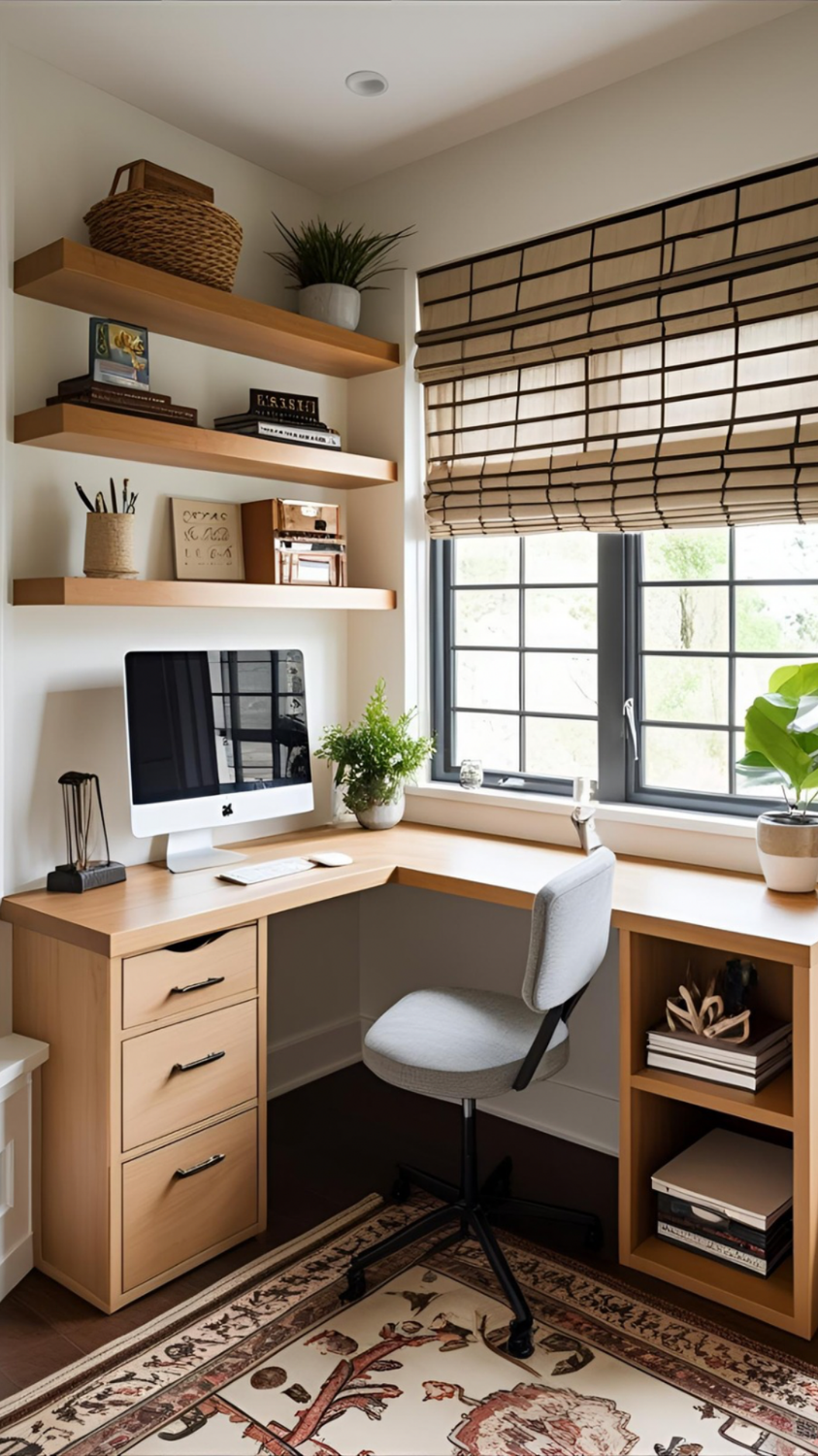
Image source: Web (Bing) / pinterest.com (Web image (fair-use with source credit))
Take a hard look at your room. Is it a dedicated space with a door? A shared section of a bedroom, living room, or kitchen?
Or a shallow nook, hallway, or closet conversion? Those are your three options, and each one needs a different approach.
| Space Type | Key Signs | Best Strategy |
|---|---|---|
| Dedicated room | Has a door, private, full walls | Use floor space freely, add closed storage for noise and clutter |
| Shared section | One corner of a larger room, no door | Define boundaries with rugs, screens, or furniture placement |
| Nook / alcove | Narrow width, weird angles, small footprint | Maximize vertical wall space, use fold-down or wall-mounted desks |
If you have a dedicated room, you can afford larger furniture and open shelving. You don't need to hide your workspace from anyone.
If you're sharing a room, visual separation matters. A tall bookcase can act as a room divider. Closed storage hides work clutter when the workday ends.
If you're working in a nook, forget anything that sits on the floor. Your friend is vertical wall space. Pegboards, floating shelves, and a wall-mounted desk will serve you far better than a bulky office chair and credenza.
The audit takes 30 seconds. The result tells you which branch of the decision tree to follow.
Decision Branch 1: Your Storage Strategy (Vertical vs. Hidden vs. Open)
Your storage strategy depends on one honest answer. How much visual clutter can you tolerate? Be real with yourself.
A glass-front cabinet looks lovely until your papers pile up behind it.
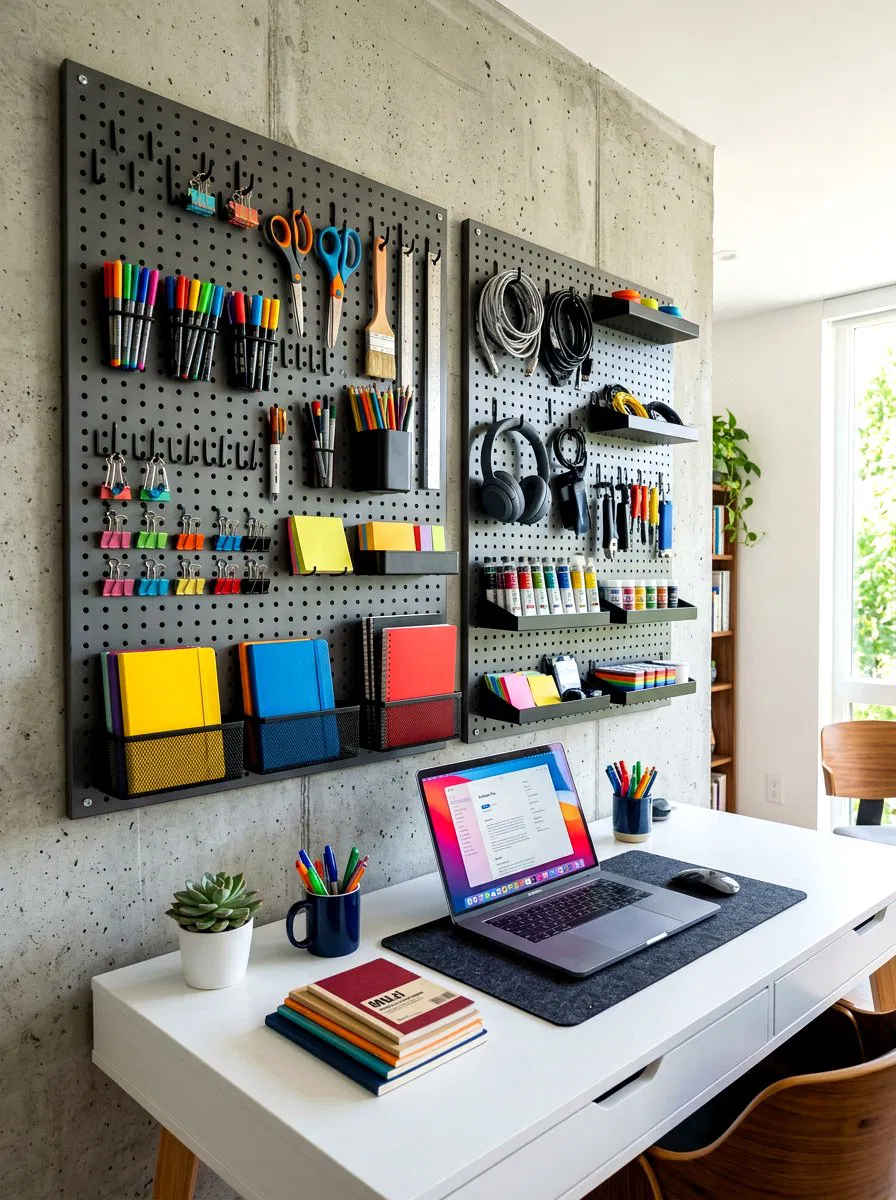
Image source: Bing (Web (fair-use with source credit))
If you're in a nook or a tight corner, go vertical. Wall-mounted shelves and pegboards use empty wall space that would otherwise go to waste. A 6-foot-tall shelf unit stores as much as a bulky credenza while taking up a fraction of the floor space. Manufacturer specifications indicate most wall shelves hold between 25 and 50 pounds per shelf, which is plenty for files, supplies, and small equipment.
If you share a room and need to hide work at day's end, choose hidden storage. Look for desks with built-in drawers, cabinets with closed fronts, or storage ottomans that double as seating. Closed storage keeps visual noise down. It also separates your work life from your home life, which matters when you live where you work.
If you have a dedicated office and like seeing your tools, open shelving works beautifully. It forces you to stay organized, because everything is visible. That's a feature if you're naturally tidy, and a trap if you're not. Aggregate reviews of open-shelf setups show one pattern.
People who maintain them love them. People who don't are constantly frustrated.
Here's a simple if/then rule. If you need to find things fast and don't mind visible organization, choose open. If you want a calm, blank visual palette, choose hidden.
If floor space is your rarest commodity, choose vertical.
Decision Branch 2: Your Desk and Layout (Measure Then Commit)
The desk is the heart of your small home office. Get this wrong and no amount of smart shelving will save you.
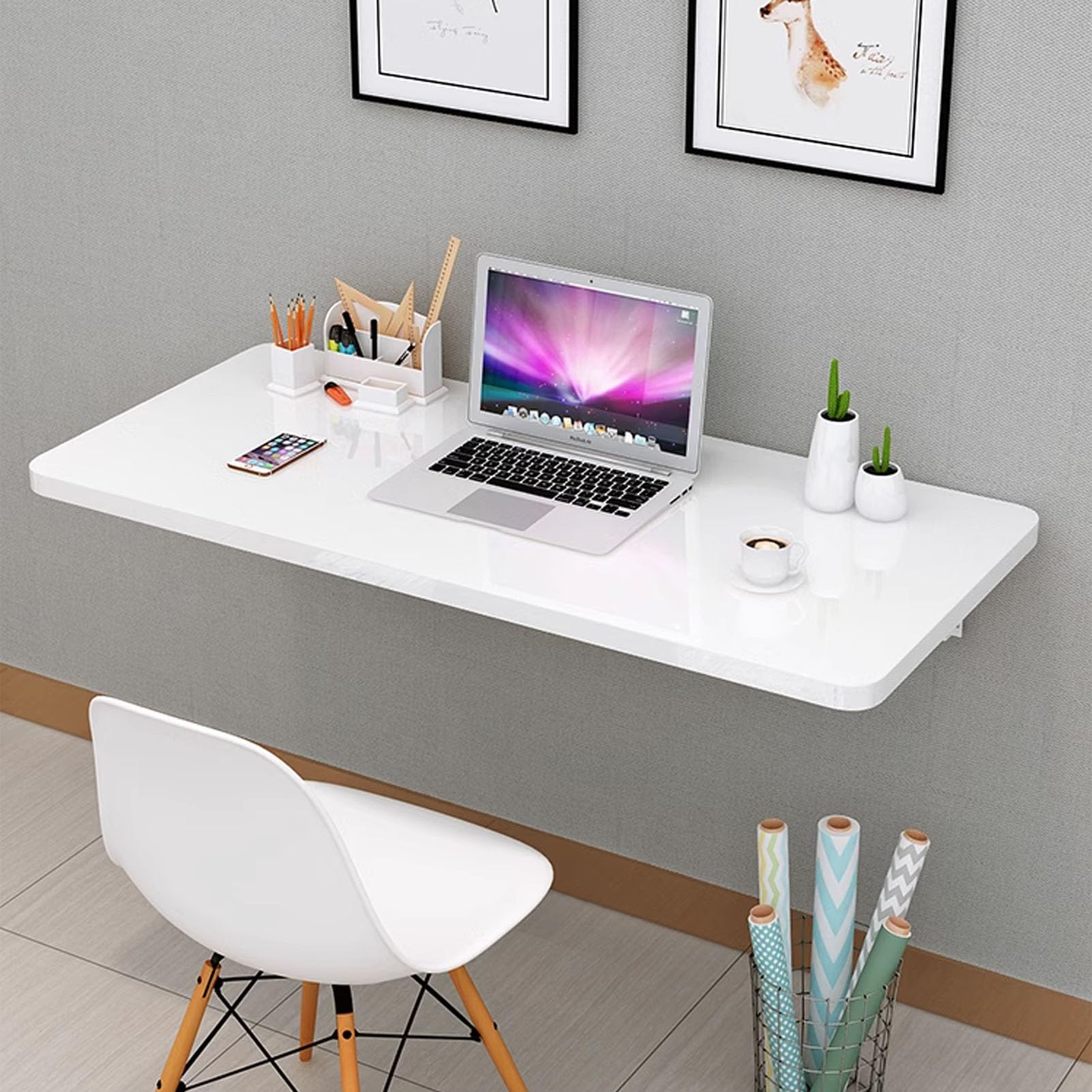
Image source: Web (Bing) / procoating.ee (Web image (fair-use with source credit))
Minimums matter. Per ANSI/HFES 100 workstation standards, your desk should be at least 24 inches deep so your monitor sits comfortably at arm's length. The standard height is 28 to 30 inches. If you're shorter or taller than average, look for an adjustable-height desk.
Your feet should rest flat on the floor, and your elbows should sit near a 90-degree angle.
If you have a dedicated room with floor space, choose a standard rectangular desk. Look for something sturdy, around 55 to 60 inches wide if it fits. That gives you room for a monitor, keyboard, and a small in-tray without feeling cramped.
If you're in a shared room, try an L-shaped desk or a corner unit. Corners are underused in small spaces. An L-shaped desk tucks into a corner and gives you two distinct work zones. One side for computer-focused tasks.
The other for paperwork or creative work.
If you're in a nook or hallway, go with a fold-down or wall-mounted desk. These have a footprint of zero when closed. When open, they offer enough surface for a laptop and a small lamp. Many include built-in shelves or a shallow cabinet for supplies.
Just check the weight rating before mounting, especially if you're using drywall rather than wood studs.
Position your desk where you'll actually focus. Our research on small office layouts shows that facing a blank wall works best for deep work. Facing a window is nice for natural light but invites distractions and screen glare. If you face a wall, place a small mirror or artwork at eye level to open up the space visually.
Cable management belongs in this decision, not later. Choose a desk with built-in grommets or add an under-desk cable tray from day one. Route power strips along the back edge to keep everything off the floor.
The "Work Triangle" Setup: Desk, Storage, and Waste Flow
Architects use the work triangle for kitchens. The same logic applies to your office. Your desk, your storage, and your waste basket form a triangle.
The shorter and clearer the paths between them, the smoother your workflow.
Start with your desk as the anchor. Place it first. Then position your storage within arm's reach or one swivel away.
If you have to stand up and walk across the room to grab a notebook, you'll stop using the system. The same goes for your waste and recycling bin. They need to sit within a step or two of your desk, not hidden under a pile across the room.
A good rule: your primary storage should sit within 3 feet of your desk. Your waste basket should sit within 5 feet. That's a short, natural motion.
You'll actually use it.
Set up the triangle in this order. Desk first, because it anchors the room. Then storage, positioned to the side of your dominant hand if possible.
Then waste and recycling, tucked under or beside the desk but still reachable.
Keep the paths between these points clear. A trip hazard in your work triangle is a broken ankle waiting to happen. Secure any cables along the desk legs or baseboards, and leave at least 36 inches of walking space in the rest of the room.
That's the standard for comfortable movement in a compact space.
If your room is a nook, the triangle becomes a straight line. Desk in the middle, storage on the wall above, waste bin tucked at floor level. It works just as well.
Test the triangle during a normal workday. If you keep reaching for something and it's not there, move it closer. Don't reschedule your habits to fit the room.
Adjust the room to fit your habits.
Common Mistakes That Sabotage a Small Office
Even with the right plan, people trip on the same five mistakes. Here's what to avoid.
Buying furniture before measuring. That gorgeous 70-inch desk will not fit your 68-inch alcove. Measure the room, the doorways, and the path to the room before you buy anything.
Ignoring cable management until it's too late. Tangled cables make cleaning harder, look messy, and create a genuine trip hazard. Add a cable tray and a few sleeves during setup. It takes fifteen minutes and saves you months of frustration.
Using the wrong light. A single overhead ceiling light gives you shadows and eye strain. Use a task light with a color temperature around 4000K to 5000K, and position it to avoid glare on your screen.
Over-storing things you never use. That box of old chargers from 2019? Recycle it. Storage should hold active tools, not guilt.
If you haven't touched something in six months, it doesn't belong in your small office.
Making it look pretty instead of functional. A styled shelf looks nice in photos. It won't help you find invoices, printer paper, or spare pens. Organize for how you actually work.
Let the aesthetic follow.
Your Daily Reset Routine (And Why It Matters More Than the Initial Setup)
The best-organized office in the world falls apart in a week without a reset routine. The good news? It only takes ten minutes a day.
The daily 10-minute reset. At the end of your workday, clear the desk surface. Return pens to their holder, files to their trays, and paper clips to their drawer. Wipe down the keyboard and monitor.
Push your chair in. Done.
Make it a habit. Tie it to something you already do, like shutting down your computer or making your evening tea. The routine sticks better when it's attached to an existing cue.
The weekly 15-minute tune-up. Once a week, do a deeper pass. Clear the in-tray. Sort any stray papers into action, file, or recycle.
Straighten your desk drawers. Check that cables are still organized. Restock supplies like sticky notes and printer paper.
That's it. Fifteen minutes on a Friday afternoon keeps your Monday morning calm.
Why this matters. A clean workspace reduces visual noise. Less clutter means fewer distractions and faster focus. The setup gets you started.
The routine keeps you going.
Frequently Asked Questions
How do I organize a very small home office on a budget?
Use what you already own first. Repurpose a sturdy table as a desk. Use wall shelves for storage.
Basic desk organizers cost less than $15. The key is measuring your space and matching your arrangement to how you actually work. No need to buy everything at once.
What's the best desk for a small home office?
A wall-mounted or fold-down desk is best for tight nooks. A slim rectangular desk works well for dedicated rooms. A corner desk works great in shared spaces.
Look for a depth of at least 24 inches and a height between 28 and 30 inches. Measure your room first.
How do I hide cables in a small home office without drilling?
Use adhesive cable clips and a cable sleeve. Stick the clips along the back edge of your desk and run cables through them. Secure the sleeve to the underside of the desk using strong double-sided tape.
It keeps everything off the floor and out of sight.
How long does it take to organize a small home office?
The initial sorting and layout takes one weekend. Set aside two to three hours to declutter, measure, and arrange. Furniture assembly adds a few hours depending on what you bought.
The daily reset routine then takes about ten minutes each day.
Should I use open or closed storage?
Open storage works if you're naturally tidy and like seeing your tools. Closed storage works better if you share the room or want a calm visual space. In a small office, a mix is ideal.
Use open shelving for daily-use items and closed cabinets for clutter-prone supplies.