
If you've ever stared at a cluttered corner and wished it could organize itself, rolling cart storage ideas are probably the answer you need. A utility cart on wheels takes advantage of vertical space without requiring a single screw in the wall. They're cheap, movable, and surprisingly versatile across almost every room.
Manufacturer specifications typically rate a standard three-tier wire cart for 100 to 150 pounds when weight is distributed evenly. That's plenty for a pantry, a bathroom, or a hobby station. As of 2026, these carts are easier to customize than ever, with bins, liners, and hooks widely available.
Let's walk through the setups that actually work, room by room.
Quick Answer: What a Rolling Cart Can Do for Almost Any Room
The best rolling cart storage ideas start with a three-tier wire cart. Use it in the kitchen for pantry overflow and the bathroom for toiletries. It also suits craft rooms and garages with simple product swaps.
Locking casters keep the cart stable when loaded. Bins and shelf liners stop small items from falling through. Match the cart size to your room and daily needs.
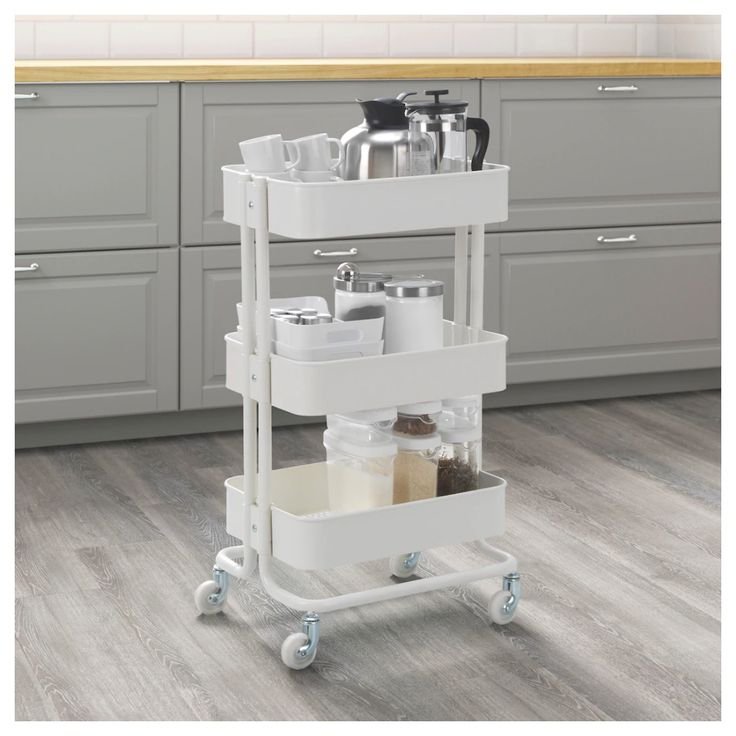
Image source: Web (Bing) / pinterest.com (Web image (fair-use with source credit))
Rolling Cart Ideas by Room: Kitchen, Bathroom, Craft Studio, Garage & More
Kitchens are where three-tier wire carts shine. A slim cart slides into that awkward gap between the fridge and the counter, giving you extra shelf space for root vegetables, canned goods, or small appliances. Choose one with a butcher-block top if you want a portable prep surface.
A two-tier cart next to the stove can hold oils, spices, and cooking utensils for quick reach.
Bathrooms get just as much value. A narrow cart next to the sink holds towels, toiletries, and hair tools without taking up counter space. Use waterproof bins so humidity doesn't wreck delicate items.
Make sure the finish is rust-resistant if you plan to keep it near the shower.
Craft rooms and home offices love mobile storage. A cart with deep wire baskets keeps paper rolls, markers, and glue guns close at hand. You can wheel it to the dining table when you need a bigger workspace, then tuck it away when you're done.
Garages and workshops lean on heavy-duty steel carts. Look for models rated for 200 to 300 pounds, especially if you're storing power tools, paint cans, or automotive supplies. Rubber casters handle uneven concrete floors better than cheap plastic wheels.
Nurseries are another popular spot. A three-tier cart becomes a diapering station with baskets on each shelf holding wipes, diapers, and spare clothes. It's easy to move to wherever you're changing the baby.
Entryways benefit too. A small cart near the front door holds mail, keys, dog leashes, and sunglasses. It keeps the drop zone tidy without adding a bulky piece of furniture.
Pro tip: measure your doorway and target space before buying. A cart that's too wide is useless. Also, check the distance between shelves, since tall containers need more clearance than the standard 8-inch spacing.
Here's a quick room-by-room summary:
| Room | Best Cart Type | Key Add-On |
|---|---|---|
| Kitchen | 3-tier wire or butcher-block cart | Shelf liners, pantry bins |
| Bathroom | Slim 3-tier cart | Waterproof baskets, hooks |
| Craft room | 3-4 tier deep basket cart | Caddy, drawer organizer |
| Garage | Heavy-duty steel cart | Tool wall hooks, rubber mat |
| Nursery | 3-tier cart with bins | Labeled baskets, washable liners |
Start with the room where you spend the most time. That's the one that gets messy fastest.
How to Set Up a Rolling Cart: Styling and Layout Cues That Actually Work
Start with a clear intent. Every cart needs a job. If you're making a pantry cart, group by food category.
If it's a craft cart, think about workflow. A cart without a purpose ends up as a clutter magnet.
Step 1: Sort by frequency. Items used daily go on the middle shelf, which is easiest to reach. Weekly items go on the top.
Seasonal or heavy items go on the bottom.
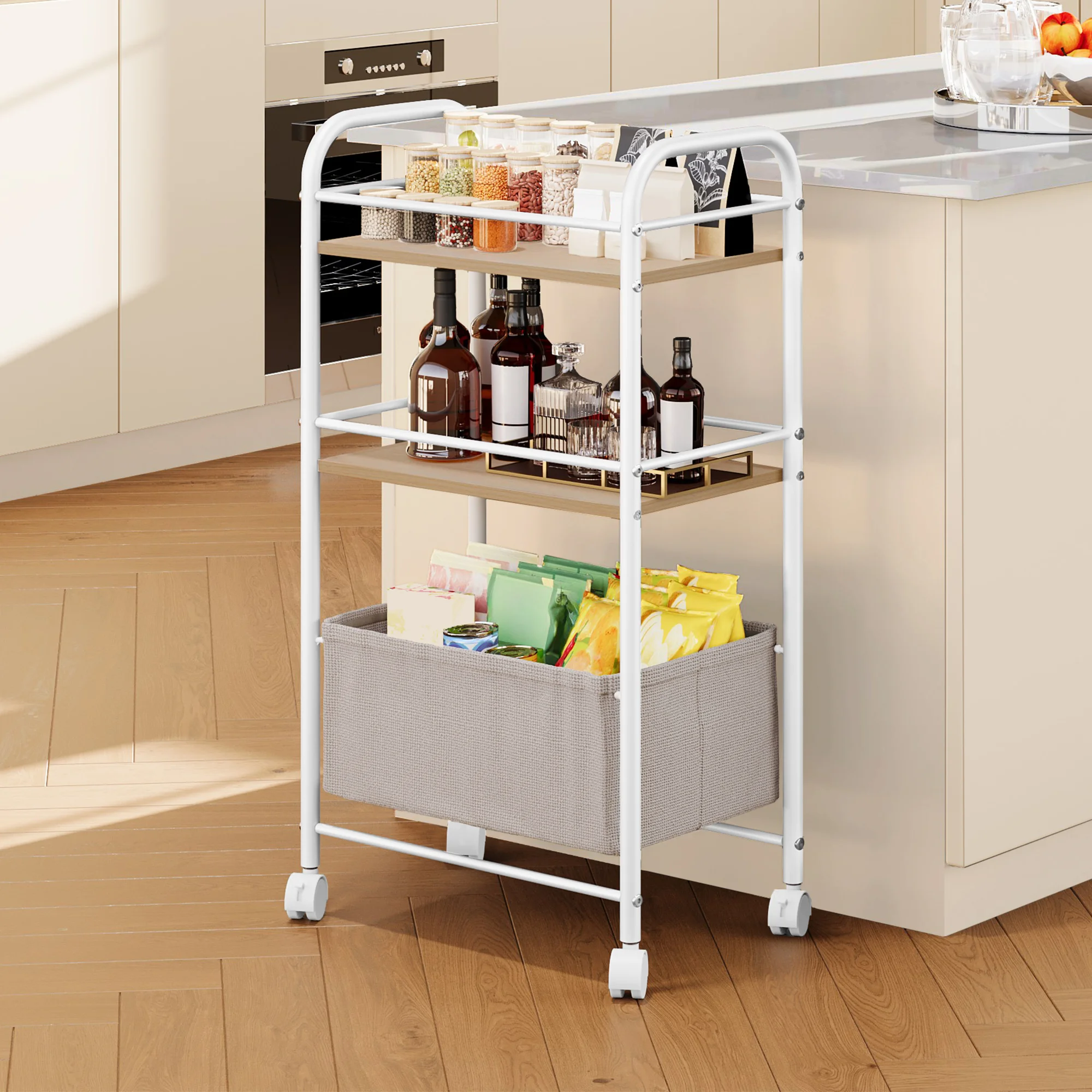
Image source: Web (Bing) / wayfair.co.uk (Web image (fair-use with source credit))
Step 2: Contain the chaos. Wire shelves have gaps, so small items will fall through. Use bins, baskets, and trays to create defined zones.
Translucent bins work best because you can spot what's inside without pulling everything out.
Step 3: Add shelf liners. Non-slip liners keep bins from sliding when you roll the cart over thresholds. They also protect the cart finish from scratches and make cleaning a simple wipe-down.
Step 4: Balance the visual weight. Heavier, wider containers go on the bottom or sides. Tall items should not block shorter ones in the same row.
A top-heavy cart tips more easily, even with locking casters.
Step 5: Lock the casters before loading or reaching. You'd be surprised how often a cart rolls away mid-organize. Get into the habit of locking both wheels before you touch anything on a shelf.
Step 6: Label bins if more than one person uses the cart. A simple label maker or chalk labels work fine. You can also color-code by room or category.
Consider the back and sides of the cart as bonus space. Add hooks for oven mitts, scissors, or handbags. It multiplies the usable area without eating shelf room.
Leave one empty spot on each shelf as well. A completely full cart is hard to enjoy and harder to clean.
A good setup takes about 15 to 30 minutes. Most of the time goes into finding the right bin sizes. Once everything has a home, the cart basically maintains itself.
Rolling Cart Mistakes to Avoid: Visual and Functional Pitfalls
Even with the best rolling cart storage ideas, a few common mistakes can ruin the setup. Here's what to watch out for.
Overloading the top shelf. Most carts have a higher weight limit on the bottom shelf. The top shelf is for light items, not a microwave.
Check the user manual for the exact ratings.
Ignoring the gap between shelves. Standard spacing is around 8 to 10 inches. That works for cereal boxes, but not tall bottles.
Measure your tallest container first, or you'll find out the hard way.
Using no bins on wire shelves. Keys, lip balm, and loose screws vanish between the gaps. Use baskets or shelf liners to create a solid base.
Leaving casters unlocked. A cart that rolls away is annoying at best, dangerous at worst. Lock before loading, and lock before reaching.
Failing to consider floor surfaces. Small hard casters struggle on carpet and thick rugs. If your cart will live on carpet, look for larger rubber wheels or a cart designed for that kind of floor.
Skipping the weight capacity. The manual prints the rating for a reason. Overload a 150-pound cart with 200 pounds of cans, and the shelves can buckle.
For safety guidance on top-heavy furniture, the U.S. Consumer Product Safety Commission publishes practical tips on furniture tip-over prevention.
Buying a cart that's too big for the room. A huge cart overwhelms a small bathroom and blocks walking space. Measure the clear path, not just the corner where you plan to park it.
Cutting corners on material. Humid bathrooms eat cheap metal finishes. If it's going to live near lots of moisture, choose a rust-resistant coated finish or plastic.
Aggregate reviews report that wobbly wheels are the most common complaint on budget carts. Pay attention to caster quality, not just shelf depth. A flimsy wheel makes the whole cart feel unstable.
Features That Matter: Wheels, Shelves, Weight Capacity & Materials
Not all rolling carts are created equal. The right one for your room depends on a few key specs.
Wheels are the first thing to check. Swivel casters make a cart easy to steer, but they should lock securely. Two locking casters on the same side are standard.
Four locking casters are better for heavier loads. Wheel diameter matters too. A 2-inch wheel is fine for hard floors.
A 4-inch wheel rolls better over carpet and thresholds.
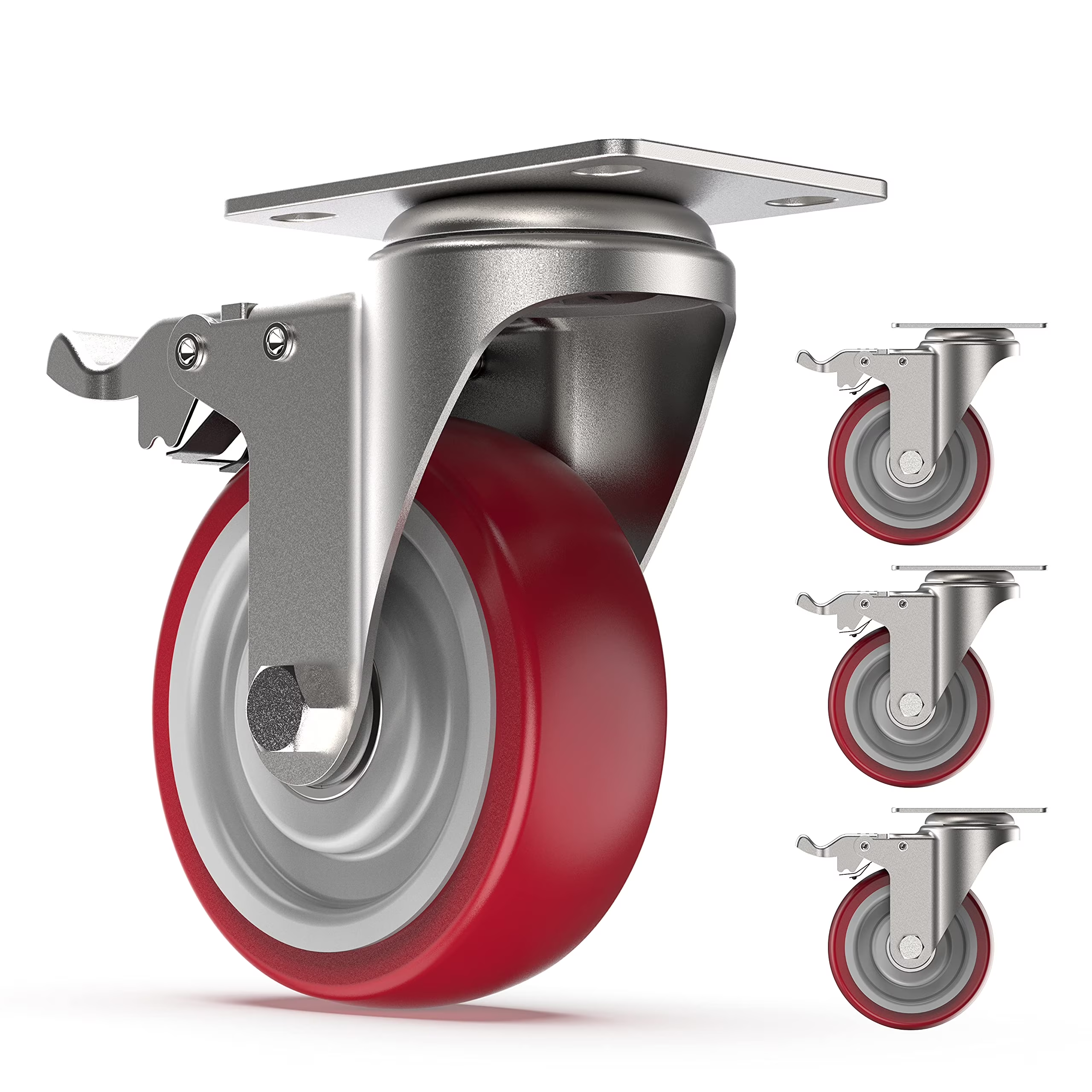
Image source: Web (Bing) / ersadental.com (Web image (fair-use with source credit))
Shelf construction affects durability. Wire shelves are lightweight and easy to see through, but they let small items fall. Solid metal shelves hold more and clean up easier.
Plastic is cheap and rustproof, but feels flimsy under heavy loads. Wood tops add a warm look and double as a work surface.
Weight capacity is the number people skip. The rating applies to the whole cart when weight is distributed evenly. A typical three-tier wire cart holds 60 to 150 pounds.
Heavy-duty steel utility carts can hold 300 to 500 pounds. Know which one you need before you fill it with bricks or canned soup.
Materials determine where the cart can live. Powder-coated steel resists rust and chips. Bamboo and wood tops look great but warp near moisture.
All-plastic carts survive outdoor use and humid bathrooms without rusting.
| Material | Best For | Watch Out |
|---|---|---|
| Powder-coated steel | Kitchens, garages | Can chip if dropped |
| Bamboo / wood top | Living rooms, offices | Avoid moisture |
| All-plastic | Bathrooms, outdoor | Low weight capacity |
| Stainless steel | Kitchens, commercial | Pricier, shows smudges |
Some carts include extras like towel bars or side hooks. Those additions are genuinely useful in kitchens and bathrooms. They give you a place to hang dishcloths, sponges, or hair tools without taking up shelf space.
As of 2026, the market splits into two clear camps: light-duty residential carts in the $30 to $80 range and heavy-duty commercial-grade carts from $80 to $200. The middle ground is where you find the best value for a standard home.
Keeping Your Cart in Shape: Cleaning, Rust Prevention, and Wheel Upkeep
A rolling cart stays useful only as long as it rolls well. Dust, crumbs, and hair gather around the casters. Wipe the shelves monthly with a mild cleaner.
For wire grates, use a microfiber cloth to catch stubborn bits.
Rust is the biggest enemy of metal carts. Keep the cart out of standing water. In humid rooms, apply a thin coat of car wax to the frame twice a year.
That adds a barrier against moisture. If you spot rust early, scrub it with fine steel wool and touch up with rust-resistant paint.
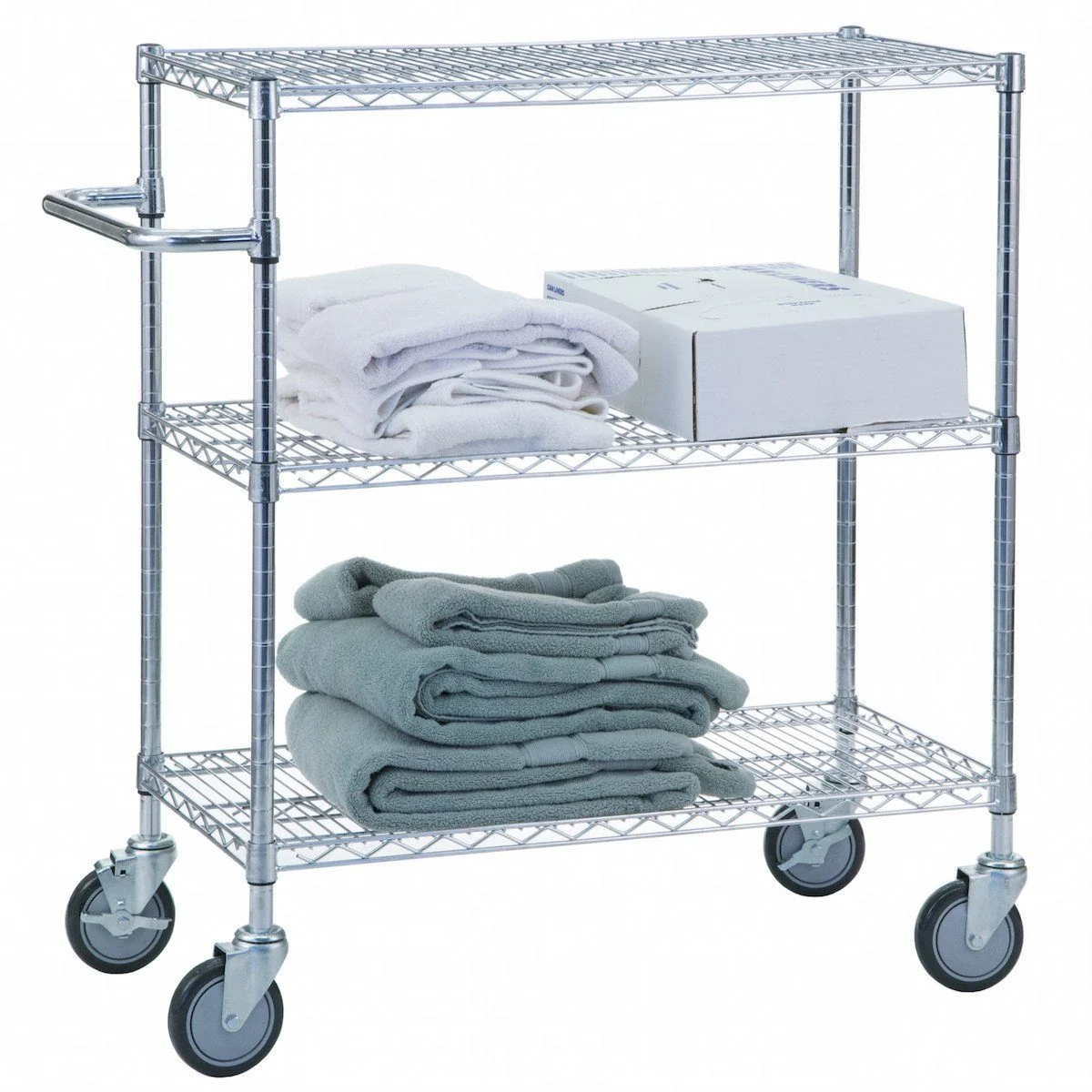
Image source: Web (Bing) / rbwire.com (Web image (fair-use with source credit))
Wheels need attention too. Hair and carpet fibers wrap around the axle and jam the bearing. Check the casters every few months.
Pull off debris with tweezers. Wipe the axles with a dry cloth. Add a drop of light machine oil to the bearing if the wheel squeaks.
Tighten loose bolts when you notice a wobble. Most carts use hex bolts, so keep a small Allen wrench handy. Replace broken caster wheels instead of buying a whole new cart.
Most standard casters use a 2-inch stem or a 4-hole plate. Measure the old one and order a match online.
Store the cart in a dry spot if it's outside or in a garage. Temperature swings cause plastic wheels to crack. Rubber wheels last longer.
If the cart sits unused, put a mat underneath to avoid floor scratches.
Frequently Asked Questions
How much weight can a rolling cart hold?
It depends on the model. A standard three-tier wire cart holds 60 to 150 pounds. Heavy-duty steel carts handle 300 to 500 pounds.
The rating assumes weight is spread evenly across the shelves. Check the manufacturer label and don't exceed the bottom-shelf rating.
Can a rolling cart be used on carpet?
Yes, with the right wheels. Small 2-inch hard casters sink into thick carpet. Look for 4-inch rubber wheels or a cart with pneumatic tires.
If the cart only has small casters, place a hard plastic mat under it.
How do I keep small items from falling through wire shelves?
Use solid bins, trays, or shelf liners. Non-slip liners create a flat surface and keep things in place. Baskets with solid bases are better than open wire baskets.
You can also add thin plywood cut to size as a DIY shelf base.
How do I stop my cart from wobbling?
Check the bolts at the shelf joints and the caster mounts. Tighten them with a wrench. If the wheels are loose, replace the casters.
A wobble often means one wheel is smaller or bent. Put a level on the top shelf to confirm.
Are rolling carts worth the space?
For most homes, yes. They add storage without permanent installation. You can move them room to room as needs change.
A cart between $30 and $80 is a low-risk experiment. If it doesn't work in one room, it will usually find a place in another.
Final Verdict: Is a Rolling Cart Right for You?
Start with a three-tier wire cart for the room that clutters up fastest. Kitchen, bathroom, or craft room, the cart gives you instant, movable storage. If you need something heavier, go with a steel utility cart rated above 200 pounds.
The best rolling cart storage ideas are simple: match the cart to the room, contain items in baskets, and lock the wheels when loading. Avoid overloading the top shelf and keep the casters clean. With minimal upkeep, a rolling cart stays functional for years.
That's the whole trick. Pick a purpose, pick a cart that fits your floor space, and build the setup around daily habits. It's one of the most affordable ways to make a small room feel organized.