
If you’ve got a tiny kitchen with bare walls, shallow counters, and nowhere obvious to put plates, you’re not stuck. Small kitchen organization without cabinets works best when you stop thinking “Where can I cram this?” and start thinking in zones. The goal is simple: keep daily items visible, reachable, and close to where you use them.
Most standard kitchen counters are about 36 inches high and 24 to 25 inches deep, so every inch above, beside, and below that surface matters. In our research, the most useful cabinet-free kitchens use vertical storage, narrow freestanding pieces, and clear food zones instead of random bins. Start with the quick answer, then shape the space around how you cook.
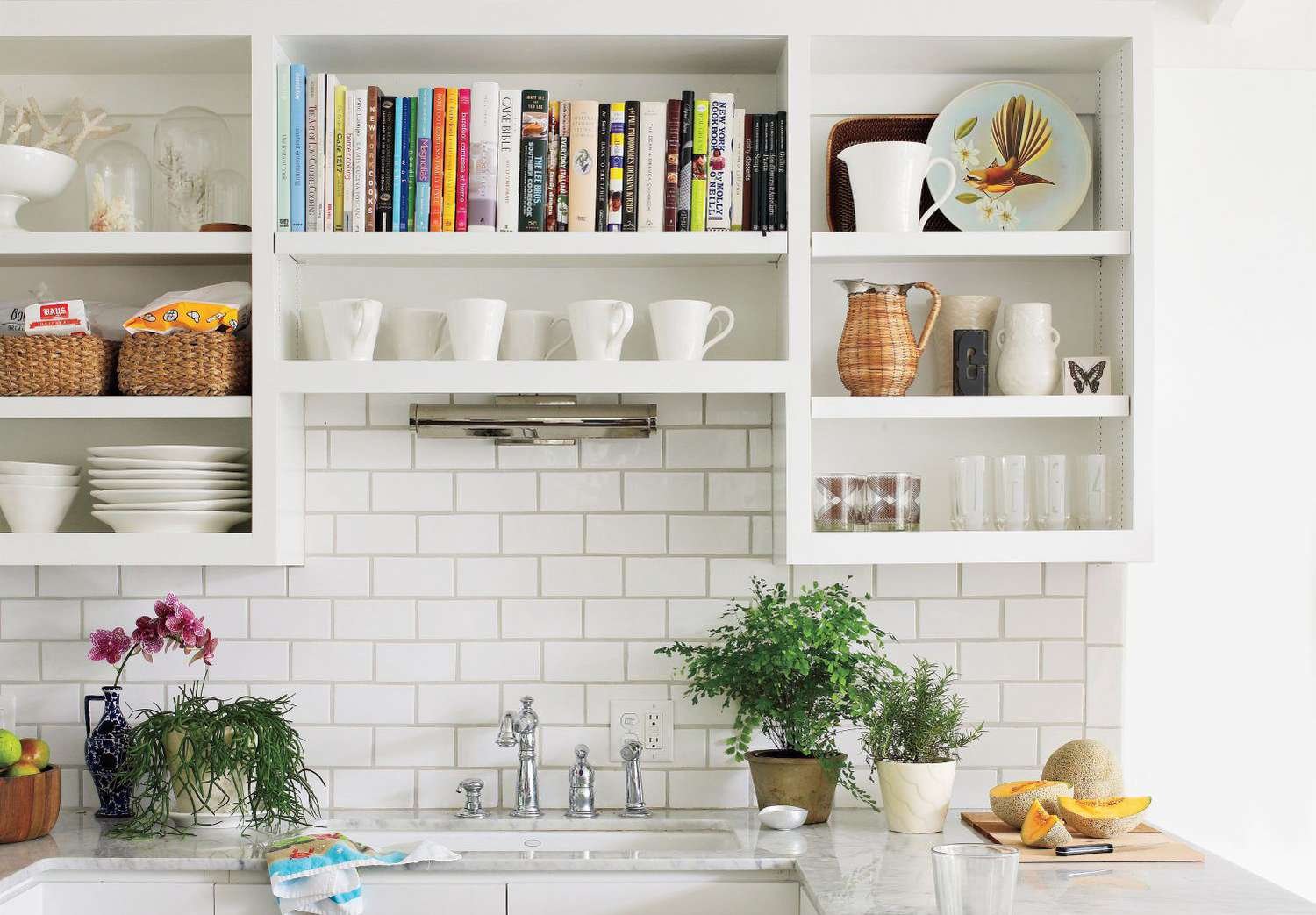
Image source: Bing (Web (fair-use with source credit))
Quick Answer
Small kitchen organization without cabinets starts with wall storage and zones. Use shelves, rails, hooks, carts, and clear bins. Keep heavy items low and daily items at eye level.
Store food in airtight containers. Leave counters mostly clear for prep.
Start With the Visual Layout: Walls, Counters, Corners, and Traffic Flow
A no-cabinet kitchen is a layout problem before it’s a storage problem. Photos and quick sketches help because you can see dead space fast. Look for empty wall strips, awkward corners, fridge-side gaps, and unused space above a trash can or microwave.
Before buying anything, measure the space you already have.
| Area to measure | Why it matters |
|---|---|
| Wall width and height | Helps size shelves, pegboards, and rails |
| Counter depth | Stops bulky organizers from stealing prep space |
| Walkway width | Keeps carts and racks from blocking movement |
| Door swings | Prevents storage from hitting ovens, fridges, or entry doors |
| Floor gaps | Shows where slim carts or narrow shelves can fit |
If your walkway is tight, treat 36 inches as a practical comfort target where possible. Older rentals may give you less. If you can’t spare floor space, go vertical first.
Picture your kitchen in three visual layers:
- Low storage: heavy pans, small appliances, bulk food
- Middle storage: dishes, spices, tools, coffee supplies
- High storage: light extras, seasonal items, backup stock
This is where small kitchens often go wrong. People add cute baskets everywhere, but the room still feels chaotic. The better move is to give each surface one clear job.
Build Storage Zones Around How You Actually Cook
Kitchen zones are grouped areas based on tasks, not product categories. You want your knife, cutting board, mixing bowl, and trash access near the prep surface. You want pans, oil, spices, and utensils near the stove.
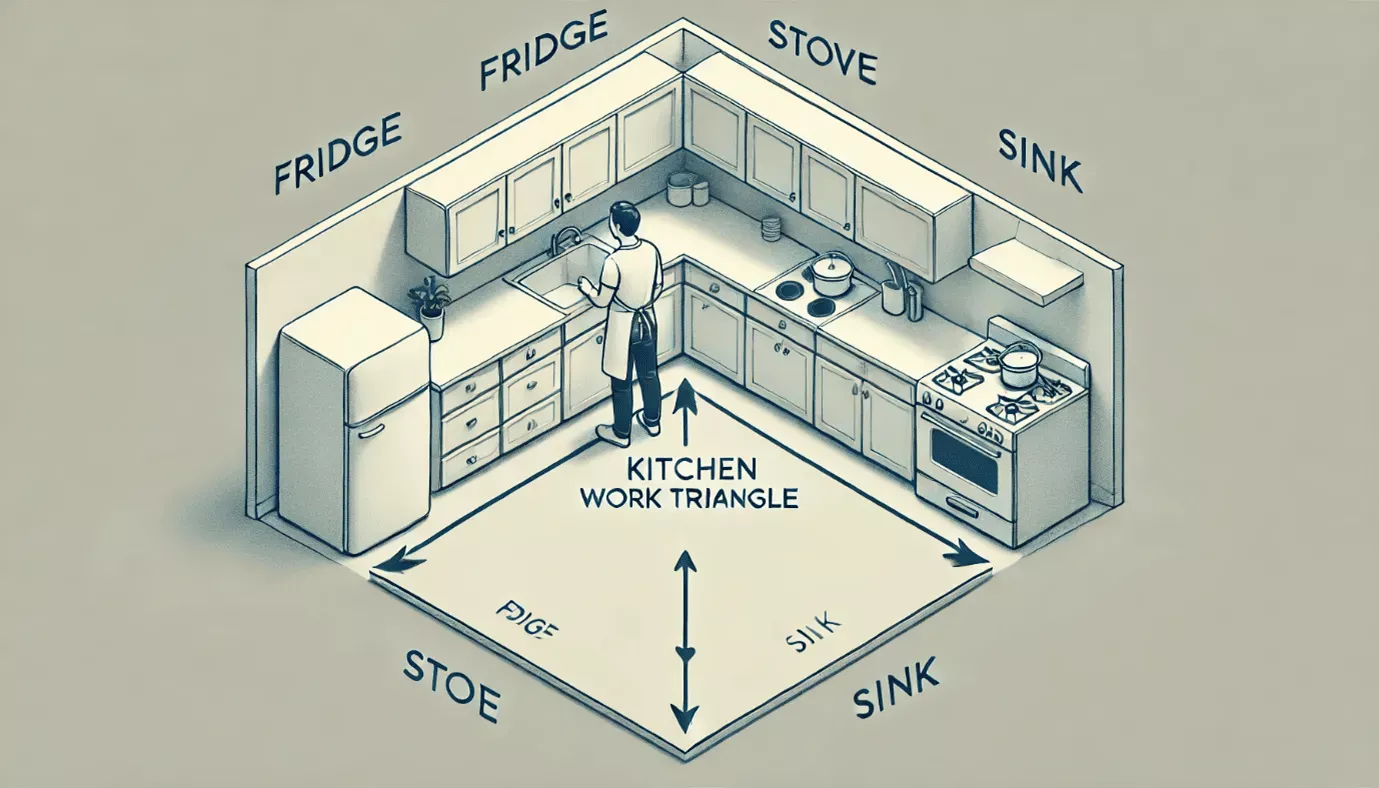
Image source: Bing (Web (fair-use with source credit))
A cabinet-free layout can still borrow from the classic work triangle: sink, stove, and fridge. You don’t need a perfect triangle. You just need fewer steps while cooking.
Prep zone
Put cutting boards, knives, mixing bowls, and measuring tools near your clearest counter. If counter space is tiny, add a wall rail above it or a rolling cart beside it.
Cooking zone
Store pans, lids, spatulas, tongs, oils, salt, and spices near the stove. Keep paper towels, plastic bins, and anything flammable away from burners.
Cleaning zone
Use a sink caddy, dish rack, and under-sink organizer if you have the space. Cleaning products should stay away from food storage. That’s safety, not just neatness.
Food storage zone
Without a pantry, use one shelf unit, cart, or wall shelf as your dry-goods zone. The USDA recommends storing shelf-stable foods in cool, dry places, so avoid hot spots beside ovens or sunny windows.
Everyday dishes and drinkware zone
Keep plates, bowls, mugs, and glasses near the sink or dish rack. Open shelves work well here if you use those items daily. Daily use helps stop dust from settling.
Choose the Right Cabinet Alternatives for Your Space
The best cabinet alternative depends on what your kitchen lacks most. If you lack wall storage, use shelves or rails. If you lack pantry space, use a cart or freestanding shelf.
If you rent, start with no-drill or low-damage options.
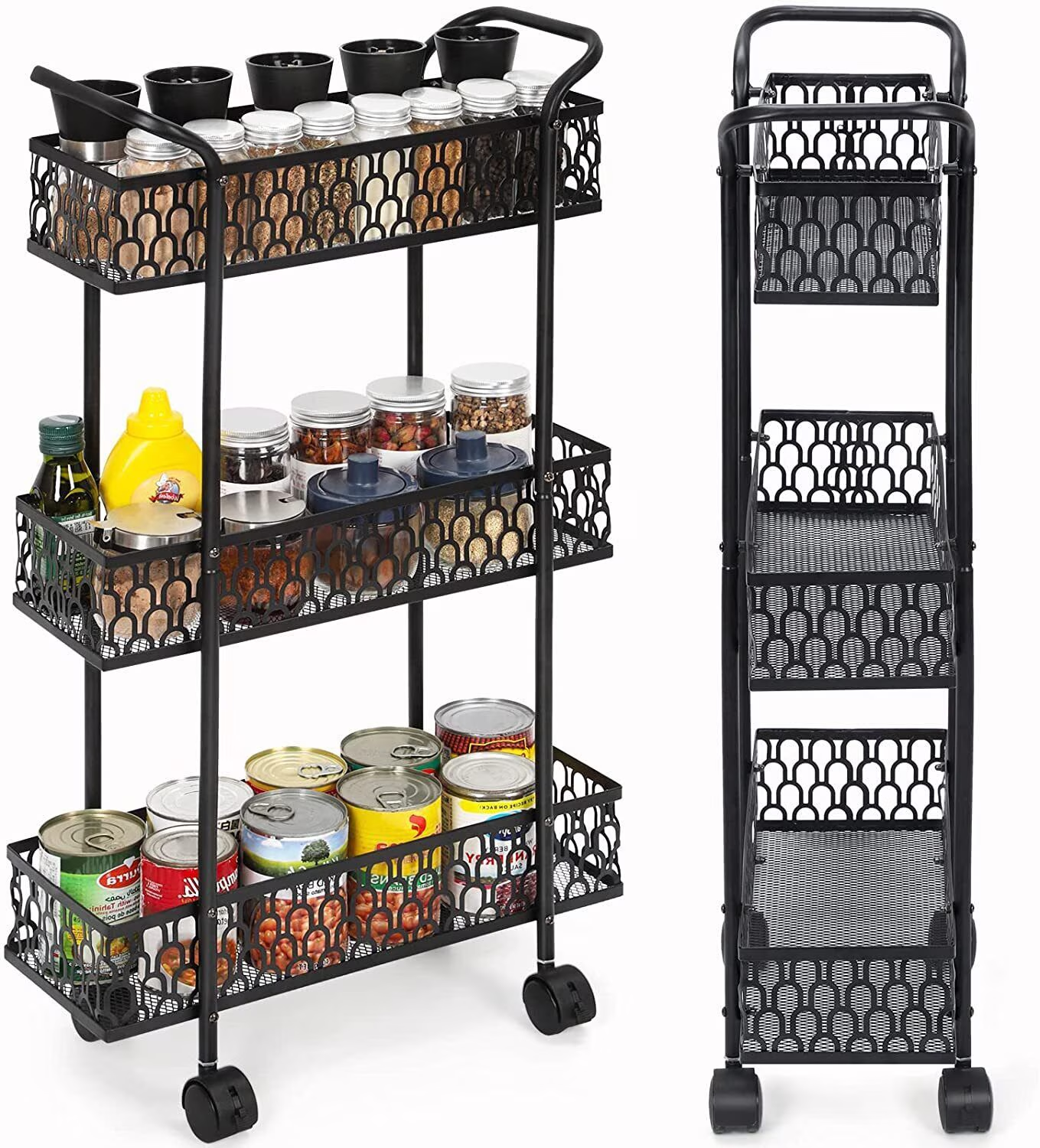
Image source: Web (Bing) / walmart.com (Web image (fair-use with source credit))
Use this table as a quick matchmaker.
| Cabinet alternative | Best for | Watch out for |
|---|---|---|
| Floating shelves | Dishes, mugs, jars | Must match wall type and weight limits |
| Pegboard | Tools, utensils, lids | Can look busy if overloaded |
| Wall rails and S-hooks | Pans, towels, utensils | Needs strong mounting for heavy items |
| Rolling cart | Pantry goods, coffee, prep tools | Choose locking casters |
| Bakers rack | Appliances, dishes, bulk storage | Can feel bulky in narrow kitchens |
| Magnetic strip | Knives or spice tins | Needs safe placement away from children |
| Counter risers | Plates, mugs, spices | Can crowd prep space fast |
Manufacturer specifications matter here. Weight ratings change by material, wall type, anchor type, and installation method. Drywall anchors are not the same as studs.
As of 2026, many renters lean on tension rods, over-door racks, freestanding wire shelves, and adhesive hooks. Those can work well for light items. For anything heavy, follow the maker’s installation guide and use proper anchoring.
What to Store Where: A Practical No-Cabinet Kitchen Map
Think of this like a visual map. If you took a photo of your kitchen, every category should have one obvious home. When everything has a visible zone, the room feels calmer.

Image source: Bing (Web (fair-use with source credit))
Use this as a starting point:
| Item type | Best no-cabinet home |
|---|---|
| Plates and bowls | Open shelf near sink or dish rack |
| Glasses and mugs | Shelf or mug hooks near coffee area |
| Pots and pans | Low rack, wall rail, or sturdy shelf |
| Lids | Vertical divider or pegboard hooks |
| Spices | Narrow shelf, magnetic rack, or tiered riser |
| Dry goods | Airtight containers on one pantry shelf |
| Small appliances | Low freestanding shelf or cart |
| Cleaning supplies | Sink zone, away from food |
| Knives | Magnetic strip or covered knife holder |
Heavy items belong low. Cast iron pans, Dutch ovens, stand mixers, and large water jugs should not sit on high open shelves. The [U.S.
Consumer Product Safety Commission](https://www.cpsc.gov) gives guidance on preventing furniture tip-over, and the same common sense applies to tall kitchen shelving.
For food, clear containers help because you can see what’s low. Don’t decant everything just for looks. Keep cooking directions, dates, and allergen information when you need them.
Common Visual Mistakes That Make a No-Cabinet Kitchen Feel Messy
The biggest mistake is treating every blank surface as storage. A kitchen without cabinets still needs breathing room. If every wall, counter, and cart is packed, the room will feel stressful even when it’s technically organized.
Watch for these common problems:
- Too many tiny containers with no shared system
- Open shelves filled with mismatched packaging
- Heavy cookware stored above shoulder height
- Spices split across three different spots
- Appliances left out even when used weekly
- Cleaning products sitting beside snacks or flour
- Rolling carts blocking oven or fridge doors
- Pretty baskets hiding items you forget you own
Open storage also collects dust and grease. That doesn’t mean you should avoid it. It means you should reserve open shelves for things you use often.
A good visual rule is the “one-third empty” test. Leave some open space on each shelf, cart, or rack. Your kitchen will look cleaner, and you’ll have room after grocery shopping.
Color helps too. Use matching clear containers for pantry staples, one basket style for snacks, and simple labels where they make sense. You don’t need a showroom kitchen.
You need a kitchen you can reset in five minutes.
Safety, Measurements, and Renter-Friendly Installation Rules
Safety starts with weight, heat, and stability. A shelf that looks fine in a photo may not be safe for stacked dishes or cast iron. Always check the manufacturer’s weight limit, then match the hardware to your wall type.
Stud-mounted shelves are the safest choice for heavy storage. Drywall anchors can work for lighter items, but their ratings depend on correct installation. Plaster, brick, tile, and masonry need different fasteners.
Use this quick placement guide:
| Storage item | Safer placement |
|---|---|
| Cast iron pans | Low shelf or sturdy rack |
| Everyday plates | Eye-level open shelf |
| Knives | Magnetic strip away from children |
| Spices | Cool spot away from stove heat |
| Cleaning sprays | Sink zone, separate from food |
| Toaster or air fryer | Open counter with ventilation |
Keep flammable items away from stovetops. That includes paper towels, woven baskets, plastic bins, and dish towels. Small kitchens make this easy to overlook.
If you rent, read your lease before drilling. No-drill options include tension rods, over-door racks, rolling carts, adhesive hooks, and freestanding shelving. Use adhesive hooks only within the listed weight rating and surface type.
Tall freestanding shelves should be anchored if possible. If anchoring isn’t allowed, keep heavy items on the bottom and avoid top-heavy layouts. Locking casters also matter on rolling carts, especially on uneven floors.
Frequently Asked Questions
How do you organize dishes without kitchen cabinets?
Store everyday dishes on a sturdy open shelf near the sink or dish rack. Keep stacks short so they’re easy to lift. If shelves aren’t possible, use a freestanding rack with plates on the middle shelf and heavier bowls lower down.
Avoid storing breakable dishes on narrow carts.
What should I use instead of a pantry cabinet?
Use one dedicated pantry zone, such as a rolling cart, narrow shelving unit, or wall shelf. Group food by type, then use clear bins for snacks, grains, cans, and baking supplies. Airtight containers help dry goods stay fresh.
Keep pantry food away from heat, steam, and direct sunlight.
Are open shelves practical in a small kitchen?
Open shelves are practical when they hold items you use often. Plates, mugs, glasses, and basic pantry jars work well because they don’t sit long enough to collect much dust. They’re less ideal for rarely used serving dishes.
Those are better in covered bins or higher storage.
How do I keep a no-cabinet kitchen from looking cluttered?
Limit each shelf to one clear job. Use matching containers where possible, and leave some empty space on every surface. Store packaging-heavy items inside bins.
Keep counters for prep, not long-term storage. A five-minute weekly reset also makes a big difference.
Where should pots and pans go without lower cabinets?
Put heavy cookware on a low freestanding shelf, bakers rack, or sturdy cart. Lightweight pans can hang from a properly mounted rail or pot rack. Store lids upright in a divider or on pegboard hooks.
Keep your two or three most-used pans easiest to reach.
1 thought on “Small Kitchen Organization Without Cabinets: Smart Ideas”