
Small bathroom organization without cabinets gets tricky fast because there’s nowhere obvious to hide the everyday stuff. Toothpaste lands on the sink, towels end up on hooks that never dry, and shower bottles take over every ledge. The fix isn’t buying more random bins.
It’s giving every wall, corner, door, and narrow gap a clear job.
As of 2026, many bathroom layouts still use a basic toilet clearance target of about 15 inches from the toilet centerline to each side obstruction. That matters because even a slim cart can make a tight bathroom feel cramped. Start with what the room physically allows, then choose storage that fits the space instead of fighting it.
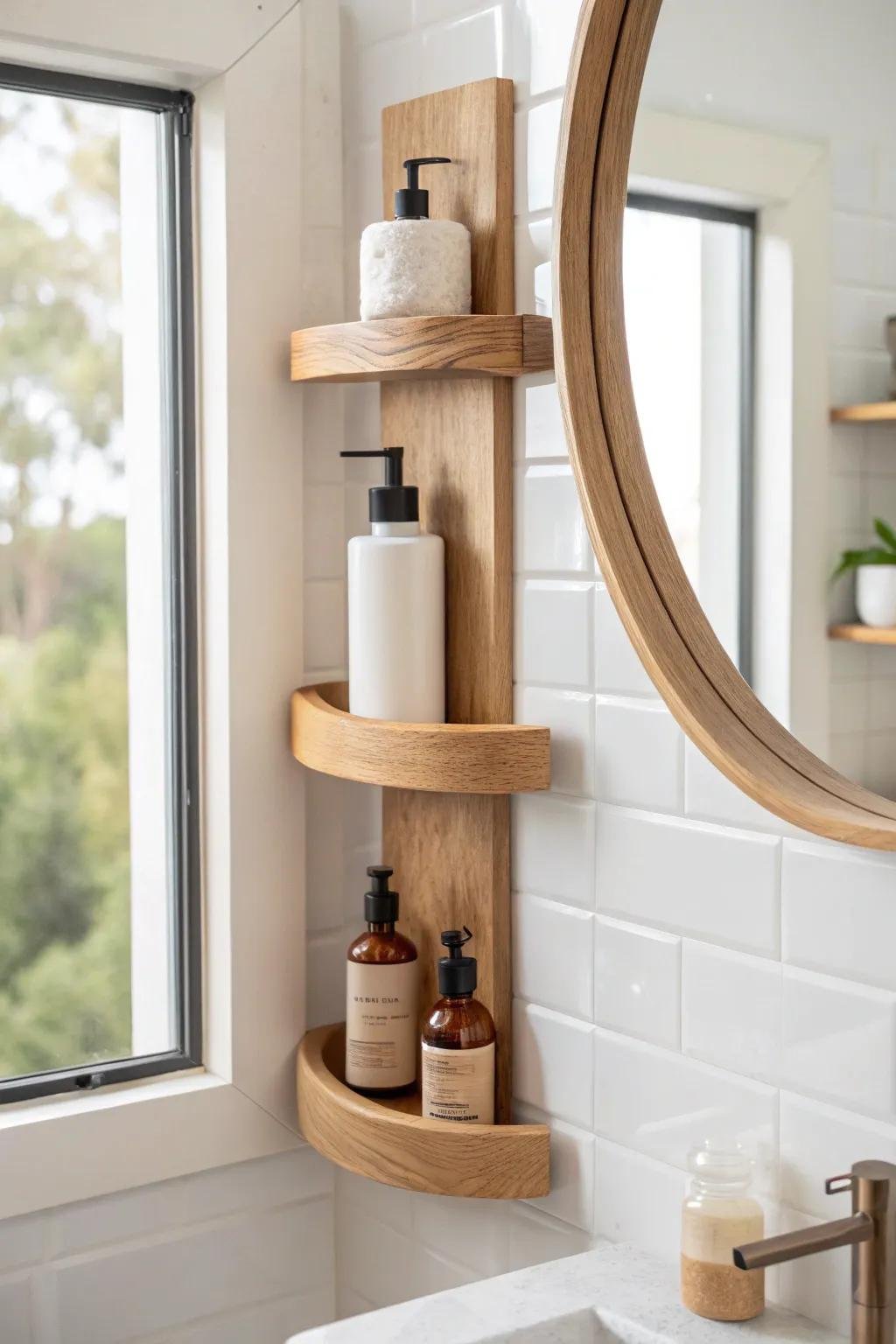
Image source: Web (Bing) / timberelle.com (Web image (fair-use with source credit))
Quick Answer
Small bathroom organization without cabinets works best with vertical storage. Use walls, doors, corners, and narrow floor gaps. Keep daily items visible and reachable.
Store backups outside the bathroom when space is tight. Choose moisture-resistant organizers with good airflow.
Why Small Bathrooms Without Cabinets Need a Visual Storage Plan
A small bathroom without cabinets is really a layout puzzle. You’re not just “adding storage.” You’re deciding what can live on the wall, what belongs near the sink, and what should leave the room completely.
A simple visual plan helps because bathroom storage depends on clearances. A shelf may look perfect online, then block the toilet lid or crowd your shoulder. A rolling cart may fit the gap beside the sink, but stop the door from opening fully.

Image source: Bing (Web (fair-use with source credit))
Think of the room in zones:
- Wet zone: shower, tub ledge, shower wall, bath toy storage
- Sink zone: toothbrushes, soap, skincare, contact lenses, grooming tools
- Toilet wall zone: toilet paper, spare towels, light baskets
- Door zone: towels, robes, hair wraps, hanging organizers
- Backup zone: extra shampoo, refill soap, bulk toilet paper
If a photo or sketch showed this well, you’d see storage moving upward. The floor stays open, the sink stays clearer, and the highest shelves hold light items you don’t grab daily.
Moisture matters too. The U.S. Environmental Protection Agency gives clear guidance on controlling moisture to reduce mold risk, and bathrooms are easy to overload with damp fabric and closed bins.
You can read their general mold guidance at EPA.gov.
Measure These Bathroom Zones Before You Buy Anything
Measure before buying a shelf, cart, hook rail, or over-the-toilet unit. Small bathrooms punish guessing. Half an inch can be the difference between “nice solution” and “why does this door hit everything?”
Use a tape measure and write down the numbers. Then take photos from each corner. Those photos help you spot empty vertical space you stop noticing day to day.
| Area to Measure | What to Check | Why It Matters |
|---|---|---|
| Above toilet | Width, height, tank lid access | Prevents blocked flushing or cleaning |
| Beside sink | Gap width and depth | Helps choose a slim cart or bin |
| Behind door | Door swing and hook depth | Stops organizers from blocking closure |
| Shower wall | Tile surface and bottle count | Guides caddy size and mounting type |
| Countertop | Usable flat space | Keeps only true daily items out |
Sink and Countertop Zone
The sink zone should hold only the items you use every day. That usually means toothbrushes, hand soap, face wash, and maybe one small tray for skincare. If the counter is smaller than a dinner plate, skip bulky countertop organizers.
Toilet Wall Zone
The wall above the toilet is useful, but don’t overload it. Shallow floating shelves, a ladder shelf, or an over-the-toilet rack can work. Keep heavy glass jars and large bottles somewhere lower.
Shower or Tub Zone
Shower storage needs drainage. Look for open wire, slotted plastic, or shelves with drain holes. Bottles sitting in pooled water create soap scum fast.
Door and Back-of-Door Zone
The door is prime storage in rentals. Use towel hooks, an over-door rack, or a fabric organizer if the bathroom door has enough clearance. Test the swing before loading it.
Narrow Floor Gaps and Corners
Slim floor gaps can be useful, but only if they don’t block movement. A 5 to 8 inch rolling cart may fit beside a pedestal sink or toilet. If you have to turn sideways to pass it, use wall storage instead.
Best Cabinet-Free Storage Ideas by Bathroom Area
The best storage choice depends on where the mess collects. If the sink is crowded, solve the counter first. If towels never dry, add hooks or a ladder.
If shower bottles are everywhere, start inside the wet zone.
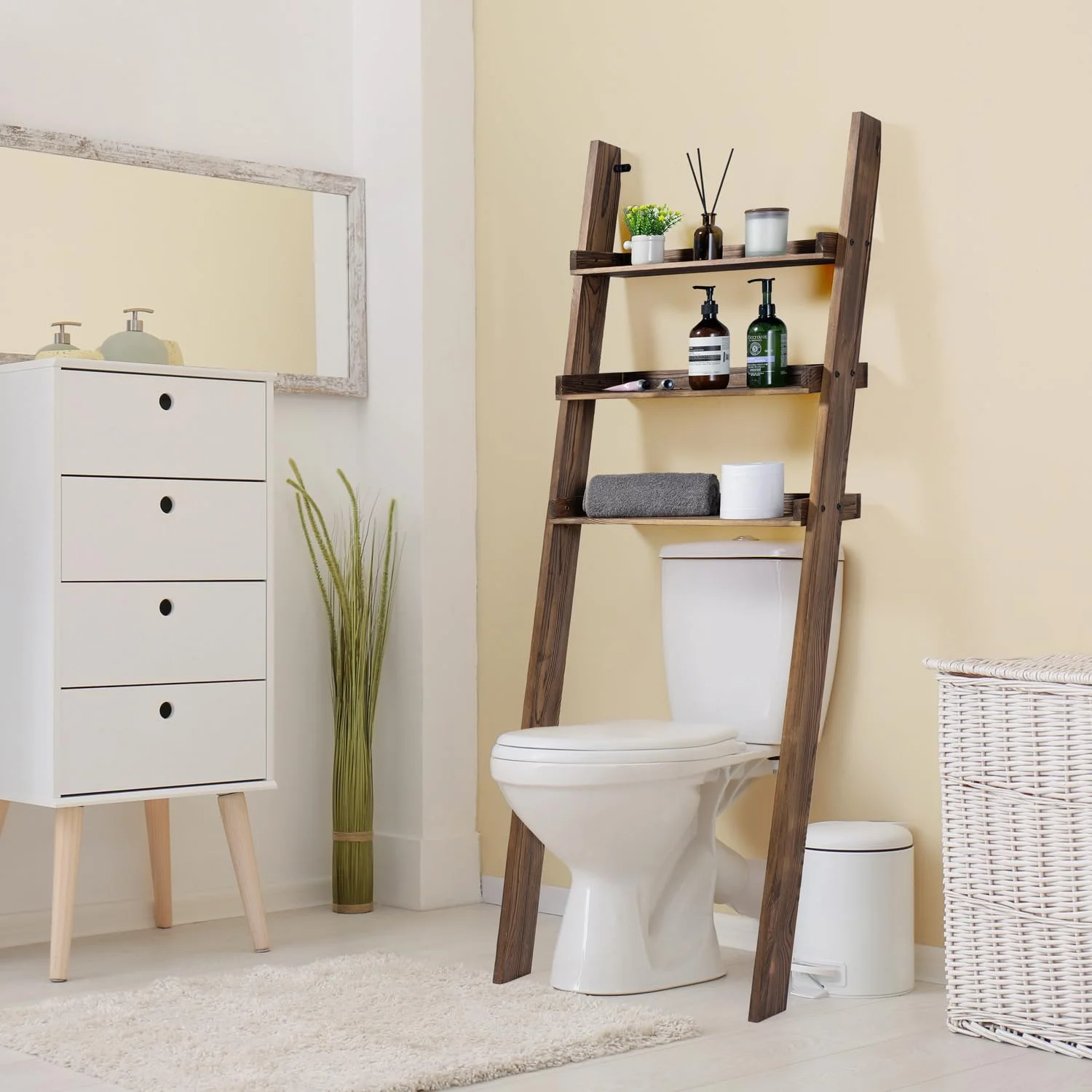
Image source: Web (Bing) / storage.googleapis.com (Web image (fair-use with source credit))
Floating Shelves and Over-Toilet Storage
Floating shelves are best for lightweight items. Think rolled washcloths, tissue boxes, cotton rounds, and small baskets. Keep shelf depth around 4 to 8 inches in very tight bathrooms so the storage doesn’t jut into the room.
Over-the-toilet storage works well when you need more height without using extra floor area. Leave enough room to remove the toilet tank lid. Avoid stacking heavy products above your head.
Shower Caddies, Adhesive Shelves, and Tension Pole Storage
Use a tension pole shower caddy when you have a tub corner and don’t want adhesive. Use adhesive shower shelves when the wall surface is smooth, clean, and dry. Suction cup organizers are fine for light items, but aggregate reviews often report slipping when they’re overloaded.
Over-Door Organizers, Hooks, and Towel Storage
Hooks beat towel bars in many tiny bathrooms because they use less wall width. Space hooks far enough apart that towels can breathe. Damp towels packed together stay musty.
Over-door organizers work best for flat items and soft goods. Use them for washcloths, hair wraps, spare soap, or lightweight toiletries. Avoid stuffing them with heavy bottles because the door can sag or stop closing cleanly.
Slim Rolling Carts, Ladder Shelves, and Freestanding Storage
A slim rolling cart works best in a 5 to 8 inch gap beside a toilet or sink. Use it for toilet paper, hair products, or cleaning cloths. If the cart blocks walking space, it’s not helping.
A ladder shelf or towel ladder can work when you have vertical wall space but can’t drill. Choose one with a stable base and keep heavier items low. In a bathroom used by children, anchor tall furniture when possible.
Trays, Bins, and Baskets for Daily Toiletries
A tray is the easiest way to control a tiny countertop. It turns loose items into one contained zone. It also makes wiping the sink area faster.
Use clear bins when you need to see small products. Use opaque baskets when visual clutter bothers you. In damp bathrooms, choose ventilated bins over fabric boxes.
What to Store Where: A Simple System for Toiletries, Towels, Hair Tools, and Backups
Good bathroom organization starts with sorting, not shopping. Pull everything out and group items by how often you use them. You’ll usually find expired sunscreen, duplicate shampoo, old razors, and travel bottles you forgot you owned.
Use this simple rule:
- Daily items stay within arm’s reach.
- Weekly items go on a nearby shelf or cart.
- Backups go high, low, or outside the bathroom.
- Damp items need airflow.
- Heat tools need a safe cooling spot.
- Cleaning products need child-safe placement.
Skincare and toothbrushes belong near the sink. Hair tools can go in a heat-safe holder, wall basket, or over-door organizer. Don’t wrap cords tightly while tools are still warm.
Towels need breathing room more than they need hiding. Hooks, ladder racks, and over-door towel bars are practical in small bathrooms. Store extra towels outside the bathroom if humidity is a problem.
Medication is one category people often store in the wrong place. The U.S. Food and Drug Administration advises storing many medicines away from heat and moisture unless the label says otherwise.
Their official consumer guidance is available at FDA.gov.
For toiletries, use open-front bins or clear containers so you can see what you have. Labels help in shared bathrooms, especially for kids, roommates, or guests. A “one in, one out” rule keeps cabinet-free storage from turning into open clutter.
Common Small Bathroom Organization Mistakes That Make the Space Feel Worse
The biggest mistake is using every empty surface as storage. Open storage works only when it’s edited. If every shelf, hook, ledge, and basket is full, the room still feels chaotic.
Another common issue is choosing deep organizers for shallow spaces. A 12-inch shelf above a toilet can feel bulky in a narrow room. A 5-inch or 6-inch shelf often looks cleaner and still holds daily essentials.
Watch for these trouble spots:
- Too many matching baskets with no labels
- Heavy bottles stored on high shelves
- Towels stacked where they can’t dry
- A cart that blocks the walkway
- Shower shelves without drainage
- Adhesive hooks loaded before curing
- Clear bins packed with visual clutter
- Hair tools stored near wet surfaces
- Toilet paper stored directly on the floor
If a storage piece makes cleaning harder, rethink it. Tiny bathrooms collect dust, hair, lint, and moisture quickly. Fewer larger zones usually beat lots of tiny containers.
Visual clutter matters too. Open shelving looks best when you leave breathing room. Try grouping small items inside one tray or basket instead of lining up ten little bottles.
A second mistake is storing too much in the bathroom. Bulk packs, seasonal products, and duplicate toiletries can live in a linen closet, bedroom bin, or hallway shelf. The bathroom should hold what you actually use there.
Safety, Moisture, and Renter-Friendly Installation Tips
Bathroom storage has to handle steam, splashes, slippery floors, and tight clearances. That’s why material and installation matter as much as size. A pretty shelf isn’t useful if it rusts, falls, or blocks safe movement.

Image source: Web (Bing) / amazon.co.uk (Web image (fair-use with source credit))
For wet areas, choose stainless steel, aluminum, coated metal, acrylic, plastic, teak, or bamboo with a water-resistant finish. Avoid untreated wood in splash zones. It can swell, stain, or grow mildew.
Adhesive shelves and hooks need proper prep. Clean the surface, dry it fully, press firmly, then wait for the manufacturer’s cure time. Many adhesive products call for about 24 hours before loading.
| Storage Type | Best Surface | Main Caution |
|---|---|---|
| Adhesive hook | Smooth tile, glass, painted wall | Needs clean, dry surface |
| Suction caddy | Glass or glossy tile | Poor hold on textured tile |
| Screw-mounted shelf | Studs or proper anchors | Avoid hidden pipes and wiring |
| Tension pole caddy | Tub or shower corner | Check ceiling and floor grip |
Keep electrical safety simple. Store hair dryers, curling irons, and electric shavers away from wet surfaces. Bathroom outlets should use GFCI protection under modern electrical safety practice, especially near sinks.
Renters should check lease rules before drilling. If drilling isn’t allowed, use over-door hooks, tension storage, freestanding carts, and adhesive products rated for bathroom use.
Place heavy items low. Put light items higher up. Keep razors, cleaning chemicals, and medication away from children and pets.
Frequently Asked Questions
How do you organize a small bathroom with no cabinets?
Start by removing expired products, duplicates, and backup supplies. Then assign zones for daily toiletries, towels, shower items, and cleaning products. Use walls, doors, and corners before adding floor storage.
Keep only everyday items near the sink so the room stays easier to clean.
What can I use instead of a bathroom cabinet?
Good cabinet alternatives include floating shelves, over-the-toilet storage, slim rolling carts, towel ladders, adhesive shower shelves, and over-door organizers. Use baskets or bins to keep open storage tidy. If the room is humid, choose ventilated containers instead of closed fabric bins.
Where should towels go in a tiny bathroom?
Towels should go where they can dry fully. Hooks, over-door towel racks, ladder racks, and wall-mounted pegs work well in tight rooms. Avoid stacking damp towels in baskets.
Store extra clean towels outside the bathroom if shelf space is limited.
Are adhesive bathroom shelves safe to use?
Adhesive shelves can work well when installed on smooth, clean, dry surfaces. Follow the manufacturer’s weight limit and curing time. Don’t mount them over fragile items or load them with heavy bottles.
Textured tile, damp walls, and dusty paint can weaken the bond.
How do you make open bathroom storage look less cluttered?
Use fewer containers and repeat materials where possible. For example, choose matching baskets, clear bins, or one metal finish for hooks and shelves. Group small products on trays instead of spreading them out.
Leave some empty space on each shelf so the room feels calmer.