
Your front door shouldn’t feel like a clutter trap every time you walk in. The best storage ideas for small entryway with no closet usually start with wall space, slim shoe storage, and one clear drop zone for daily items. If the floor is tight, you can still make the area work without adding bulky furniture.
A practical entryway needs enough clear walking space to move in and out without bumping furniture, bags, or shoes. Around 36 inches of clear path is a useful target when the layout allows it. That number matters because even a pretty bench becomes annoying if you squeeze past it every day.
Small Entryway Storage Ideas When You Have No Closet

Image source: Web (Bing) / materialsix.com (Web image (fair-use with source credit))
Quick Answer
Storage ideas for small entryway with no closet work best vertically. Use wall hooks, a slim shoe cabinet, and a small tray. Add one shelf for keys and mail.
Keep daily items visible, but limit the quantity.
Why Your Entryway Layout Matters More Than the Storage Piece
A small entryway is a traffic zone first. Storage comes second. If a cabinet blocks the door swing or a bench steals walking space, it won’t matter how nice it looks.
Think of your entry as a mini floor plan. A photo or quick sketch should show the parts that control what fits:
- Where the door swings
- Where people naturally step
- Which wall is free for hooks or shelves
- Where shoes already pile up
- Where light switches, outlets, vents, or stairs limit storage
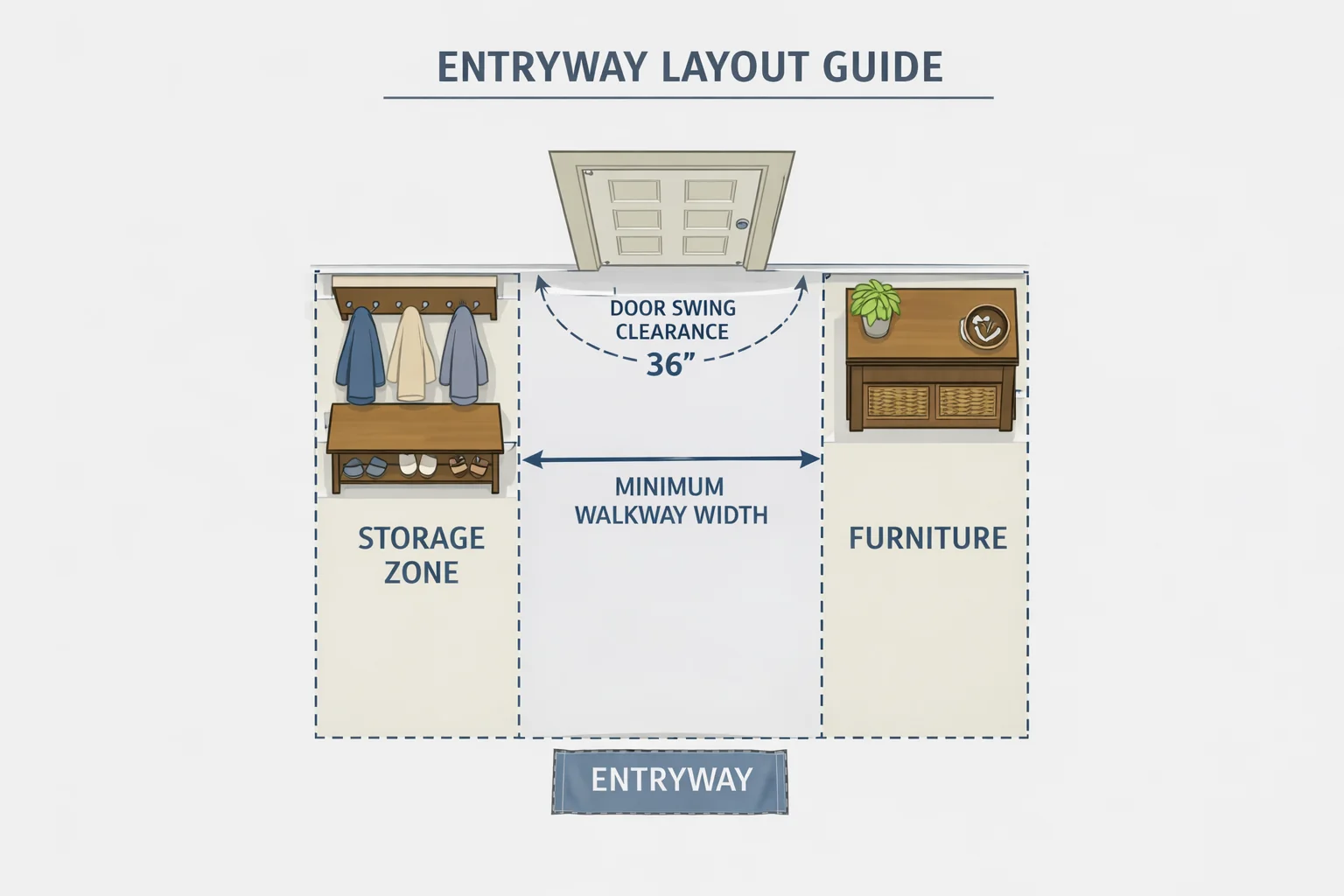
Image source: Web (Bing) / rocabudesigns.com (Web image (fair-use with source credit))
An entryway drop zone is a small landing area for daily items like shoes, coats, bags, keys, and mail. In a home with no coat closet, this zone has to do the work of a mudroom without taking over the room.
Start by watching your habits for two days. Where do shoes land? Where do you toss keys?
Which coat gets used every morning? Your storage should match that pattern, not fight it.
Here’s the simple rule. If the floor is narrow, go up the wall. If the wall is busy, use the back of the door or an awkward corner.
If the entry opens into a living room, choose some closed storage so the space feels calmer.
As of 2026, many slim shoe cabinets list depths around 7 to 12 inches in manufacturer specifications. That’s why they often work better than deep benches in tight halls. The right piece is the one your layout can handle every day.
Measure These Visual Cues Before You Buy Anything
Measure first, buy second. A tape measure prevents the most common small-entry mistake: choosing furniture that looks compact online but feels huge at home.
Use painter’s tape on the floor to mark the footprint before ordering anything. This gives you a real visual of how much space a shoe bench, hall tree, or narrow console table will take.
| What to measure | Why it matters | Useful target |
|---|---|---|
| Clear walking path | Keeps traffic comfortable | About 30 to 36 inches where possible |
| Shoe cabinet depth | Prevents blocked movement | 7 to 12 inches for tight spaces |
| Bench depth | Affects sitting and clearance | 12 to 16 inches for small entries |
| Adult hook height | Keeps coats easy to grab | Around 60 inches from the floor |
| Child hook height | Helps kids hang items | Around 36 to 44 inches from the floor |
Also check the visual obstacles. Light switches, outlets, baseboards, HVAC vents, and stair railings can all change what fits. Photos help here because they catch the small details we forget when staring at a blank wall.
Door swing is the big one. Open the door fully and mark that arc. Nothing tall, sharp, or wobbly should sit inside it.
If you rent, check your lease before drilling. Adhesive hooks can help, but they’re not magic. Manufacturer weight limits depend on clean surfaces, correct curing time, and the right wall finish.
For anything heavy, look for studs or use the correct drywall anchors. The Consumer Product Safety Commission also stresses anchoring furniture to reduce tip-over risks, especially in homes with children.
Best Storage Ideas for a Small Entryway With No Closet
The best setup usually combines three layers: wall storage, shoe storage, and a small catch-all spot. You don’t need a full mudroom. You need a tight system that handles what comes through the door every day.
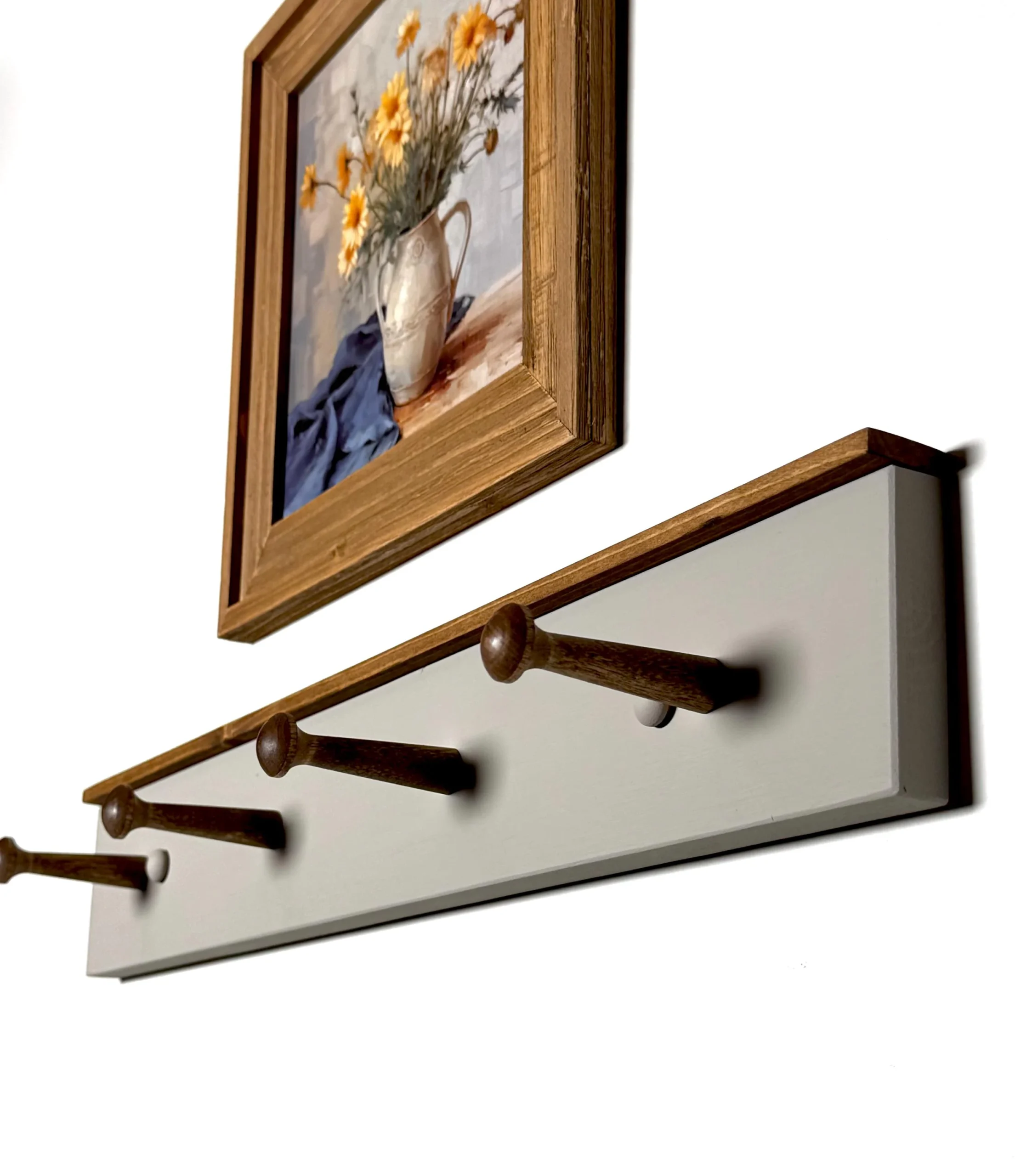
Image source: Bing (Web (fair-use with source credit))
Wall Hooks, Peg Rails, and Coat Racks
Wall hooks are the easiest win in a closetless entry. They hold coats, bags, hats, dog leashes, and umbrellas without using floor space.
A peg rail gives a cleaner look than scattered hooks. It also spreads items across the wall, which helps prevent one overloaded hook from pulling loose.
Use adult-height hooks for coats and lower hooks for kids. That one change makes the system easier to maintain because everyone can put things away.
Slim Shoe Cabinets and Shoe Benches
A slim shoe cabinet hides visual clutter. It works especially well when the front door opens into a living room or narrow hallway.
A shoe bench is better if you need a seat. Choose one with open shelves if shoes are used daily, since wet footwear needs airflow.
Floating Shelves, Key Holders, and Mail Organizers
A floating shelf creates a landing spot without adding furniture legs to the floor. Pair it with a small key holder and one mail slot.
Keep this zone small. If the shelf is too large, it turns into a dumping ground.
Baskets, Boot Trays, and Umbrella Storage
Baskets soften open storage and hide small items. Use one basket per category, like hats, gloves, pet gear, or reusable bags.
A boot tray protects flooring from rain, mud, and snow. Pick one with a raised edge so water stays contained.
Compact Hall Trees and Modular Entryway Systems
A compact hall tree can work if you have enough depth. It gives you hooks, shoe storage, and a seat in one piece.
Modular systems are better for awkward walls. You can combine hooks, cubbies, shelves, and baskets without forcing one bulky unit into the space.
How to Choose the Right Setup for Your Space
The right setup depends on your layout, not a trend. If your space is narrow, choose shallow and wall-mounted. If your entry is open to another room, choose closed and tidy.
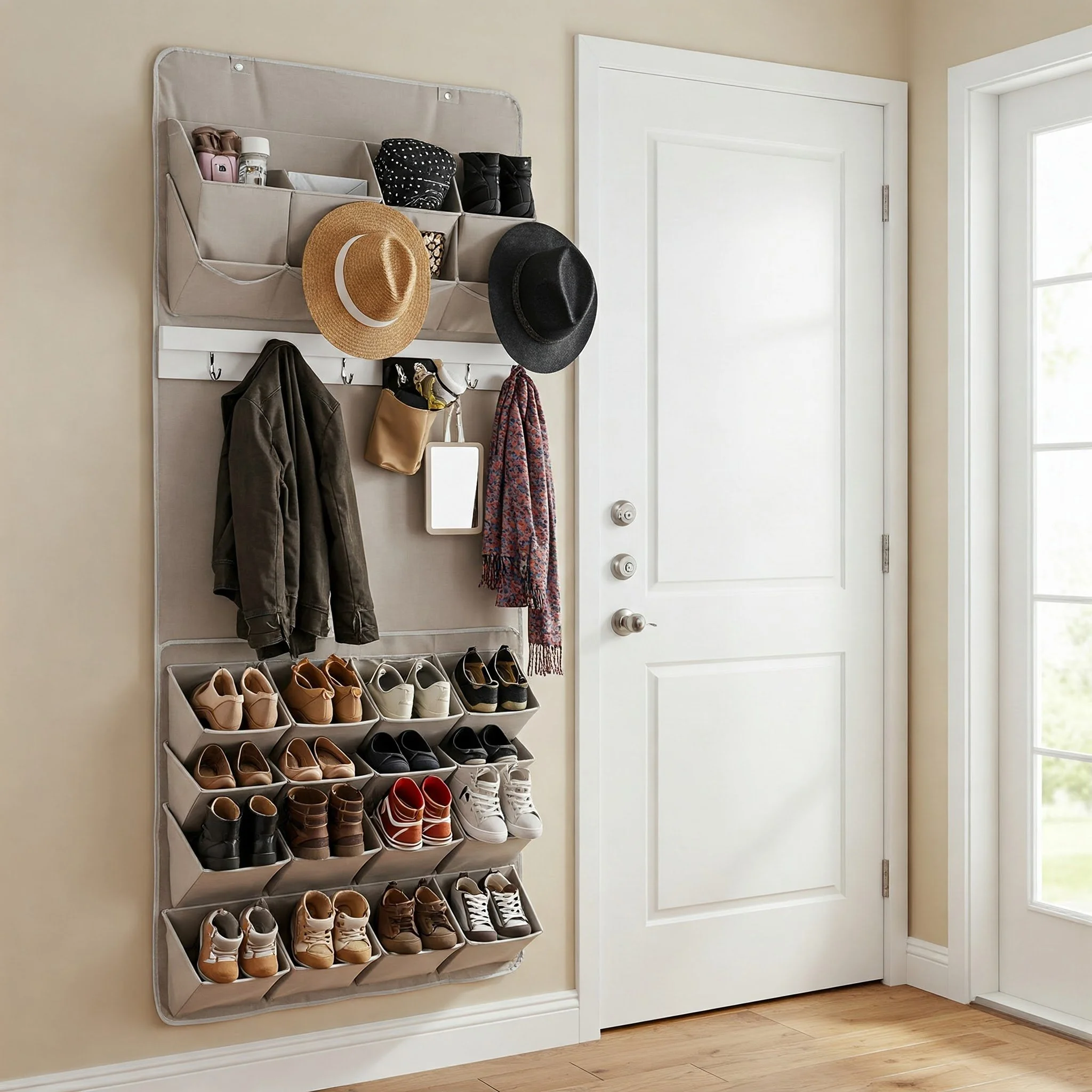
Image source: Web (Bing) / liveneat.com (Web image (fair-use with source credit))
If Your Entryway Is a Narrow Hallway
Use a peg rail, slim shoe cabinet, and small wall shelf. Skip deep benches unless you still have enough walking clearance.
A mirror can help the hallway feel wider. Choose one with a tiny ledge if you need a spot for keys.
If Your Door Opens Straight Into the Living Room
Closed storage usually looks better here. A tilt-out shoe cabinet, lidded baskets, or a storage bench keeps the entry from spilling into the room.
Try to match the finish to nearby furniture. That makes the storage feel intentional instead of temporary.
If You Rent and Can’t Drill
Use over-the-door storage, freestanding racks, adhesive hooks, and lightweight baskets. Keep heavy coats and backpacks off adhesive hooks unless the manufacturer clearly rates them for that load.
For damage-free setups, clean the wall first. Many adhesive products also need time to bond before holding weight.
If You Have Kids, Pets, or Lots of Shoes
Go lower, sturdier, and simpler. Kids use hooks they can reach. Pet owners need one leash hook and a washable bin for towels or waste bags.
For shoe-heavy households, limit the entry to daily pairs only. Store seasonal shoes somewhere else. Otherwise, even the best cabinet fills up fast.
Common Small Entryway Storage Mistakes to Avoid
The biggest mistake is buying storage for the space you wish you had. A deep bench, wide hall tree, or oversized coat stand can make a tight entry feel worse. If you have to turn sideways to get past it, it’s the wrong piece.
Another common issue is using only open storage. Open hooks and baskets are handy, but too many visible items look messy fast. If your front door opens into a main room, mix open hooks with one closed cabinet or lidded basket.
Watch out for these easy misses:
- Hanging hooks too close together, so coats bunch up
- Storing every pair of shoes by the door
- Forgetting wet boot storage in rainy or snowy weather
- Choosing a freestanding coat rack that tips when loaded unevenly
- Mounting shelves where they hit shoulders, bags, or the door
- Skipping labels in shared family entryways
- Buying baskets before deciding what each basket will hold
A visual check helps here. Stand outside the open door and look in like a guest would. If the first thing you see is a pile of shoes, move shoe storage lower, slimmer, or behind a closed front.
Also avoid “just for now” piles. A basket without a purpose becomes a clutter bin. Give each container one job, like gloves, dog gear, returns, or reusable bags.
Safety, Clearance, and Installation Tips for Tight Entryways
Tight entryways need clear exits first and storage second. Keep the walking path open, especially near stairs, exterior doors, and apartment exits. The National Fire Protection Association focuses on safe egress, and the same common-sense rule applies at home: don’t block the way out.
Wall-mounted storage must match the load. A hook for a light jacket is different from a hook holding backpacks, winter coats, and tote bags. Manufacturer specs confirm weight ratings only when the hardware is installed as directed.
Use this quick safety check before mounting anything:
| Item | Safer choice | What to avoid |
|---|---|---|
| Heavy coat hooks | Studs or rated wall anchors | Tiny screws in drywall |
| Tall hall tree | Anti-tip restraint | Unanchored narrow furniture |
| Boot tray | Low-profile raised edge | Tall lip that catches toes |
| Kids’ hooks | Rounded hook ends | Sharp metal corners |
| Shoe cabinet | Stable wall attachment | Top-heavy freestanding unit |
If your home was built before 1978 in the US, be careful drilling into painted surfaces. The Environmental Protection Agency gives lead-safe renovation guidance for older homes through EPA.gov. For renters, ask the landlord before drilling into trim, plaster, tile, or masonry.
A small entry also needs maintenance. Tighten screws every few months. Wipe boot trays before grit scratches the floor.
Recheck adhesive hooks after humid weather, since moisture can weaken some bonds.
Frequently Asked Questions
What is the best storage for a very narrow entryway?
The best choice is usually wall-mounted storage paired with a slim shoe cabinet. Look for shallow pieces around 7 to 12 inches deep. Add a peg rail, a small floating shelf, and a boot tray if the floor can handle it.
Skip deep benches unless your walkway stays clear.
How do you store coats without an entryway closet?
Use wall hooks, a peg rail, or a compact coat rack. Wall-mounted options save the most floor space. Keep only daily coats near the door, then move off-season coats to a bedroom closet, under-bed bin, or storage tote.
Too many coats make even good hooks look crowded.
Are adhesive hooks strong enough for coats and bags?
Adhesive hooks can work for light items, but they’re not ideal for heavy bags or several winter coats. Always check the manufacturer’s weight rating and surface instructions. Clean the wall first, then let the adhesive cure as directed before adding weight.
For heavy loads, use studs or anchors.
How many shoes should stay in a small entryway?
Keep one or two daily pairs per person near the door. That’s enough for normal routines without turning the entry into a shoe zone. Store dress shoes, seasonal boots, and extra trainers elsewhere.
If shoes still overflow, use a closed cabinet or rotate pairs weekly.
How can I make an entryway look tidy when everything is visible?
Limit the number of visible items and repeat materials. Matching baskets, one hook style, and a simple tray make open storage feel calmer. Use closed bins for small clutter like gloves, pet supplies, and mail.
Leave a little empty space too. It makes the whole area look intentional.
1 thought on “Small Entryway Storage Ideas When You Have No Closet”