
If your lease says no holes, small apartment organization without drilling is still completely doable. The trick is to stop asking, “Where can I hang stuff?” and start asking, “Where is space being wasted?” Most tiny apartments have useful storage hiding on doors, under beds, inside cabinets, above toilets, and in narrow gaps.
Manufacturer specifications for removable adhesive hooks often list weight limits from 0.5 lb to 15 lb, depending on the product, surface, and curing time. That number matters because no-drill storage only works when the organizer matches the surface and the load. Let’s start with the fastest answer, then build the space visually.

Image source: Web (Bing) / kanopipilihan.blogspot.com (Web image (fair-use with source credit))
Small Apartment Organization Ideas—No Drilling Needed
Quick Answer
Small apartment organization without drilling works best with zones. Use doors, vertical gaps, cabinets, and under-bed space first. Match storage to the surface and weight.
Keep heavy items low and light items high.
Why Small-Apartment Organization Works Better When You Plan It Visually
Tiny homes punish random storage. One extra basket in the wrong place can block a cabinet, crowd a walkway, or make the room feel smaller. A quick visual plan helps you see what belongs where before you buy another bin.
Think of your apartment like a simple floor plan. Mark the spots where clutter actually starts: keys by the door, toiletries near the sink, pans on the counter, clothes on a chair. Those are your storage pressure points.
A photo helps too. Stand in each room corner and take one picture. You’ll notice things you stop seeing in daily life, like empty door backs, blank cabinet sides, and the dead space above a toilet.
For no-drill organization, visuals matter because the installation method is limited. You can’t just add wall shelves wherever you want. You need to use existing surfaces well.
Look for these visual clues:
- Empty vertical space above furniture
- Doors with enough clearance for over-the-door racks
- Cabinet doors with unused inner panels
- Under-bed clearance of 6 inches or more
- Narrow gaps beside fridges, washers, or sofas
- Corners where a slim freestanding shelf could fit
- Smooth surfaces that may work with adhesive products
As of 2026, most renter-friendly storage falls into four practical groups: stick-on, hang-over, tension-fit, and freestanding. Each one solves a different kind of space problem.
Map Your Apartment Into Storage Zones Before Buying Anything
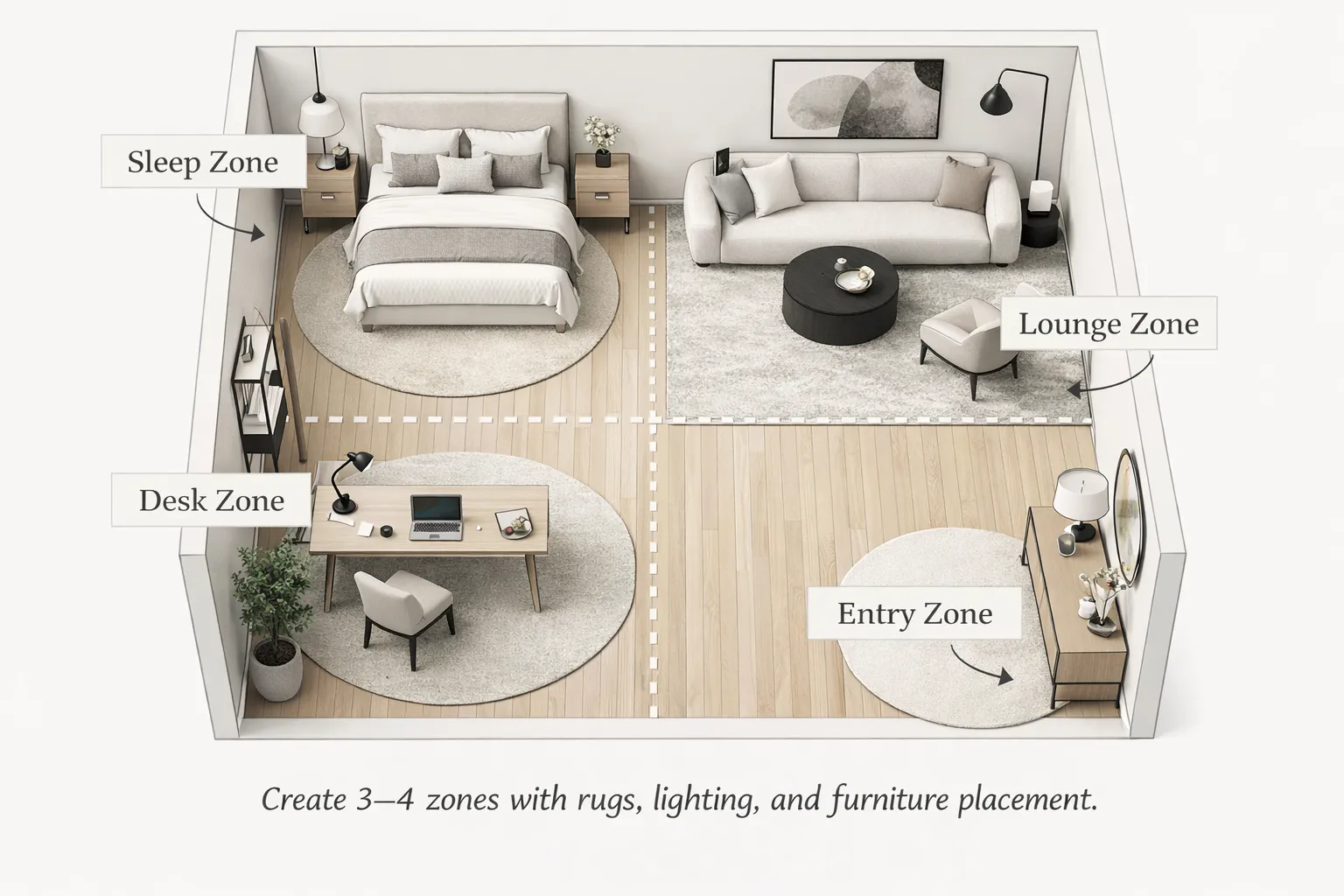
Image source: Web (Bing) / zgallerie.com (Web image (fair-use with source credit))
A storage zone is a small area that holds items used for one routine. That might be getting out the door, cooking dinner, working from home, or getting ready in the morning. Zones stop clutter from spreading across the whole apartment.
Start with function, not room names. In a studio, your living room may also be your bedroom, office, and dining area. So the better question is simple: what happens here every day?
Use this simple zoning map:
| Zone | What to store there | Best no-drill options |
|---|---|---|
| Entry | Keys, shoes, bags, mail | Over-door hooks, slim shoe rack, adhesive key rail |
| Kitchen | Spices, wraps, utensils, pantry overflow | Cabinet door racks, shelf risers, magnetic holders |
| Bathroom | Toiletries, towels, hair tools | Tension caddy, over-toilet shelf, suction baskets |
| Bedroom | Clothes, linens, accessories | Under-bed bins, hanging shelves, drawer dividers |
| Work area | Chargers, papers, headphones | Rolling cart, cable clips, desktop risers |
Keep high-use items at hand height. Keep occasional items higher, lower, or farther away. This one habit makes small spaces easier to live in.
If you’re unsure where to start, follow the mess. The spot that gets cluttered every day needs a zone first. Not the closet you rarely open.
Before buying anything, measure these areas:
- Door thickness and top gap
- Cabinet interior depth
- Under-bed clearance
- Closet width and depth
- Narrow gaps beside appliances or furniture
Those numbers prevent the most annoying returns. They also stop you from buying storage that technically fits but blocks daily movement.
Choose the Right No-Drill Organizer for Each Surface and Space
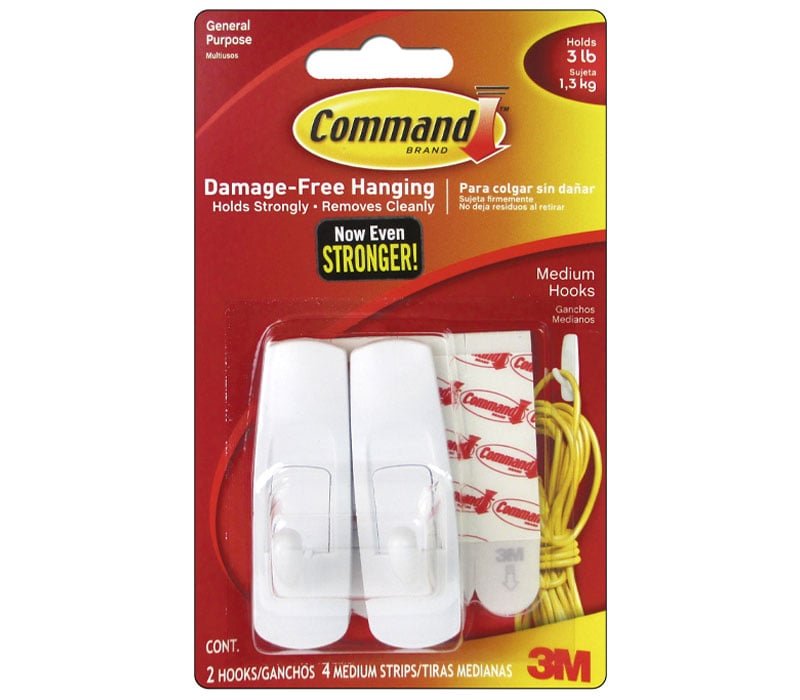
Image source: Bing (Web (fair-use with source credit))
No-drill storage works when the organizer matches the surface. Smooth painted drywall, tile, glass, laminate, metal, and wood all behave differently. Textured walls are the hardest because adhesives cannot fully grip the surface.
Adhesive hooks and strips are best for light items. Think keys, hats, small baskets, necklaces, masks, and cables. Manufacturer instructions from 3M Command stress clean surfaces, firm pressure, and waiting before loading.
Tension rods are better when two solid sides face each other. Use them inside cabinets, closets, showers, and narrow alcoves. They’re useful for spray bottles, scarves, lightweight curtains, and small dividers.
Over-the-door organizers are ideal when wall surfaces are risky. They work well for shoes, pantry items, toiletries, cleaning cloths, and accessories. Check that the door still closes fully before loading it.
Freestanding pieces handle heavier storage. Use rolling carts, slim shelves, storage ottomans, and cube units when you need capacity without relying on walls.
Here’s the quick match-up:
| Organizer type | Best for | Watch out for |
|---|---|---|
| Adhesive hooks | Light daily items | Paint damage, humidity, overload |
| Suction baskets | Tile, glass, showers | Falling on textured tile |
| Tension rods | Cabinets, closets, showers | Slipping if overloaded |
| Over-door racks | Shoes, bags, toiletries | Door clearance and scratches |
| Freestanding shelves | Books, bins, pantry overflow | Tip-over risk and floor space |
Put heavy items low. Put fragile items where they won’t swing, fall, or hit a door frame.
Room-by-Room No-Drill Organization Ideas That Actually Work

Image source: Bing (Web (fair-use with source credit))
The best no-drill ideas are simple and repeatable. They make the thing you already do easier. Start with the room that slows you down most.
Small entryway ideas
Create a landing strip by the door. Use a narrow shoe rack, adhesive hooks for keys, and a small tray for wallets or sunglasses. If there’s no floor space, use the back of the door for bags and seasonal accessories.
Avoid deep furniture here. Entryways need clear movement more than extra storage. A 6-inch-deep shelf or slim cart often works better than a bulky bench.
Small kitchen ideas
Use cabinet doors before counters. Add lightweight racks for wraps, lids, spices, or cutting boards. Shelf risers can double cabinet space without permanent hardware.
Magnetic storage works well on fridges or metal doors. Use it for spices, paper towels, or small tools. Keep anything near a stove away from heat and steam.
For pantry overflow, group food by routine. Put breakfast items in one bin, snacks in another, and baking supplies together. This stops small cabinets from turning into a loose pile of boxes.
Small bathroom ideas
Bathrooms are tough because moisture weakens many adhesives. Use tension shower caddies, over-toilet shelving, suction baskets on smooth tile, and stackable drawers under the sink.
Store daily toiletries in one open bin. Store backups elsewhere. That keeps the sink from turning into a crowded shelf.
Hair tools need special care. Let hot tools cool fully before storing them in plastic bins or fabric pockets. Use heat-safe holders only when the manufacturer says they can handle that use.
Small bedroom and closet ideas
Under-bed bins are usually the biggest win. Measure the clearance first, then choose low-profile containers. Clear lids help you avoid forgotten storage.
Inside the closet, add hanging shelves, slim drawer units, shelf dividers, and a second tension rod for short clothes. Keep bulky seasonal items in vacuum bags only if wrinkles aren’t a problem.
Use drawer dividers for socks, underwear, belts, and accessories. Small things get messy fast when they share one large drawer. Dividers create lanes without adding furniture.
Studio apartment and living room ideas
Use furniture that earns its footprint. Storage ottomans, nesting tables, and low bookcases help divide zones without building walls. A rolling cart can serve as office storage by day and dining storage at night.
For open storage, keep the look calm. Repeat two or three container styles. Use closed bins for visual clutter and open baskets for items you grab every day.
Common No-Drill Mistakes That Damage Walls, Waste Space, or Create Clutter
The biggest mistake is buying organizers before decluttering. Storage does not fix too much stuff. It only gives everything a place to go.
The second mistake is trusting weight limits without reading the surface requirements. A hook rated for 5 lb may fail on textured paint, dusty walls, humid tile, or fresh paint. Adhesive products need clean, dry, smooth surfaces.
Don’t load adhesive shelves immediately. Many removable adhesive products require a wait time before use. Check the manufacturer’s instructions for cure time, pressure, and removal steps.
Watch for these common problems:
- Over-door hooks that stop doors from closing
- Door racks that scrape trim or paint
- Suction baskets placed on uneven tile
- Tension rods used for heavy items
- Fabric bins in damp bathrooms
- Tall shelves loaded heavily at the top
- Floor baskets placed in narrow walkways
- Storage bins without labels
- Clear bins used for messy categories
Safety matters, even in a rental. The U.S. Consumer Product Safety Commission warns about furniture tip-over risks, especially with children in the home.
If you can’t anchor furniture because of lease rules, choose low, wide pieces and keep heavy items on bottom shelves.
The goal is not to fill every gap. Leave breathing room. A small apartment feels calmer when storage is easy to use, not packed to the limit.
Safety, Lease Rules, Weight Limits, and Move-Out Considerations
No-drill does not mean no-risk. Adhesive shelves can fall, over-door racks can scrape paint, and tall freestanding units can tip if they’re loaded badly. Treat every organizer like a small installation, even when no tools are involved.
Read your lease before adding anything to walls, doors, cabinets, or ceilings. Some leases ban sticky products because removal can lift paint. Others allow removable hooks but charge for damage at move-out.
Use this quick safety check before loading storage:
| Storage choice | Safe habit | Red flag |
|---|---|---|
| Adhesive hook | Stay under the listed weight limit | Textured or peeling paint |
| Tension rod | Install between solid surfaces | Rod bows or slides |
| Over-door rack | Add felt pads where it touches | Door won’t close cleanly |
| Rolling cart | Keep heavy items on lower shelves | Cart tips when pulled |
| Freestanding shelf | Load bottom shelves first | Wobbles on carpet |
Weight limits are not suggestions. They depend on clean surfaces, correct installation, and the right load direction. A hook holding a coat is different from a hook holding a swinging tote bag.
Bathrooms need extra caution. Steam and humidity can weaken adhesives and cause metal organizers to rust. Choose rust-resistant finishes and check suction cups often.
Keep emergency paths clear. Don’t block windows, heaters, vents, sprinklers, smoke alarms, or exits. If you have kids or pets, store medications, cleaners, cords, and sharp tools out of reach.
Before move-out, remove adhesive slowly and follow the product instructions. Pulling straight out from the wall can peel paint. Slow removal gives you the best shot at keeping your deposit intact.
Frequently Asked Questions
What is the best way to organize a small apartment without drilling?
Start by creating zones for daily routines. Use over-door storage, tension rods, under-bed bins, shelf risers, and freestanding carts. Put heavy items low and light items higher.
Measure doors, cabinets, and under-bed clearance before buying anything.
Do adhesive hooks damage apartment walls?
Adhesive hooks can damage walls if the paint is weak, textured, dirty, damp, or removed incorrectly. They work best on smooth, clean, fully cured painted surfaces. Follow the manufacturer’s weight limit and removal instructions closely.
How do you add storage in a rental kitchen without holes?
Use cabinet shelf risers, magnetic storage on the fridge, over-cabinet door racks, drawer dividers, and slim rolling carts. Keep counters for active cooking only. Store lightweight items on doors and heavier pantry goods in lower cabinets or freestanding shelves.
Are tension rods strong enough for apartment organization?
Tension rods are strong enough for light to moderate storage when installed between solid surfaces. They work well for spray bottles, scarves, curtains, and cabinet dividers. Don’t use them for heavy cookware, bulky clothing loads, or anything breakable.
How do I keep no-drill storage from looking cluttered?
Use fewer container styles and repeat the same colors. Choose closed bins for messy categories and open baskets for things you grab daily. Leave some empty space on shelves.
Labels also help because you won’t need to pull everything out to find one item.
What should renters avoid when organizing without drilling?
Avoid overloaded adhesive shelves, deep furniture in narrow walkways, unmeasured over-door racks, and tall shelves loaded heavily at the top. Skip adhesives on rough plaster, peeling paint, and damp bathroom walls. Don’t store anything where it blocks doors, vents, windows, or exits.
1 thought on “Small Apartment Organization Ideas—No Drilling Needed”