
If you’re searching for small bedroom storage ideas for clothes, you’re probably not short on effort. You’re short on usable space. The trick isn’t buying more bins.
It’s giving every type of clothing a clear, reachable home.
Most small bedrooms fail because storage blocks movement or hides things too well. A useful target is at least 24 inches of clear walking space beside the bed, with more if drawers need to open. Manufacturer specifications for wardrobes, dressers, and under-bed drawers often assume that extra clearance.
Let’s start with the fast answer.
Quick Answer
Small bedroom storage ideas for clothes work best in zones. Use the closet, bed, walls, and door separately. Store daily clothes where you can reach them fast.
Move seasonal clothes higher, lower, or under the bed.
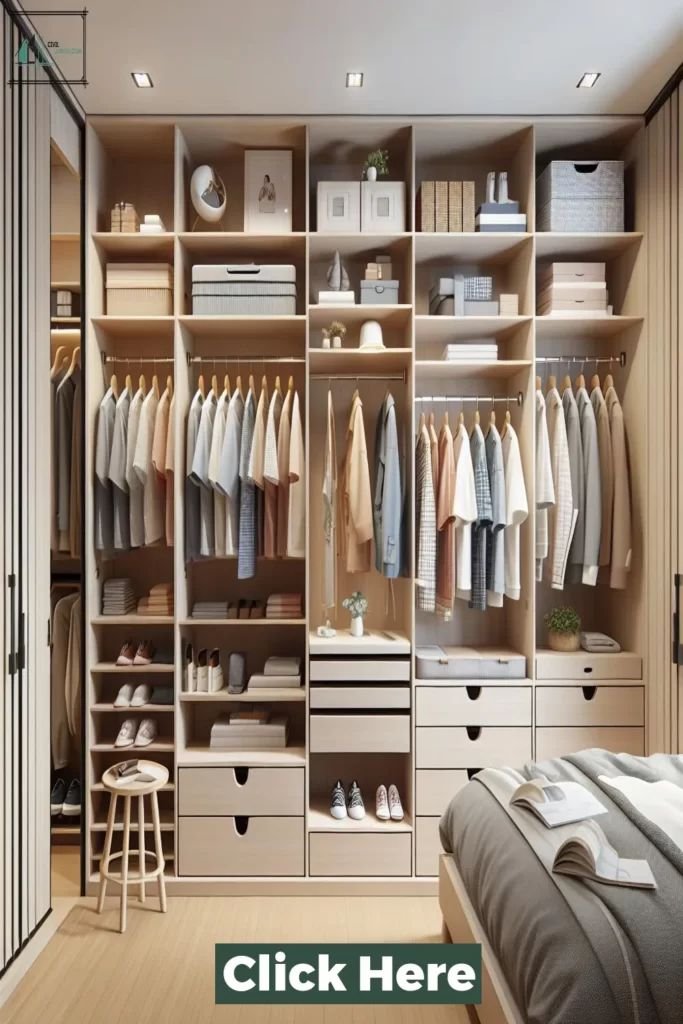
Image source: Bing (Web (fair-use with source credit))
Before You Buy Anything, Read the Room Like a Floor Plan
A small bedroom is easier to fix when you stop seeing it as “too tiny” and start seeing it as zones. A zone is a job area. One wall might handle hanging clothes.
The bed might hold off-season items. The door might take shoes, scarves, or accessories.
Start with measurements, not shopping. Measure:
- Bedroom width and length
- Closet width, depth, and height
- Space under the bed
- Clearance beside the bed
- Door swing and drawer swing
- Empty wall height above furniture
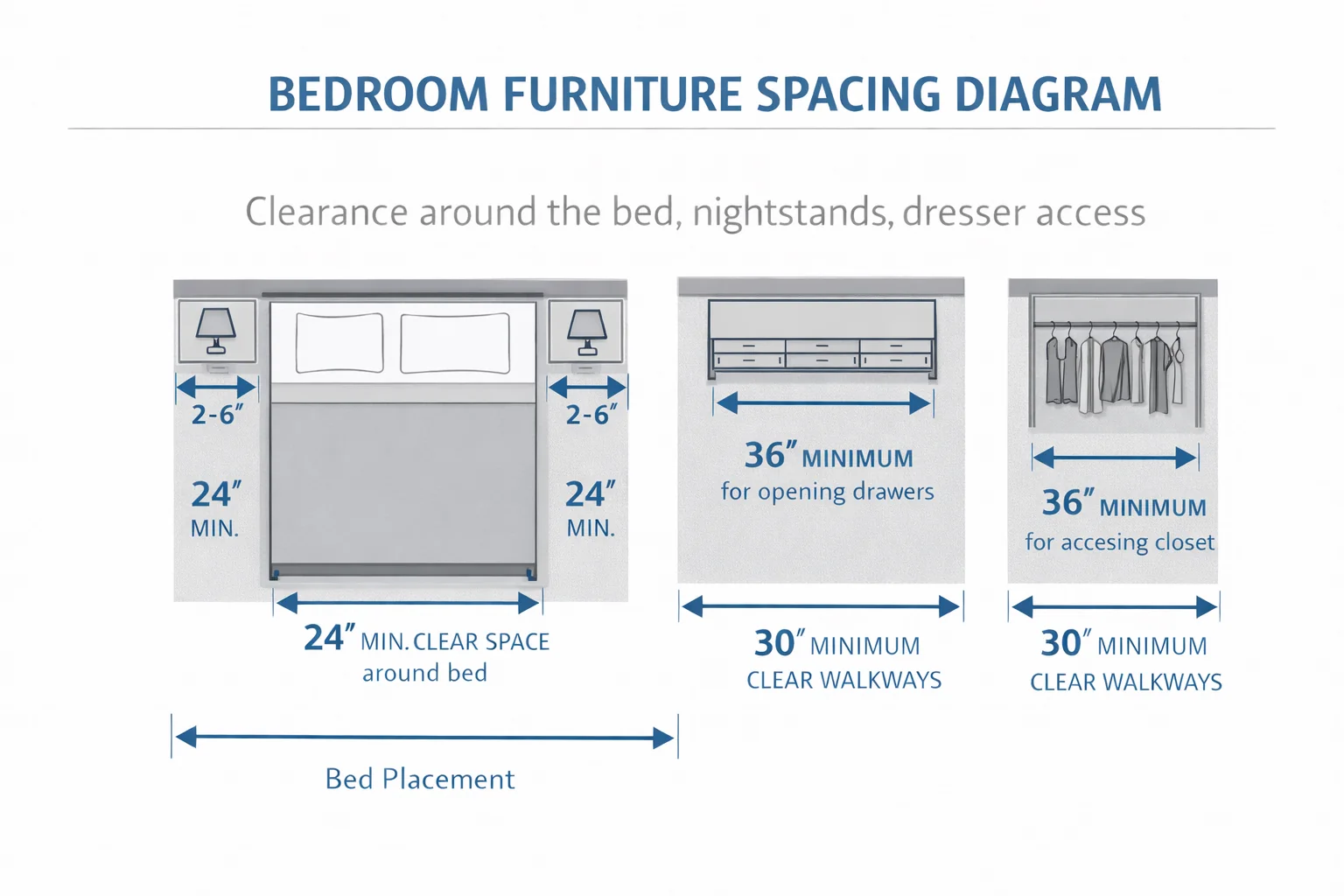
Image source: Web (Bing) / rocabudesigns.com (Web image (fair-use with source credit))
Photos and diagrams matter here because storage is visual. A tall chest of drawers can look perfect online, then make the room feel boxed in. A sliding-door wardrobe may fit better than a hinged-door wardrobe because it doesn’t need door swing space.
Use painter’s tape if you’re unsure. Mark the footprint of a dresser, garment rack, or storage bed on the floor. Then walk around it like you would on a normal morning.
If you bump the tape, the furniture is too big. If a drawer can’t open fully, it won’t stay organized for long.
Use the Bed, Walls, Door, and Closet as Separate Storage Zones
The best small rooms don’t rely on one giant storage piece. They spread clothes across smart zones. That keeps the room easier to use and less visually heavy.
Think of your room this way:
| Zone | Best for | What to avoid |
|---|---|---|
| Under the bed | Seasonal clothes, spare bedding, coats | Daily clothes you need fast |
| Closet | Hanging clothes, shoes, folded stacks | Stuffing every shelf full |
| Walls | Hooks, shelves, peg rails, narrow rails | Deep shelves above head height |
| Door | Shoes, belts, scarves, light accessories | Heavy items that strain hinges |
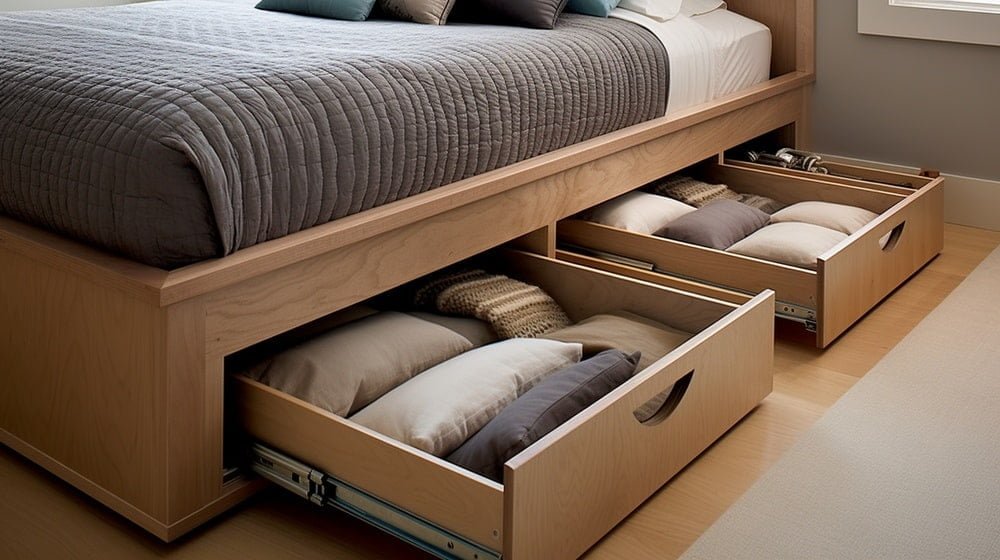
Image source: Bing (Web (fair-use with source credit))
Under-bed storage is brilliant when it’s easy to pull out. Use low-profile boxes, zip fabric bags, or drawers on casters. Clear fronts help because you can see what’s inside without opening everything.
Walls work best for light, repeat-use items. A peg rail can hold tomorrow’s outfit, bags, hats, or worn-once clothes. That one change often removes the classic “clothes chair” problem.
Closets need layers. A double hanging rail gives shirts and trousers separate space. Hanging shelves can hold folded knits or jeans.
Slim velvet hangers also reduce rail bulk, which helps more than people expect.
As of 2026, many modular closet systems are designed around adjustable rails and shelves. That matters because fixed storage rarely matches real wardrobes.
Best Clothes Storage Ideas for Small Bedrooms, Based on Your Layout
The right idea depends on your room. What works in a dorm room may annoy you in a shared bedroom. Use your layout as the filter.
If You Have a Tiny Closet
A tiny closet usually needs better division, not more stuff. Add a second hanging rail if most clothes are short. Shirts, skirts, folded trousers, and jackets don’t need full-height hanging space.
Use the top shelf for labelled fabric bins. Keep daily clothes at eye level and hand level. Store occasional items high, such as formalwear or out-of-season knitwear.
Good tiny closet upgrades include:
- Slim hangers for more rail space
- Shelf dividers for stacked sweaters
- Hanging shelves for folded jeans
- A small shoe rack under short hanging clothes
- Hooks inside the closet door
If You Don’t Have a Closet
No closet means you need closed storage somewhere. Open garment racks can look stylish, but they show every colour, hanger, and crowded rail. That visual noise can make a small bedroom feel messier.
Try one of these setups:
- A narrow wardrobe with sliding doors
- A garment rack plus matching fabric bins below
- A tall chest of drawers and wall hooks
- A wall-mounted clothes rail with a curtain panel
If you use an open rail, limit it to current-season clothes. Keep the rest under the bed or in lidded boxes.
If Your Bed Takes Up Most of the Room
Make the bed earn its footprint. Under-bed drawers, an ottoman storage bed, or bed risers can turn dead space into clothing storage.
Keep bulky, low-use clothes there. Coats, ski layers, spare bedding, and off-season clothes all make sense. Daily socks and underwear do not.
If You Share the Bedroom
Split storage by person, not by furniture type. One shared dresser often becomes a mess because no one knows where one category ends.
Give each person:
- Their own drawer zones
- Their own rail section
- Their own laundry basket if space allows
- One shared seasonal storage area
This reduces arguments and makes clean-up faster.
If You Rent and Can’t Drill
Rental-friendly storage should be light, removable, and stable. Use over-the-door organizers, freestanding rails, fabric bins, and tension-based closet additions.
Avoid overloading adhesive hooks. Manufacturer weight limits usually apply to clean, smooth surfaces. Painted walls, texture, humidity, and dust can weaken the hold.
Small Bedroom Storage Options Compared
Most storage ideas sound good until you compare how they behave in a real room. The best option is the one that fits your clothes, habits, and floor space.
| Storage option | Best for | Watch out for |
|---|---|---|
| Tall chest of drawers | Folded clothes in narrow rooms | Can tip if overloaded |
| Sliding-door wardrobe | Rooms with little clearance | Needs enough wall width |
| Under-bed boxes | Seasonal clothing | Hard to access if packed tightly |
| Open garment rack | No-closet rooms | Can look cluttered fast |
| Wall hooks or peg rail | Bags, outfits, worn-once clothes | Not ideal for heavy coats |
| Over-door organizer | Shoes and accessories | May stop the door closing cleanly |
| Vacuum storage bags | Bulky off-season items | Can crease delicate fabrics |
A dresser works well when most of your clothes fold neatly. Think T-shirts, gymwear, underwear, pyjamas, and jeans. Choose tall over wide when floor space is tight.
A wardrobe is better when you own dresses, coats, blazers, or shirts that crease easily. If the bed sits close to the wardrobe, sliding doors usually beat hinged doors.
Open garment racks are useful, but they need discipline. Stick to one colour hanger and leave breathing room between items. Otherwise, the whole wall starts looking busy.
For safety, tall clothing storage should be anchored when possible. The U.S. Consumer Product Safety Commission shares furniture tip-over guidance at CPSC.gov, and it’s worth taking seriously in homes with children.
Even in adult-only rooms, a loaded drawer can shift weight forward quickly.
Visual Mistakes That Make Clothes Storage Feel Messier
Small rooms are unforgiving. One bulky piece, one crowded rail, or one dark corner can make the whole bedroom feel tighter.
The biggest visual mistake is mixing too many storage styles. Clear boxes, woven baskets, fabric cubes, plastic drawers, and open rails can all work. Together, they often look chaotic.
A photo of a calm small bedroom usually shows the same visual clues:
- Similar hangers
- Repeated storage colours
- Clear floor edges
- Closed storage for messy categories
- Open storage only for neat items
Open shelves are the easiest place to get wrong. Folded clothes look tidy for a day, then stacks slide and sag. If you want open shelving, use baskets for soft items like socks, gymwear, and sleepwear.
Another common problem is storing everything at eye level. That creates a wall of clothing, even when the room is technically organized. Move bulky or colourful items lower, higher, or behind doors.
Watch the “too many hooks” trap too. Hooks are great for a robe, bag, or tomorrow’s outfit. Ten overloaded hooks become a vertical laundry pile.
If the room still feels busy, remove one visible category. Shoes, laundry, handbags, or accessories are usually the culprit. Put that category behind a door or inside a single labelled bin.
Safety, Measurements, and Practical Details People Often Miss
Good storage should save space without creating a hazard. Tall dressers, wardrobes, and shelving units need special care because clothes are heavier than they look.
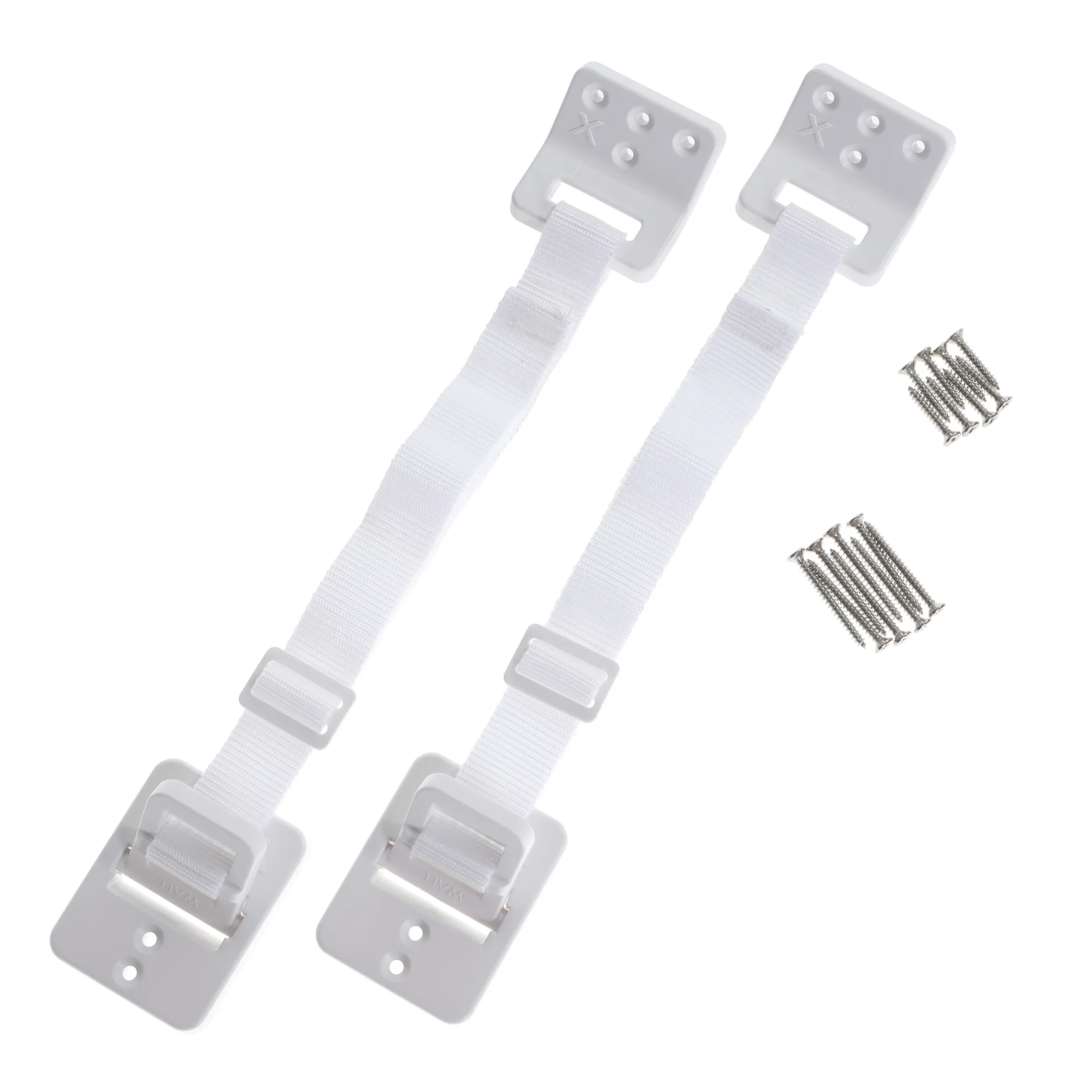
Image source: Bing (Web (fair-use with source credit))
Anchor tall clothing storage when the manufacturer requires it. The ASTM F2057 standard covers stability requirements for clothing storage units. The STURDY Act also strengthened tip-over prevention rules for clothing storage units sold in the US.
Check these measurements before you commit:
| Detail | Practical target |
|---|---|
| Walkway beside bed | About 24 inches where possible |
| Closet depth for hangers | Around 24 inches for standard hangers |
| Drawer clearance | Full drawer depth plus standing room |
| Under-bed box height | At least 1 inch below bed clearance |
| Wall shelf position | High enough to avoid head bumps |
Don’t block exits, windows used for escape, radiators, heaters, or electrical outlets. Storage should never make the room harder to leave in an emergency.
Moisture matters too. Clothes packed tightly under a bed or against a cold exterior wall can smell musty. The EPA gives practical mould and moisture guidance at EPA.gov, and the same idea applies here: keep fabric dry, ventilated, and off damp surfaces.
Use breathable bags for wool, knits, and delicate fabrics. Save vacuum bags for bulky seasonal pieces you won’t need often. Check stored clothes every few months so damp, dust, or pests don’t get a head start.
Frequently Asked Questions
How do I store clothes in a small bedroom without a closet?
Use a narrow wardrobe, wall-mounted rail, or freestanding garment rack for hanging clothes. Add a chest of drawers for folded items. Keep only current-season clothes visible.
Store off-season clothing under the bed, on a high shelf, or in labelled lidded boxes.
Is under-bed storage good for clothes?
Yes, under-bed storage works well for seasonal clothes, bulky layers, and spare bedding. Choose low-profile boxes or fabric bags that pull out easily. Avoid storing daily clothing there because access gets annoying.
Add labels so items don’t disappear for months.
What clothes should go in drawers instead of hanging?
Fold T-shirts, jeans, underwear, gymwear, pyjamas, sweaters, and casual trousers. Hang dresses, coats, blazers, work shirts, and anything that wrinkles quickly. Drawer dividers help small items stay in place.
Rolling casual clothes can also improve visibility in shallow drawers.
How can I make an open clothes rail look tidy?
Limit the rail to clothes you actually wear now. Use matching slim hangers and leave small gaps between garments. Put shoes or folded items in matching bins below.
If the rail still feels busy, hang a simple curtain in front.
What is the cheapest way to add clothes storage?
Start by decluttering before buying anything. Then add low-cost upgrades like slim hangers, drawer dividers, over-door organizers, hooks, and under-bed bags. These usually cost less than new furniture.
They also fix the daily mess faster than another bulky dresser.
1 thought on “Small Bedroom Clothes Storage Ideas That Save Space”